Mauricio Pochettino: From Short-Term Hire to Long-Term Architect of US Soccer
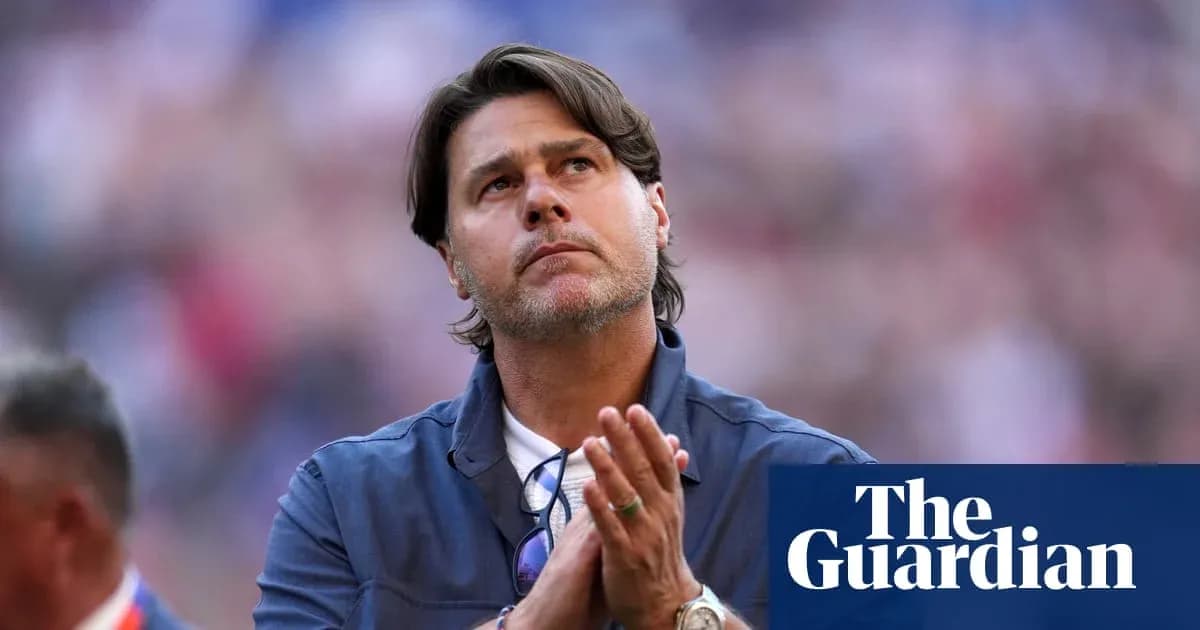
Two months after the World Cup exit that flattened the mood around the US men’s national team, Mauricio Pochettino is back at work – and his job now stretches far beyond a touchline and a technical area.
The World Cup, hosted on home soil and billed as a coming‑of‑age moment, ended with a crash rather than a coronation. Pochettino, hired in 2024 as a supposed short‑term fix, could easily have walked away. Instead, he signed up for more.
US Soccer extended his contract in August. With that signature, the Argentinian stopped being a stopgap and became something closer to an architect.
From short-term hire to long-term architect
When Pochettino arrived, the brief was simple: maximize a home World Cup. Now the mandate is heavier. He must steer the US through qualification for the 2030 World Cup, push them deeper into major tournaments, and help reshape the sport’s structure in a country that still sees soccer as a challenger, not a king.
He speaks about it in the language of legacy.
Staying on, he said, is a chance to “have a lasting impact on the sport in the country that has welcomed us so warmly – and for that impact to extend beyond results on the field.” That line is not window dressing. US Soccer’s announcement of his renewal came with a notable twist: Pochettino will take a leading hand in youth development, coaching education and collaboration with the professional game.
No US coach has ever been handed that kind of influence over the entire program. Technical areas, yes. Pathways, curriculums and structural vision, no.
The timing is no coincidence. US Soccer is in the middle of a major reshuffle, preparing to fill two new director positions overseeing the men’s and women’s senior and youth setups. Pochettino has already made clear he wants to be involved in that process – but not as a kingmaker for his inner circle.
“It can’t [just] be my guy,” he joked on Monday, as he sat with a small group of reporters. The tone was light, the message serious: the structure has to outlast any coach, even one with his profile.
“This is the future of the USA,” he said. “We want to try to perform in the World Cup and to create something special with the fans. And now it’s about being a part of the legacy that the federation wants to create – becoming one of the most powerful countries in soccer. That is a dream, no? It’s amazing. If we can be part of that, we are so excited and so happy.”
The immediate calendar looks modest by comparison. Four friendlies – Peru, Chile, Mexico and Canada – between late September and early October. Useful tests, but not the point. The real work lies in the scaffolding behind the scenes.
Balogun, Everton and the human side of deadline day
On the player front, this summer was quieter than many expected for the USMNT. Gio Reyna’s move to Strasbourg, Sebastian Berhalter’s switch to Middlesbrough and teenager Zavier Gozo’s jump from MLS to Crystal Palace stood out, but the window never turned into a flood.
Folarin Balogun’s story cut through the noise anyway.
After a breakout World Cup, the Monaco forward looked ready for a major Premier League move. Everton pushed, talks advanced, and the move edged towards completion. Then it collapsed at the last moment, the club pointing to a potential fitness concern that Monaco – and Balogun himself – rejected.
For a 25‑year‑old riding the high of a World Cup, that kind of late‑window rejection stings. Pochettino knows the emotional whiplash of transfer drama as well as anyone, and he made a point of backing his striker.
“Yes, it’s difficult because you cannot influence that decision,” he said. “You need to support what they are doing with the people making the decisions. In some special cases, like Flo’s, I will call in the next few days. I wanted to give him a little bit of space after that situation in Everton. I want to know from him what happened. But we are always offering our support, and that’s it.”
No tactical breakdown, no public pressure. Just a reminder that Balogun remains central to his plans.
“I think he’s an important player for us, he was an important player in the World Cup and I hope that he can find being in Monaco, or in another place, his best place to perform in the best way.”
The message is clear: club uncertainty will not shake his status with the national team.
The tug-of-war for dual nationals
If Balogun’s situation highlights the unpredictability of club football, the case of Noahkai Banks underlines the delicate politics of international allegiance.
The Augsburg center-back will not be in this month’s 26‑man squad. At 19, the German-American is still weighing up his future and has set himself a loose deadline: decide by the next international break, or the one after that at the latest.
Germany are not standing still. Reports there say new national team coach Jürgen Klopp has already watched Banks in person, a clear sign of intent from a powerhouse that rarely needs to chase.
Pochettino chose his words carefully but made one thing plain: the US are in the conversation.
“We are in contact with all the potential dual nationals,” he said. “I think it’s important for us, of course, because that is the human connection that is so important.”
That human connection has become a battleground. It is no longer enough to send a scout or a polite email. Players like Banks live between cultures, courted by multiple federations, aware that one choice closes every other door.
“Even if they, like in that case, Noki, didn’t change his mind and is waiting still, no decision, and of course we cannot consider him for the next camp … But the organization is working with all the dual nationals and players with the possibility to make a decision.”
The carrot is clear: if they choose the US, and if they meet the standard, the path is open.
This is where Pochettino’s expanded role matters most. He is not just picking lineups; he is selling a project to a generation that can play almost anywhere.
A long road to 2028 and 2030
Beyond the autumn friendlies and the tug‑of‑war over talent, the horizon is crowded. The US will step onto another global stage at the Los Angeles Olympics in 2028. They are widely expected to appear at Copa América that same summer, a chance to test themselves against South America’s elite in meaningful games.
Those tournaments will arrive quickly. The structural overhaul Pochettino has been handed will not.
He has signed up for a long, messy job: to help turn a World Cup host into a World Cup threat, to shape the pathways that feed the senior team, to convince the best dual nationals that the US is not just an option, but an ambition.
The crash out of the last World Cup still lingers in the background. The next cycle will not be judged on group‑stage performances alone. It will be judged on whether this era, with Pochettino at its center, finally pushes the US from promise to power.
The question now is simple: can one coach’s expanded reach bend an entire soccer culture toward that dream?