Mauricio Pochettino: A New Era for US Men's Soccer
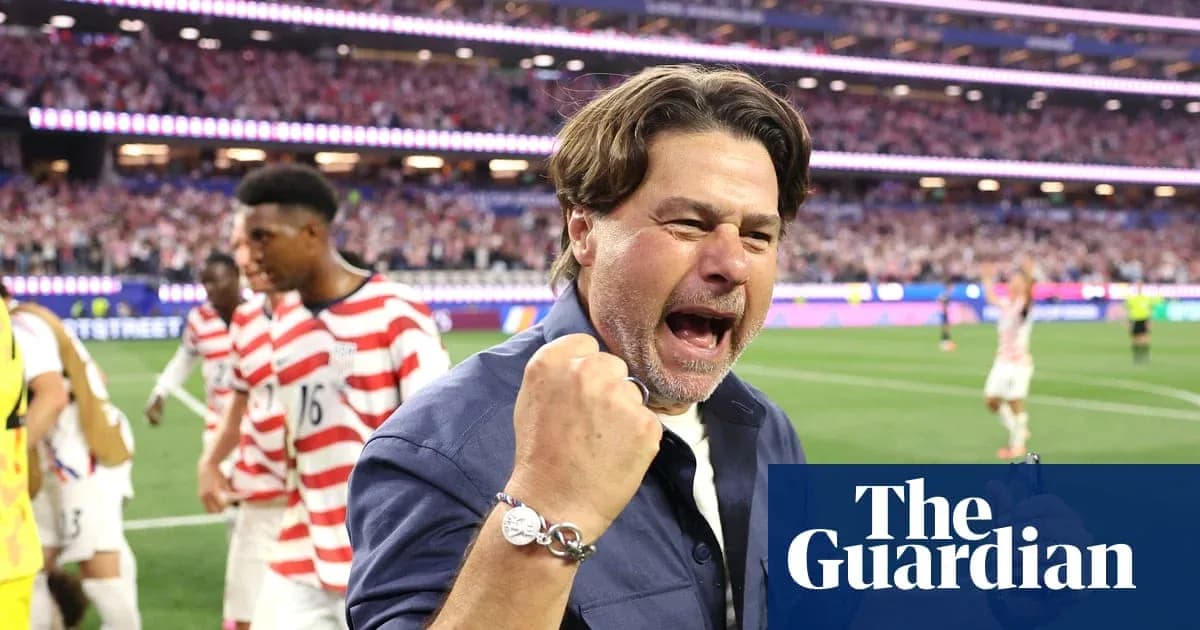
Mauricio Pochettino walked into New York with the Hudson River at his back and a World Cup in his sights, and he didn’t bother easing himself in.
New job. New country. A men’s program still reeling from a wretched Copa América. On that 24th floor in Manhattan, with the federation desperate for a reset before a home World Cup, he went straight for the one thing American men’s soccer has never truly owned: unashamed belief.
“We need to believe that we can win,” he said in September 2024. “That we can win not only a game: We can win the World Cup.”
It landed like a provocation and a promise all at once.
For a fanbase conditioned to flinch at that kind of talk, it sounded almost foreign. US men’s supporters have spent decades being told what they are not. Not technical enough. Not tactical enough. Not serious enough. Even as American players finally broke into elite European clubs, the idea of actually winning a men’s World Cup still felt like a punchline delivered with a straight face.
Pochettino refused to play along with that script. He hammered the same line, over and over, in public and in private: 2026 wasn’t just about a good showing, it was about daring to imagine the absurd. He even told Donald Trump the US could win it all, a conversation that would later feel like the start of a political circus the program never needed.
Belief became his brand. The problem was everything that came after.
A coach who talked big – and looked elsewhere
Pochettino was hired to galvanize a nation, to give the program a sense of purpose that matched the scale of a home World Cup. Instead, from almost the start, there was a second storyline running alongside the main event: his next job.
Rumors out of England never really stopped. They attached him to Premier League clubs with tedious regularity, and he rarely bothered to slam the door on them. US fans would wake up to see fresh clips of their national team coach praising the Premier League, musing about going back one day, speaking more romantically about the game “over there” than the one he was being paid handsomely to reshape here.
Some of that comes with the territory. Hire a manager with a global profile and you accept the noise that follows. But this felt different. Too often, it seemed like Pochettino wasn’t just tolerating the speculation; he was feeding it. The man tasked with convincing America to believe in its own football future kept sounding as if his heart still lived in another league, another continent.
None of it was scandalous. Just jarring. This was supposed to be the coach who would wrap his arms around a generational opportunity. Instead, there were stretches when he looked more like a high-end consultant passing through.
Wrestling with America, and losing patience
On the field and off it, Pochettino also ran headlong into the oddities of American soccer culture – and didn’t always hide his irritation.
After losing the 2025 Gold Cup final to Mexico in Houston, he took aim at a familiar, long-standing reality: the US men playing “at home” in front of a pro-Mexico crowd. It’s an issue that predates him by decades, one baked into the demographics and loyalties of the region. Anyone who had done even light homework on the job would have seen it coming.
He also jabbed at the structure of the domestic game. He called out the lack of real stakes in Major League Soccer. He suggested that US players are coddled through their youth systems. He bristled when media questioned the impact of a group-stage loss to Turkey at the World Cup, as if the scrutiny were disproportionate.
In truth, the pressure he faced with the USMNT was gentler than what he would have endured in almost any major footballing nation. No daily tabloid wars. No ultras at the training ground. No political crisis triggered by a bad substitution. Yet he often sounded like a man besieged.
The tension was hard to miss. He had been brought in to help the sport feel bigger, sharper, more serious in the American landscape. At times, though, he seemed exasperated by the very environment he’d been hired to help transform.
Whiplash: from Country Roads to catastrophe
And then, just when it felt as if he was half out the door emotionally, the football would snap everyone back.
The 4-1 demolition of Paraguay at the World Cup was the clearest example. It wasn’t just a good US performance; it was the best they had ever produced on that stage. Relentless pressing. Fluid attacking. A swagger rarely associated with this program.
There was Pochettino at the final whistle, voice cracking, belting out “Country Roads” with the fans, speaking glowingly about America and American football and everything that wrapped around it. In those moments, he looked all in. The country wanted to believe him.
Then came Belgium. A 4-1 beating in the last 16 that now sits among the worst World Cup displays the US men have ever delivered. Certainly the most scarring. All the talk of belief, all the noise about a miracle run, dissolved into a night of defensive chaos and emotional collapse.
The pendulum that had swung so dramatically toward hope snapped back toward doubt. Again.
Legacy, on his own terms
Ask most athletes or coaches about their legacy and they’ll recoil. It sounds too final, too funereal. Pochettino is different. He has always spoken in grand themes, big arcs, big ideas. You get the sense he thinks about how he’ll be remembered while he’s still in the middle of the story.
Yet when the Guardian pressed him to define his lasting impact with the US, he hesitated. Then came the familiar glint.
“I am not arrogant,” he said with a smile. “Well, not arrogant enough. I am a little bit arrogant.”
When he finally answered, he did not point to tactics or trophies or milestones. He talked about relationships. About doing things the right way, at least in his own view.
“The most valuable feeling that we get isn’t one victory, or that we helped in the program,” he said. “It is that relationship in the program – even when you cross the sea, you look and smile because I think you share the values that are very important in life, more important than anything else. That is our principal that we respect always.”
It was classic Pochettino: big-picture, emotional, rooted in human connection more than in cold metrics.
An unfinished project, and an uneasy truth
He arrived with three broad missions. Deliver a respectable showing at a home World Cup. Shift how the broader American public sees the sport. Plant something lasting for the next generation.
On some fronts, he made real progress. The World Cup included the kind of performance against Paraguay that will live in highlight reels and memory. His rhetoric about ambition did seep into the locker room and into parts of the fanbase. He forced uncomfortable conversations about development, stakes, and standards.
On others, he left the job half-done. The Belgium collapse, the friction with media, the persistent sense that his gaze was fixed on the Premier League all chipped away at the credibility of his central message. He asked a country to believe without ever fully convincing it that he believed just as deeply, just as exclusively, in this project.
That is the paradox of his time in charge. Mauricio Pochettino wanted the US to think bigger than it ever has. He challenged a soccer culture long defined by its ceiling. Yet as he walks away to Manchester United, the lingering question is not whether America believed him.
It’s whether he ever truly believed America.