Mbilli vs Alvarez: World Title Fight Amidst Tension in Riyadh
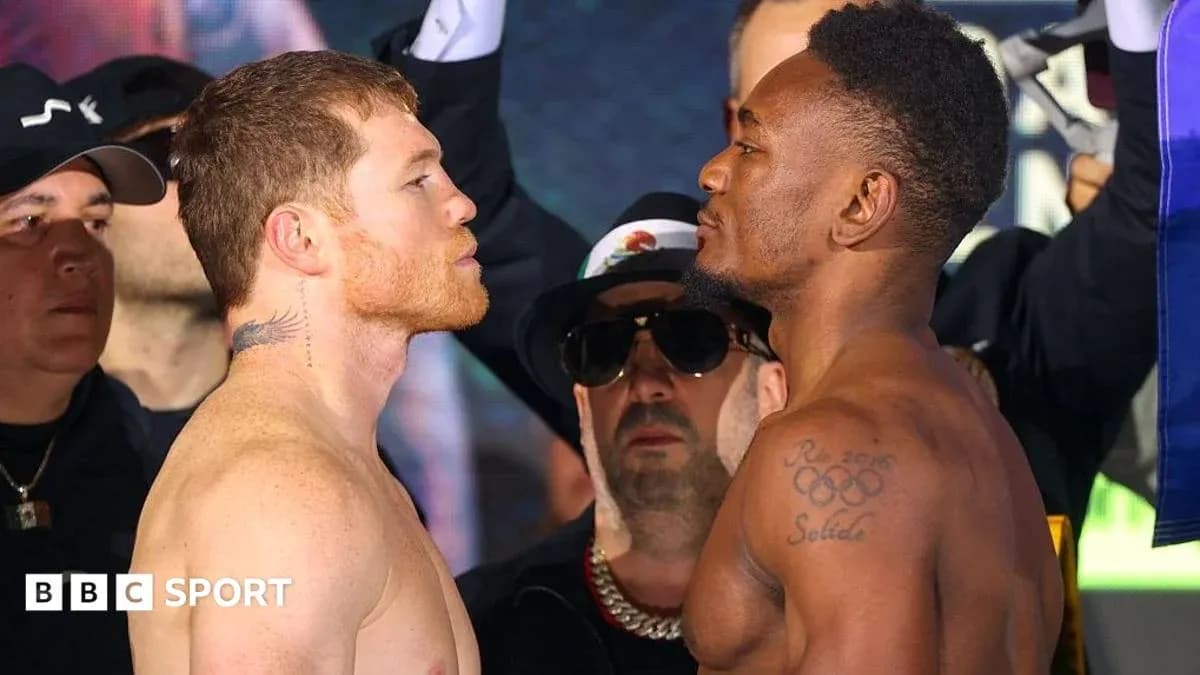
In a city on edge, with smoke trails still fresh in the memory, Christian Mbilli and Saul “Canelo” Alvarez stepped onto the scales in Riyadh and did what fighters always do. They made weight. They stared each other down. And they tried to shut out the noise of a conflict crackling above their heads.
Twenty-four hours earlier, two ballistic missiles had been intercepted over the Saudi Arabian capital. On Friday, the focus switched – at least for a while – from defence systems to a boxing ring.
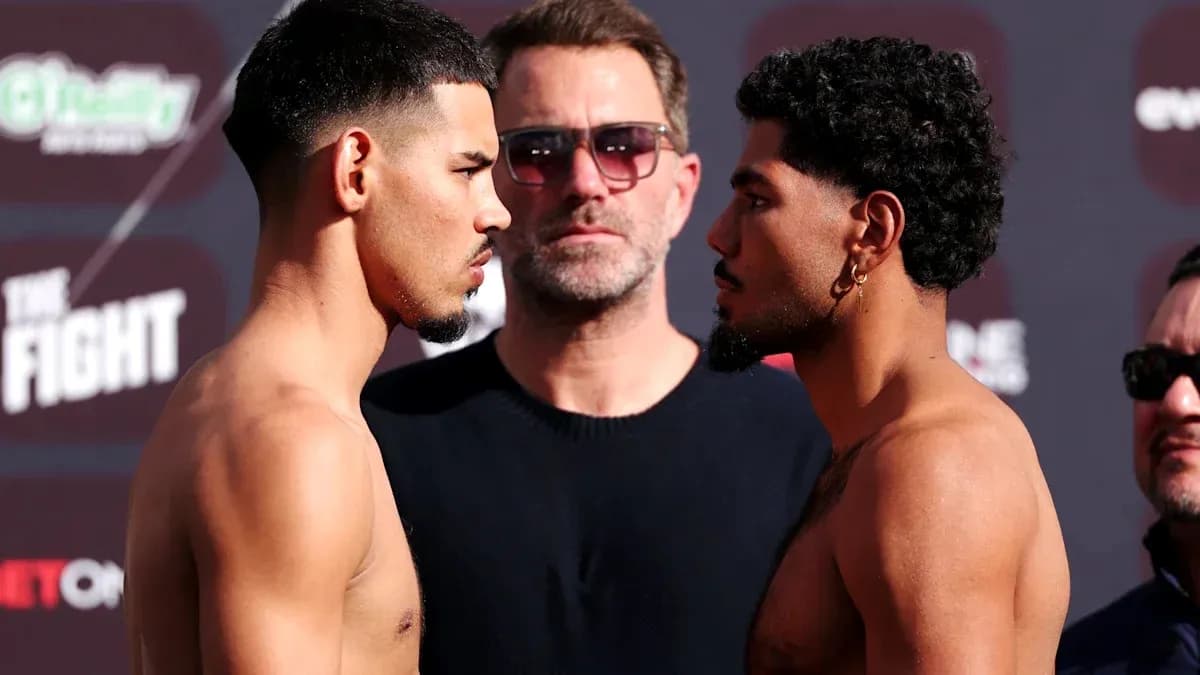
Both men came in at 12st (76kg), right on the super-middleweight limit, before a face-off that carried tension but no theatrics. No shoves, no chaos. Just two men who know exactly what’s at stake.
Canelo back where it all began – chasing another belt
For Mbilli, 31, this is the first defence of the WBC super-middleweight title he was elevated to in January. For Alvarez, 36, it is something different: a return to the familiar terrain of a world title fight, but this time as challenger, not undisputed ruler.
He walks into his 69th professional bout almost 21 years to the day since he first laced up for pay on 29 October 2005. The miles are there in the record, not yet in the eyes.
“This is very important for me, I've been doing this for 21 years and won my first world title 16 years ago. It's important for me to win a title again,” Alvarez said, the words carrying the weight of a man who has lived his adult life under bright lights and heavy gloves.
He did not bother with diplomacy when it came to Mbilli’s résumé.
“My experience is different, he hasn't faced anyone like me and I'll teach him tomorrow.”
Mbilli, the fresher champion, brings youth by comparison and momentum, but not the catalogue of elite names that define Alvarez’s career. That gap in experience is exactly where Canelo believes this fight tilts his way.
A world title fight under a missile shadow
The bout lands in Riyadh at a time when many wondered whether it should be there at all.
Doubts have swirled for weeks over the safety of staging a major event in the city as the conflict between Saudi Arabia and Yemen’s Houthi movement intensifies. The UK’s Foreign, Commonwealth and Development Office currently advises against all but essential travel to the whole of Saudi Arabia, a stark backdrop for a global boxing showcase.
On Thursday, the Saudi Press Agency reported that Civil Defence forces had intercepted two ballistic missiles over the capital. A civilian suffered a minor injury; a house and a vehicle were damaged by falling shrapnel. Earlier in October, a missile strike on Riyadh’s King Khalid International Airport killed 13 people and wounded more than 300.
Those numbers hang in the air as heavily as the desert heat.
Travel for fans, media, and teams has been tangled by restricted access to the airport, complicating the usual conveyor belt of entourages and broadcasters that follow a fight of this size. The machinery of big-time boxing has had to work around closed routes and heightened risk.
Yet the ring will still be built, the lights will still go on, and Mbilli and Alvarez will still make that long, lonely walk on Saturday night.
One man defends the first world title he has held. The other chases yet another belt in a career built on chasing them. And they will do it in a city where the sound of gloves on leather competes with the echo of sirens and intercepted missiles.