Memphis Grizzlies: A New Era of Shooting and Chemistry
Ten games rarely tell the whole story. For a franchise resetting its identity around one of the youngest cores in the league, they usually don’t tell much of anything.
Memphis is trying its best to be the exception.
The Grizzlies have opened this new era with a 7–3 start that feels less like a fluke and more like a sketch of what this group could become. The schedule has been forgiving in spots, yes. But the way Memphis is winning — the way the numbers back up the eye test — hints at something sturdier than an early-season sugar high.
A Different Kind of Grizzlies Offense
For years, the Grizzlies’ brand leaned on grit, physicality, and defense. This version is rewriting the script with spacing and touch.
Over their past 10 games, Memphis has buried 152 threes at a blistering 38.6%. They’ve also knocked down 195 free throws at an 84.6% clip. Hitting either of those marks over a 10-game stretch has popped up multiple times in franchise history. Hitting both at once to open a season? That’s so rare they’re only the second team in NBA history to do it.
Right now, Memphis sits second in the league in three-point percentage and first in free-throw percentage. No one had them circled as an elite shooting team in October. They’re playing like one in November.
Will those percentages hold? Almost certainly not. Regression is coming. Defenses will adjust. The schedule will tighten.
But the bigger story is that this might be the best pure shooting group the Grizzlies have ever assembled.
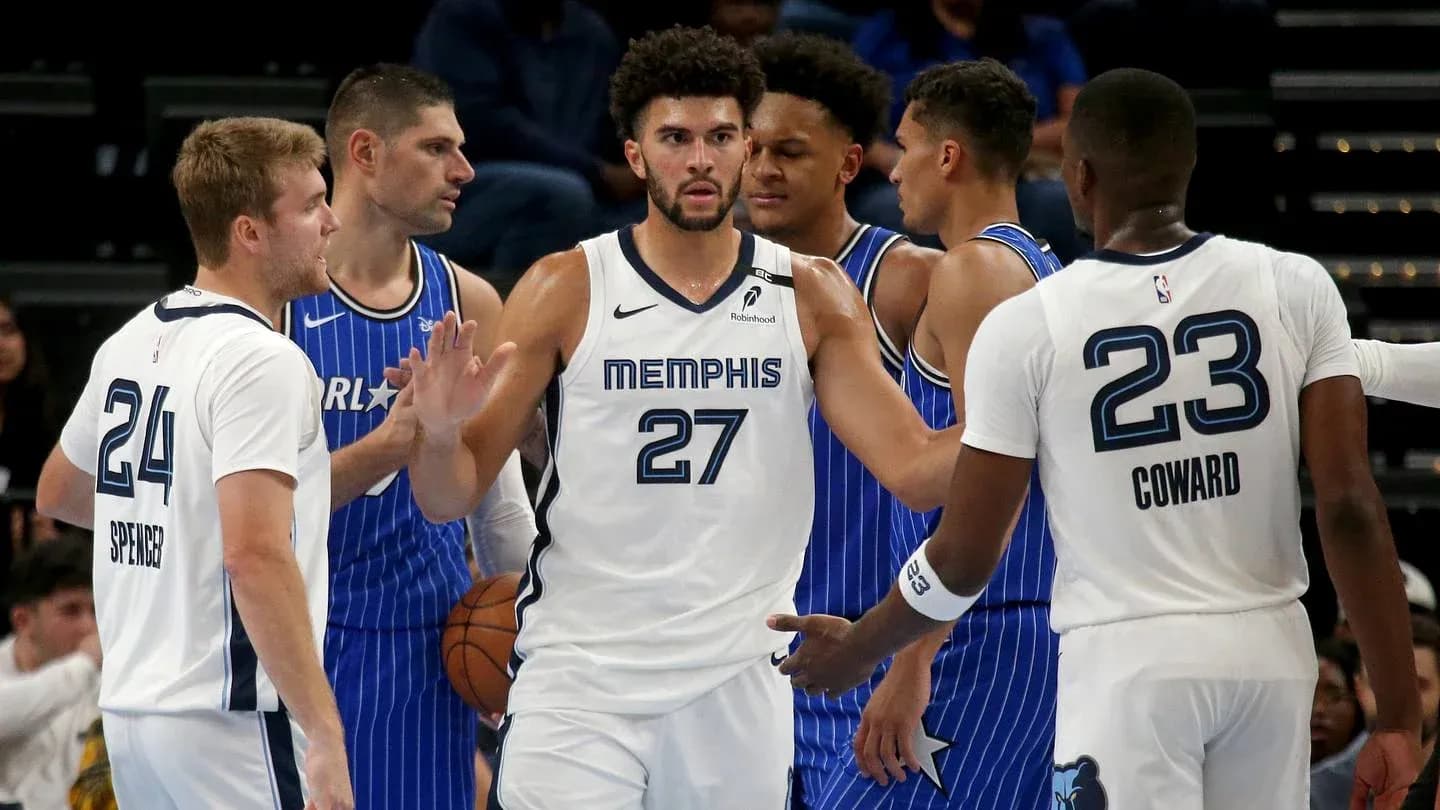
Cam Spencer brings historically elite shooting credentials. Ty Jerome has shown stretches where he looks like one of the league’s most accurate guards. Off the bench, Jerami Grant is drilling 45% of his threes on nearly four attempts per game — a luxury scorer stretching second units thin.
Then there’s the quiet revelation: Jaylen Wells and Ced Coward turning “maybe” shooting into “you have to guard this.” Their growth from question marks to reliable threats is exactly the kind of internal development a rebuild needs.
The impact is already visible. Memphis ranks 6th in true shooting, 10th in offensive rating, and 12th in half-court offense. For a young team at the start of a new cycle, that’s not just encouraging. It’s foundational.
Even when the shots cool, the presence of this much legitimate shooting should keep the floor of the offense higher than anything Memphis has seen in most of its previous iterations. If this is the baseline, the rebuild is ahead of schedule.
A Core That Fits
Young teams usually stumble over roles and rhythm. The Grizzlies’ core looks like it skipped a few steps.
The chemistry between Cam Boozer, Zach Edey, Coward, and Wells has arrived early and with real substance. Health has helped, but this is more than just availability. Their games mesh.
When those four share the floor, Memphis plays grown-up basketball. They rebound at a high level. They execute. They defend as a unit. With Ty Jerome joining that mix, the Grizzlies have quietly built one of the most productive starting groups in the league.
The key isn’t just talent. It’s buy-in.
Each player has leaned into his role because the role actually highlights what he does best. Edey anchors the paint and has flashed more defensive impact than many expected this soon. Boozer is already showing he can process the floor and organize the offense. Wells and Coward, once viewed primarily through the lens of potential, are now spacing the floor and hitting shots that swing possessions.
And within those roles, there’s more upside peeking through. That’s what should excite Memphis most. These aren’t veterans at their ceiling. They’re young players already contributing while still discovering new parts of their game.
The first 10 games won’t define them. But they do give this group something young teams rarely have: proof. Proof that their style can win. Proof that their mix works. That kind of early validation fuels confidence when the season inevitably tightens.
The Cracks in the Picture
Of course, 7–3 doesn’t mean 82–0. The flaws are there, and they’re familiar for a team this young.
Turnovers stand out. Memphis sits 20th or worse in both committing turnovers and forcing them. Losing the possession battle that consistently eats into the advantage they’ve built on the glass. For a team that shoots this well, simply holding onto the ball more often could unlock another level.
There’s also the matter of rim pressure. The three-point shooting has carried them through some nights, but the math can flip quickly. Early November already offered a warning: when the threes don’t fall, Memphis doesn’t yet have a reliable Plan B.
Right now, they rank 27th in the percentage of total shots taken at the rim and just 19th in finishing those attempts. That’s a dangerous combination for a team leaning so heavily on jump shooting. They don’t have elite self-creators who can live in the paint, and they’re not a terror in transition.
So the burden falls on ball movement and structure. They’ll need sharper passing, more purposeful cutting, and better use of their spacing to carve out higher-quality looks inside the arc. If the offense becomes too three-happy without that balance, the cold spells will hit harder.
Those issues don’t erase what’s working. They simply mark the next checkpoints in the development curve.
A Rebuild That Refuses to Creep
Memphis is probably ahead of where most expected. That doesn’t mean recalibrating expectations is a mistake.
This team should be competitive most nights. The shooting is real enough. The chemistry is real enough. The core pieces clearly care about the result — and some of them flat-out hate losing.
The league will get a better read on the Grizzlies as the schedule toughens and the hot shooting cools. The question isn’t whether they’ll come back to earth. It’s how high their new ground level will be.
For the first time in this new era, there’s a legitimate argument that sustainable winning in Memphis isn’t some distant goal.
It might be arriving ahead of time.