Messi’s Departure and the Transformation of Barça
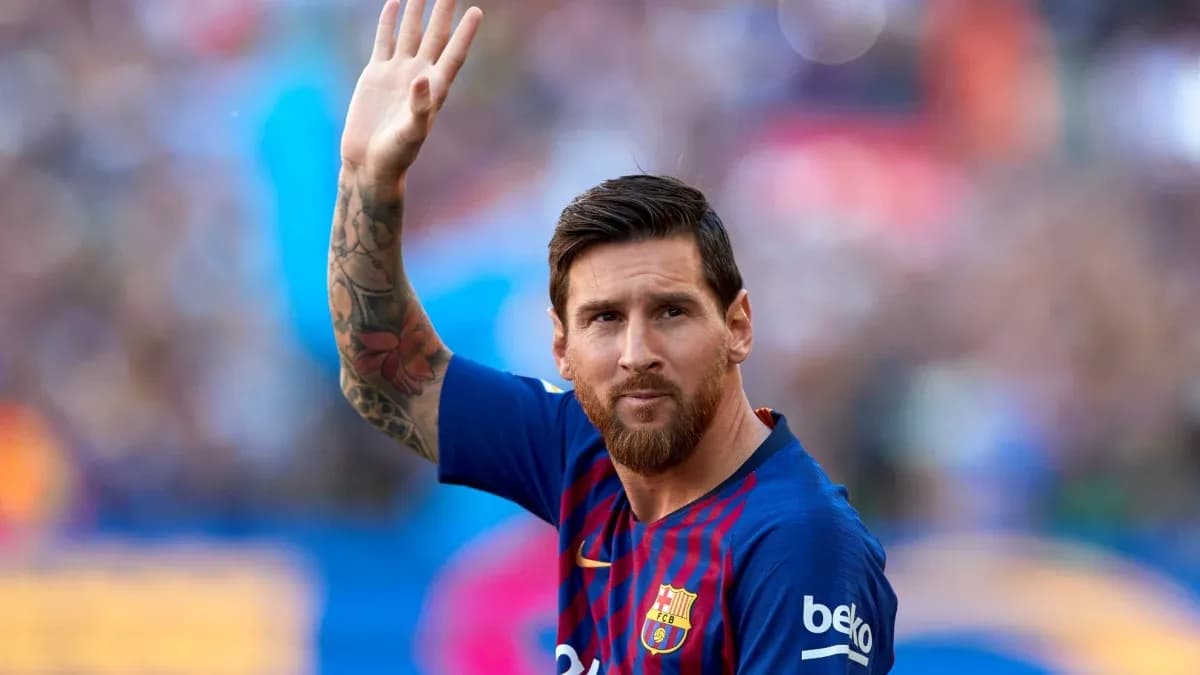
Leo Messi’s shadow still stretches across Barcelona. Every debate about what this Barça is, and what it might become, eventually circles back to the night he walked out of the Camp Nou for the last time.
For Pepe Brasín, that departure is not just a wound in the club’s history. It is also the starting point of a necessary transformation — one he links directly to what he believes is now happening with the Los Angeles Lakers, LeBron James and Luka Doncic.
“For this Barça to be born, Messi had to disappear”
Brasín does not tiptoe around his premise. He starts from a position that feels almost sacrilegious and then builds his case.
“Barça today is much better than in the ‘late-Messi era’,” he argues. Then comes the nuance, crucial and unequivocal: “No one in their right mind is going to criticize Messi. Clearly, he is the best player of all time and, obviously, the best player in Barça’s history.”
The respect is absolute. The conclusion is ruthless.
“But, for this Barça, which is among us right now, to be born, Messi had to disappear.”
In his eyes, the club needed the end of an era to begin another. Not because Messi failed on the pitch, but because his sheer presence defined everything around him. Tactics, signings, dressing-room dynamics, even the emotional tone of the club. When one figure becomes the axis of the universe, everything else orbits in response.
That is the bridge Brasín uses to cross the Atlantic and land in Los Angeles.
LeBron as a “black hole” in purple and gold
To explain his theory, Brasín leans on an image every sports fan understands instinctively.
LeBron James, he says, is not just a superstar. He is a force of nature. “LeBron James, like all the giants of sport, has an almost infinite gravitational pull. He is almost a black hole in the middle of a galaxy, making all the other solar systems orbit around him.”
The point is not that LeBron plays badly. Quite the opposite. The problem, as Brasín frames it, is what happens to a franchise when one man becomes the gravitational centre of everything.
“There is a distortion factor that ranges from the purely pragmatic, the salary he earns, to the effect he has on his teammates, in the locker room, in how the team plays, in the press, and among the fans.”
Money, minutes, media. Style of play, hierarchy, expectations. All of it bends toward the star. Just as it did with Messi in his final years at Barça.
For Brasín, that kind of dominance eventually becomes a ceiling. You can tweak the pieces around it, you can change coaches, you can shuffle role players, but the project is always built around one sun. You don’t really start a new era until that sun sets.
A Lakers project drawn around Luka Doncic
This is where his analysis sharpens. In his view, the key change in Los Angeles has come with the absence of LeBron and the decision to build a project tailored to Luka Doncic.
Without that overpowering gravitational field, Brasín believes the Lakers have been able to sketch a cleaner blueprint: a roster constructed to maximise Doncic’s qualities, his rhythm, his angles, his decisions. The Slovenian is no longer just a star dropped into an existing structure; he is the reference point around which the structure itself is designed.
The shift is not only on the court. Brasín highlights Doncic’s growing influence in the corridors of power. He notes that the guard has been involved in sporting decisions alongside the coach and the general manager, a role he considers essential to understanding the franchise’s new direction.
This is not the old model of a veteran star dragging a team along on reputation. It is a franchise handing the keys to a player and saying: we build this with you, not just for you.
When the godfather steps aside
That is the thread tying Messi’s Barça and LeBron’s Lakers together in Brasín’s mind: the idea that the greatest figure, the “godfather” of a project, can eventually block the door to the future simply by being too big, too central, too definitive.
Sometimes, he insists, the only way to unlock that future is for the giant to step away.
“Sometimes the great star, the great godfather, needs to disappear in order to keep building the future, to make a better team.”
It is a harsh truth in the age of legends and lifetime banners. But it is also the cold logic of elite sport: no matter how bright the star, the next era only truly begins when its light no longer blinds everything else.