
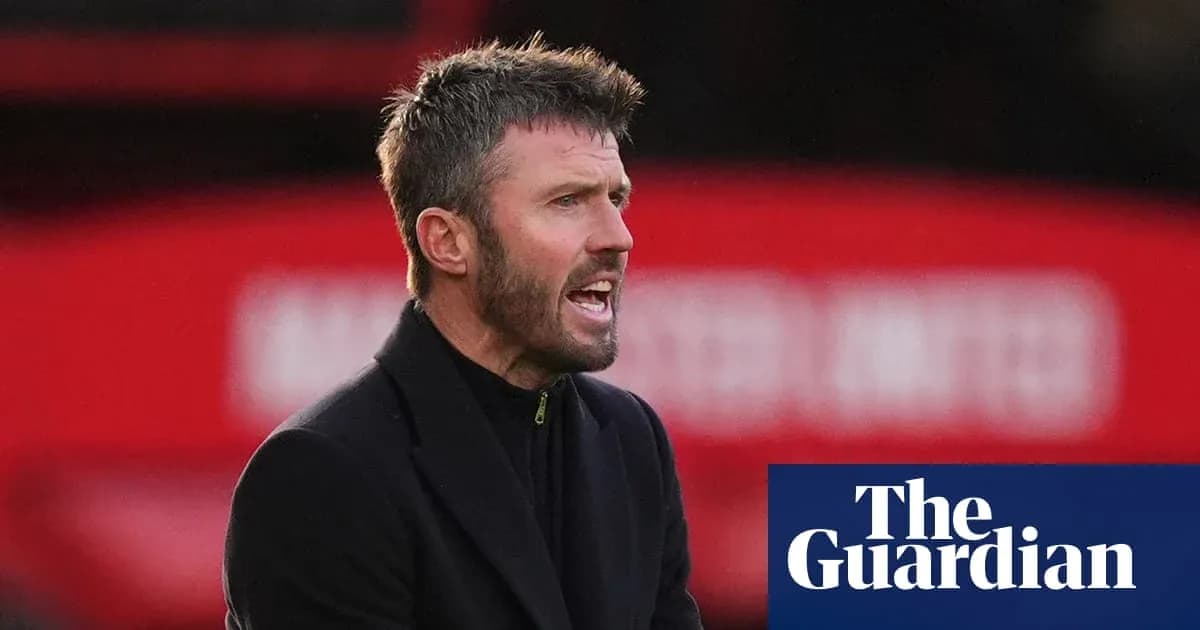
Michael Carrick Faces Hard Truths at Manchester United
Michael Carrick has admitted to a week of “hard truth” at Manchester United, revealing a series of uncomfortable talks with the club’s hierarchy and his players as the pressure around him intensifies.
United travel to Chelsea on Saturday without a win in eight games, marooned in 16th place and hovering just a point above the relegation zone. The numbers are brutal, the mood even more so. Last weekend’s 3-0 home defeat by Bournemouth pushed Carrick’s position to the brink, but the club has, for now, stopped short of pulling the trigger and handed him the chance to arrest the slide.
Hard truths at the top
Carrick did not pretend this has been business as usual. He indicated he has held frank discussions with director of football Jason Wilcox and chief executive Omar Berrada as the club grapples with a start that has shaken confidence on and off the pitch.
“It’s pretty clear, it’s not always rosy and nice conversations between anyone, whether that’s between me and the players, whether that’s between me, Jason, Omar or the owners,” Carrick said. “It’s the truth, it’s the hard truth at times and it’s what we need to move forward. Whatever we need to move forward, we will do.”
Those words frame the reality: nothing is off the table, no one is shielded. Carrick is fighting for his job while trying to protect a dressing room already under heavy fire.
Applause for the manager, boos for the team
The fracture lines were visible at Old Trafford on Sunday. After the final whistle against Bournemouth, Carrick walked the pitch alone, applauded by supporters who sang his name even as the scoreboard glared back at them. As he disappeared down the tunnel, the mood turned. The cheers for the manager gave way to loud boos aimed squarely at the players, whose performance and perceived lack of effort infuriated the crowd.
Carrick admitted the experience left him conflicted.
“I’ll be totally honest, it was mixed feelings for me,” he said. “To have the appreciation from the supporters and that connection and that respect is something I feel strongly about.
“It wasn’t a nice situation but to feel that was important, of course, but it didn’t make me feel better in the fact that I’m with the players 100% and we’re all in it together. I’ve told the players that, I’m happy to say that.
“I didn’t feel comfortable being in any way, shape or form, a separation from that. That’s my group, my players and this is my football club so we have to all be in it together, and that’s the supporters included. As hard as it is at the moment, I totally get that, I get their feelings, but when we get through this then we’ll be a lot stronger as a whole.”
The message is clear: he refuses to stand apart as the “good guy” in front of a bad team. Public backing from the stands might help him survive, but he knows it can also drive a wedge between manager and dressing room. He is trying hard to stop that crack from widening.
Inside the camp, he insists, the players are “hurting” but “hungry” to put things right. Whether that pain translates into performances at Stamford Bridge will define how long this project lasts.
Neville’s jab and Carrick’s shrug
As if the league table and the boos were not enough, the squad’s professionalism has also been dragged into the spotlight. On his podcast this week, Gary Neville questioned the habits and discipline of some United players, accusing them of falling short of elite standards.
“I’ve got no time for them,” Neville said. “There’s a few of them that don’t go to bed at the right time. Don’t eat the right things.”
In another week, such a broadside from a club legend might have triggered a lengthy defence or a carefully constructed rebuttal. Carrick opted for something else: a laugh and a line.
“Gaz says a lot of things,” he replied, brushing away the storm with a smile.
Behind the humour sits a serious backdrop. The scrutiny is relentless, the margin for error gone. United head to Chelsea with their manager still in place, his authority tested but not yet broken, his belief in his players publicly intact.
Now those players have to show, in 90 minutes under the lights, whether that loyalty is deserved or dangerously misplaced.





