
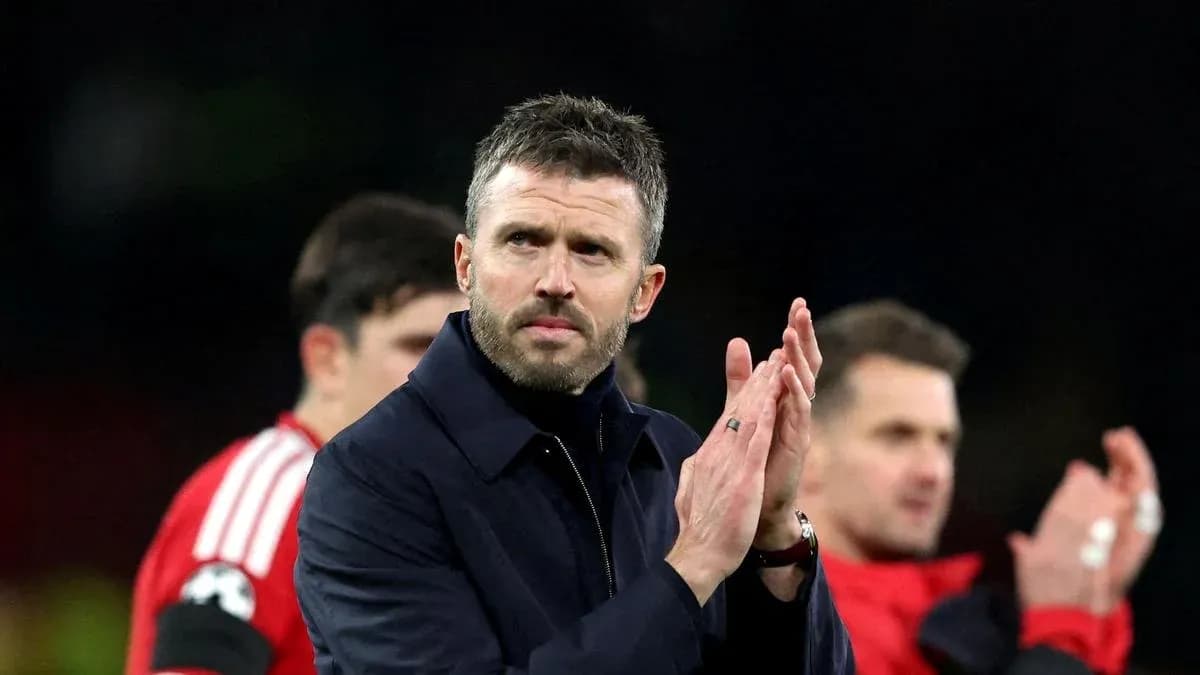
Michael Carrick's Last Stand as Manchester United Manager Against Aston Villa
Michael Carrick stands on the touchline again this weekend knowing it may be for the last time as Manchester United manager. Roma bought him time. Aston Villa might decide his future.
The midweek Champions League comeback, a wild 3-2 win from 2-0 down, dragged Old Trafford from mutiny to mayhem in the space of 45 minutes. It also snapped a grim run of nine games without a victory, United’s worst sequence since 1988/89. The noise on Tuesday night felt like the old place again. The noise around Carrick’s position has not gone away.
United walk into Sunday’s meeting with Villa under a stark threat: by kick-off, results elsewhere could leave them bottom of the Premier League. That is the brutal context to the euphoria of Roma. One stirring European night has not erased months of drift.
At half-time against the Italians, Carrick looked a dead man walking. His players trudged off two goals down and out of ideas, the atmosphere sour and flat. Then the game flipped. United found urgency, Old Trafford found its voice, and Matheus Cunha found the net twice late on to complete an unlikely rescue act.
It felt like a stay of execution rather than a full pardon.
The international break looms immediately after Villa’s visit, and with it a natural pause for the club’s hierarchy to weigh their options. Carrick is fighting not just for points, but for the right to convince those above him that this is a project worth persisting with, not another false dawn in a decade full of them.
Across the technical area will stand a man whose name has already been whispered in the corridors of Old Trafford. Unai Emery, the meticulous Spaniard who has reshaped Villa in his own image, had been floated as a potential candidate for the United job. Reports now indicate he is close to signing a new deal in Birmingham, a development that would shut one intriguing door just as another might be creaking open.
Villa arrive with stability, structure and a coach whose stock keeps rising. United bring jeopardy, emotion and a manager coaching with the clock ticking loudly in his ear. It is not just a league fixture; it is an audition, a referendum, and possibly a farewell rolled into one.
While United wrestle with their identity, Manchester City confront a different kind of pressure. Pep Guardiola’s side travel to Nottingham Forest trying to avoid a third straight league defeat, an almost unthinkable scenario for a team that has turned relentlessness into an art form.
City know the cruel twist to this title race: even if they match Arsenal stride for stride, it may not matter. The club is still waiting to learn its punishment after being found guilty of more than 100 breaches of Premier League financial rules. A heavy points deduction hangs over everything, an asterisk in waiting.
On the pitch, though, the equation is clear. Arsenal look like the only serious rival in the title picture, and both they and City, on paper, have assignments they would expect to navigate. But paper can lie.
City’s trip to the City Ground carries more danger than the table suggests. Nottingham Forest, under Oliver Glasner, sit far lower in the standings than their performances deserve. Opta’s “expected points” model has Forest in third place, a staggering 16 spots above their actual position. The numbers paint a picture of a team far sharper than their league ranking implies.
So City walk into a forest that is statistically far denser than it appears, trying to steady a wobble while the threat of off-field sanctions lurks in the background. United, a short drive away across the northwest, face Villa with their own storm clouds gathering.
Two giants, two different crises, one pivotal weekend.





