
Michael Carrick Faces Manchester United's Managerial Curse
The cycle that eventually swallows every Manchester United manager since Sir Alex Ferguson has claimed another victim. This time, it has Michael Carrick by the throat.
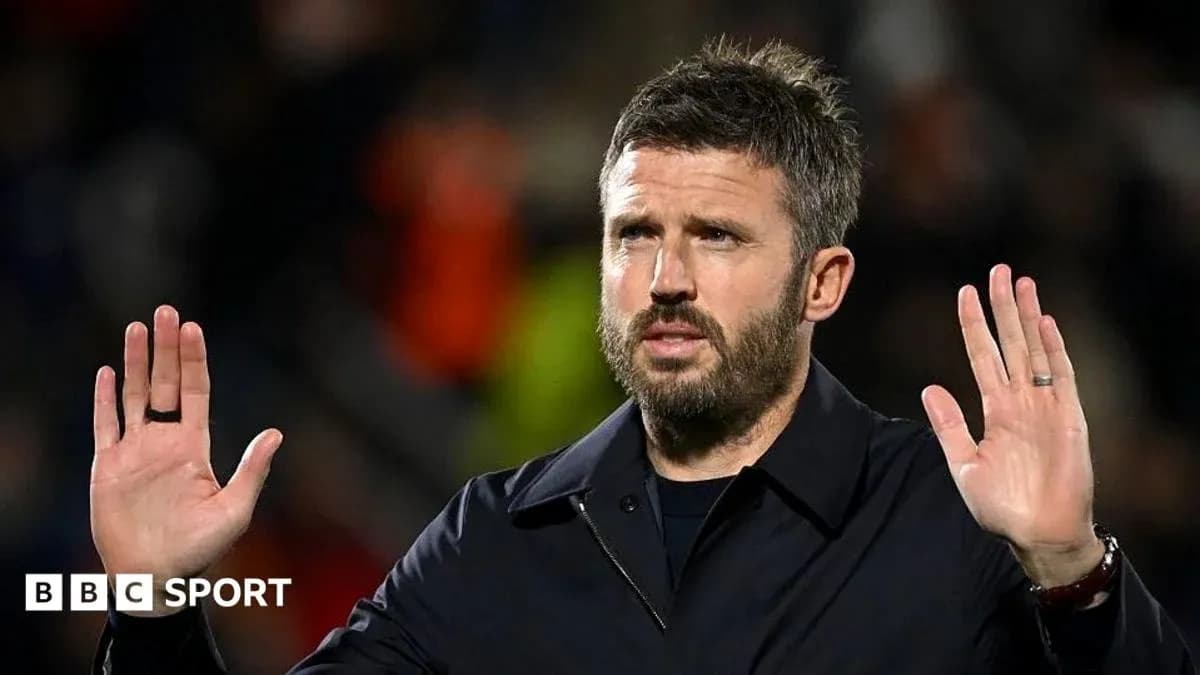
On a grim Champions League night in Como, Carrick replayed a scene that has become part of United’s post-Ferguson folklore. Arms raised in apology. Eyes fixed on an away end that had just watched their team concede four. Again. The scoreline – 4-1 – was the same that ended Ole Gunnar Solskjaer’s reign at Watford in November 2021. The gesture was the same. The mood, if anything, darker.
Carrick is the seventh full-time manager since Ferguson walked away in 2013, leaving behind 38 trophies and a standard no one has come close to matching. They have all had their moments. Louis van Gaal with the FA Cup. Jose Mourinho with the League Cup and Europa League. Erik ten Hag with that seismic FA Cup win over Manchester City in 2024. But the ending never changes.
They all get sacked.
A club that chews up its managers
Carrick will need something extraordinary to break the pattern. Results are poor. The dressing room is fractured. Lisandro Martinez has publicly taken aim at director of football Jason Wilcox after the defeat at Atletico Madrid. Bruno Fernandes has questioned the tactics in Como. When the players start talking like that, the manager usually doesn’t last long.
It feels rotten at the core now, not just frayed at the edges.
So the questions come thick and fast. How many times can United point at the man in the dugout? How many times can a manager stand in front of those travelling fans and apologise, while the people who hired him slip back into the shadows? At what point does the spotlight stay fixed on the decision-makers, not the fall guy?
Because this is not just about Carrick. Or Ten Hag. Or Solskjaer. Or Mourinho. Or Van Gaal. Or David Moyes. Or Ruben Amorim. This is about a club that, for more than a decade, has lurched from one big idea to the next and watched every one of them collapse.
United have tried the anointed successor in Moyes. The methodical tactician in Van Gaal. The serial winner in Mourinho. The romantic return of a club legend in Solskjaer. The modern systems coach in Ten Hag. The rising star of European coaching in Amorim. They have even sprinkled in interim spells for Ryan Giggs, Ralf Rangnick, Ruud van Nistelrooy and Darren Fletcher.
Every route has led to the same dead end.
The unmanageable club?
The trophies since Ferguson tell their own story. One FA Cup under Van Gaal. A League Cup and Europa League double under Mourinho. Another FA Cup under Ten Hag. For a club that once measured seasons by league titles and Champions League runs, this is thin gruel.
United did not suddenly become dysfunctional in the last year or two. This has been a slow-motion collapse, rooted in the botched succession to Ferguson and the vacuum that followed. The club’s hierarchy have been chasing ghosts ever since.
At various points, Carlo Ancelotti, Pep Guardiola and Jurgen Klopp were all working within 35 miles of Old Trafford. None of them were at United. Ancelotti took Everton. Guardiola chose Manchester City. Klopp rebuilt Liverpool. United, by contrast, went for Solskjaer – a feelgood caretaker turned permanent manager, appointed more on emotion than evidence. He didn’t make three full seasons.
Now Carrick looks like Solskjaer all over again.
A former fan favourite. A respected figure inside the club. A man who steadied the ship in a temporary spell. But his previous full-time managerial job ended in the sack at Middlesbrough in the Championship. Solskjaer arrived with the same baggage, having been dismissed by Cardiff City in 2014 as they floundered in the second tier.
United have circled back to the same mistake: the comfort appointment. The familiar face. The man who buys time with goodwill rather than a proven record at this level.
Which leads to the brutal question: has it ever felt worse than this? Less hope, lower morale, more apathy? In the Ferguson years, crisis was measured in weeks. Now it feels permanent.
No longer the irresistible job
United will always be able to find a manager. The badge still carries weight. The stadium still inspires. The history still dazzles. But they no longer get first pick of the world’s elite coaches. The job now comes with a warning label.
Any top-level manager looking at Old Trafford sees a squad that needs major surgery, a fanbase on edge, and an ownership structure that has consistently made the wrong calls. Without huge investment and a clear plan, even the best might struggle to impose order on the chaos.
Carrick stands at the front of house, taking the flak. On current evidence, he will pay with his job. He is the soft choice made after a return to the Champions League, the reassuring presence for supporters that has been stripped away by results and rancour.
The blame lies far higher.
Ratcliffe, the Glazers and a decade of drift
The Glazers have been targets of supporter anger since their leveraged takeover in 2005 loaded debt on to the club. They have stayed put through protests, walkouts and banners, rarely flinching.
Sir Jim Ratcliffe’s arrival as part-owner was supposed to mark a new era. Instead, many fans have simply extended their fury to include him. His decision to go into business with the Glazers has not been forgiven easily.
Ratcliffe has made it clear he wants football people to make football decisions. Jason Wilcox and chief executive Omar Berrada are supposed to be the ones shaping the future. Yet instability has only deepened on his watch.
United were ready to sack Ten Hag before the FA Cup final against City. He won. He stayed. He then received a contract extension and around £200m to reshape the squad. Six months later, he was gone, at a cost of more than £10m in pay-offs for him and his staff.
It was an expensive miscalculation – financially and in football terms.
The sporting director saga was no better. Dan Ashworth arrived in July 2024 with a reputation as one of the sharpest operators in the game. He left five months later after a behind-the-scenes disagreement. His time on gardening leave waiting to join from Newcastle United almost matched his time actually working for United.
Inside the club, the whispers were that Ashworth carried the can for Ten Hag staying. Others said he clashed over the direction of the next appointment, reportedly preferring English candidates such as Graham Potter or Gareth Southgate, while the club’s powerbrokers pushed hard for Amorim.
United landed Amorim, whose rigid devotion to a 3-4-3 system had already put off Liverpool, who turned to Arne Slot instead. That tactical obsession undermined him in Manchester as well. He lasted 14 months, leaving with a stinging parting shot at the hierarchy and a bitter confrontation with Wilcox.
By the time Carrick walked through the door, morale inside Old Trafford was already low. Ratcliffe’s aggressive cost-cutting had triggered staff departures and deep unease. The club’s decision to launch a ticket-touting investigation in the summer only inflamed an already restless fanbase. United later admitted they had misjudged the scale of account-sharing among supporters and softened some of their threats over season-ticket confiscations, but they stood by the investigation itself.
On the pitch, the football has been flat. Off it, the mood has been sour.
Money, concrete and a poisoned cocktail
Ratcliffe promised to sharpen United’s finances. The numbers are mixed. Overall debt still stands at £1bn, even after the cost-cutting. Yet United have posted record revenue of £678m and a £23m operating profit, despite missing out on European football for the first time in a decade. That is a dramatic swing from the £113m loss in 2023-24.
The club has also spent £64m on land for a new stadium. Ratcliffe wants that project – a proposed 100,000-capacity arena with an estimated price tag north of £2bn – to be his legacy. Berrada insists the plan is on track.
But bricks and mortar do not fix a broken football operation.
Right now, United are defined by a cocktail of bad decisions, short-term thinking and a playing squad that reflects years of drift. The clubs they once measured themselves against are now vanishing into the distance.
The question is no longer just who manages Manchester United next. It is whether anyone, under this structure and this leadership, can actually manage them at all.





