Mixed Martial Arts Makes Asian Games Debut in Nagoya
NAGOYA — Once derided in the United States as “human cockfighting” and chased out of television schedules, Mixed Martial Arts has walked through the front door of respectability in Asia. This week in Japan, it steps onto one of sport’s biggest regional stages with its Asian Games debut — and the people behind it are already looking beyond Nagoya, towards the Olympic rings.
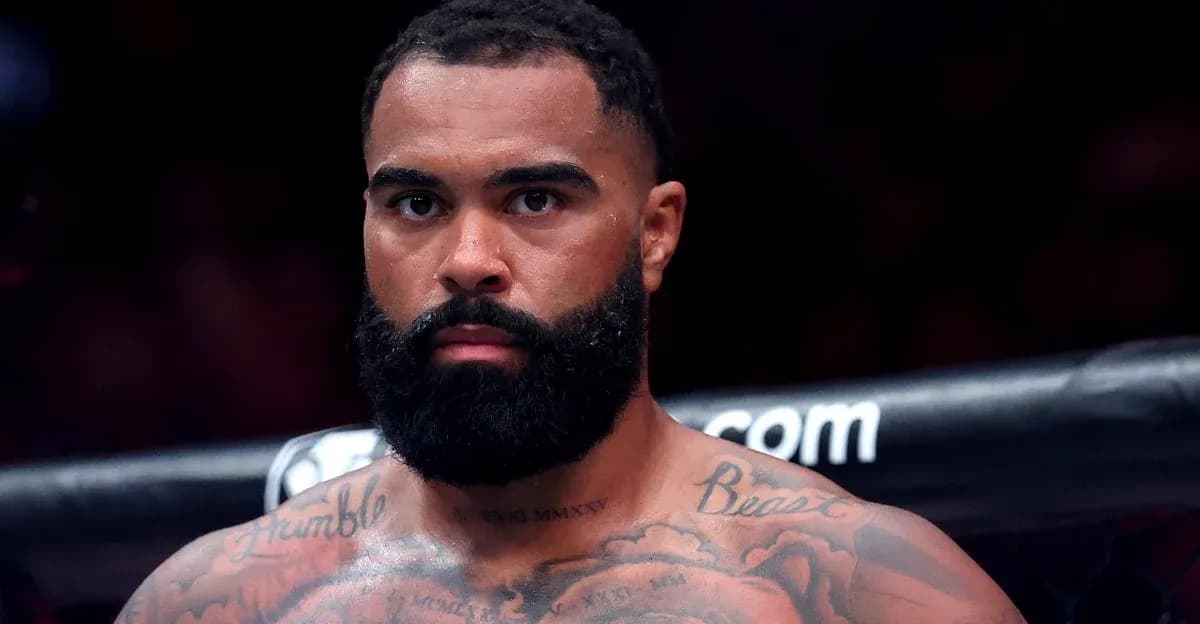
For Galastein Tan, director general of the Federation of International Mixed Martial Arts, this isn’t just another tournament. It is a marker.
“Being at the Asian Games is a big step,” he said, outlining what that really means in the language that matters to Olympic decision-makers: governance, membership, structure. A sport does not reach a continental multi-sport event by accident. It has to prove it can organise itself, regulate itself and fill a bracket with serious athletes, not curiosities.
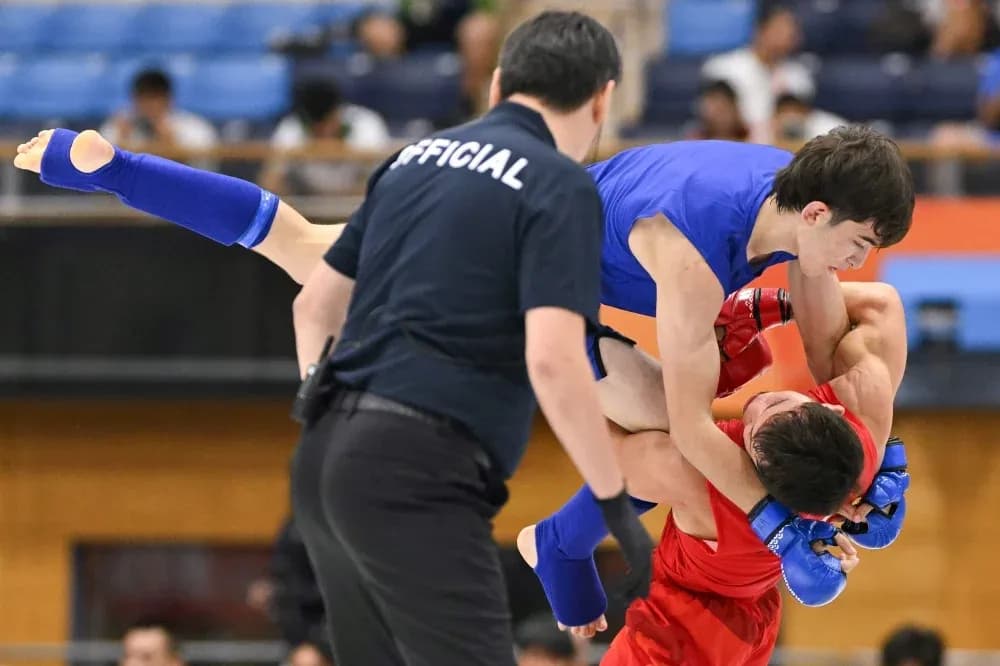
Inside a compact gym that feels more like a school sports hall than a grand arena, that seriousness is on show. Men and women compete in separate categories, trading strikes and grappling exchanges in front of a modest crowd that makes up in noise what it lacks in size. Flags and tracksuits tell their own story: Thailand, Kazakhstan, the Philippines, Japan. Nations that have produced champions in boxing, wrestling, judo and Muay Thai now feed a new discipline.
For fans raised on the spectacle of the Ultimate Fighting Championship, the scene looks familiar but not quite the same.
The fighters wear the same intensity. The combat is still unforgiving. But there is no cage.
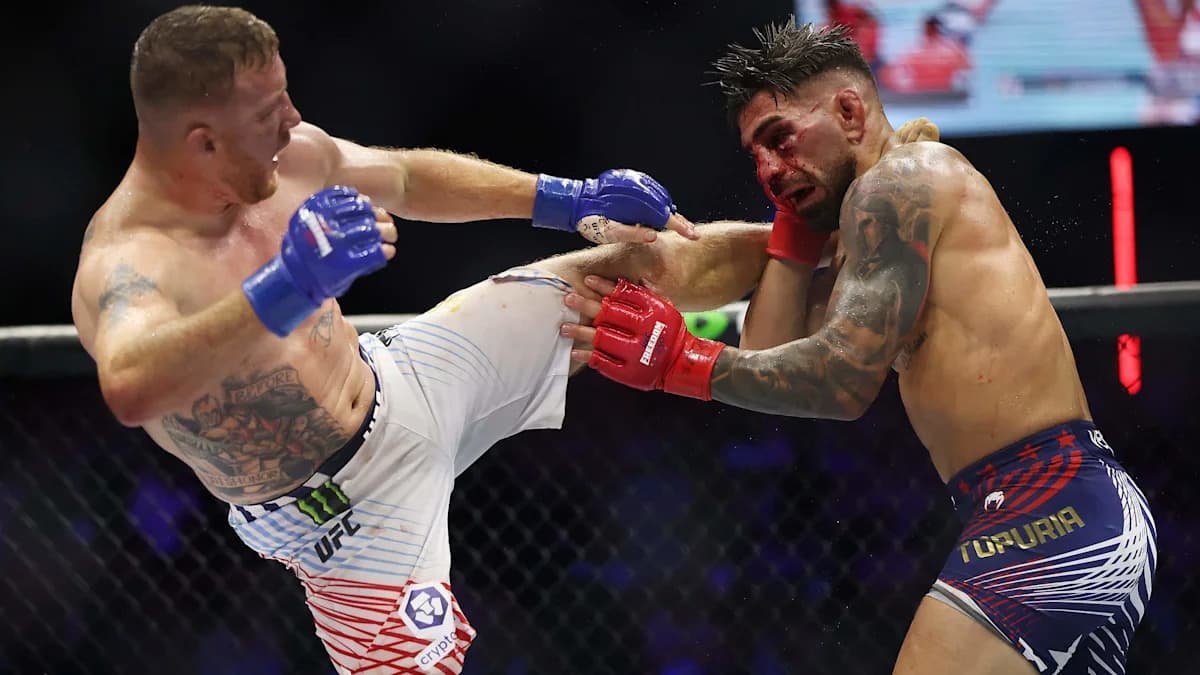
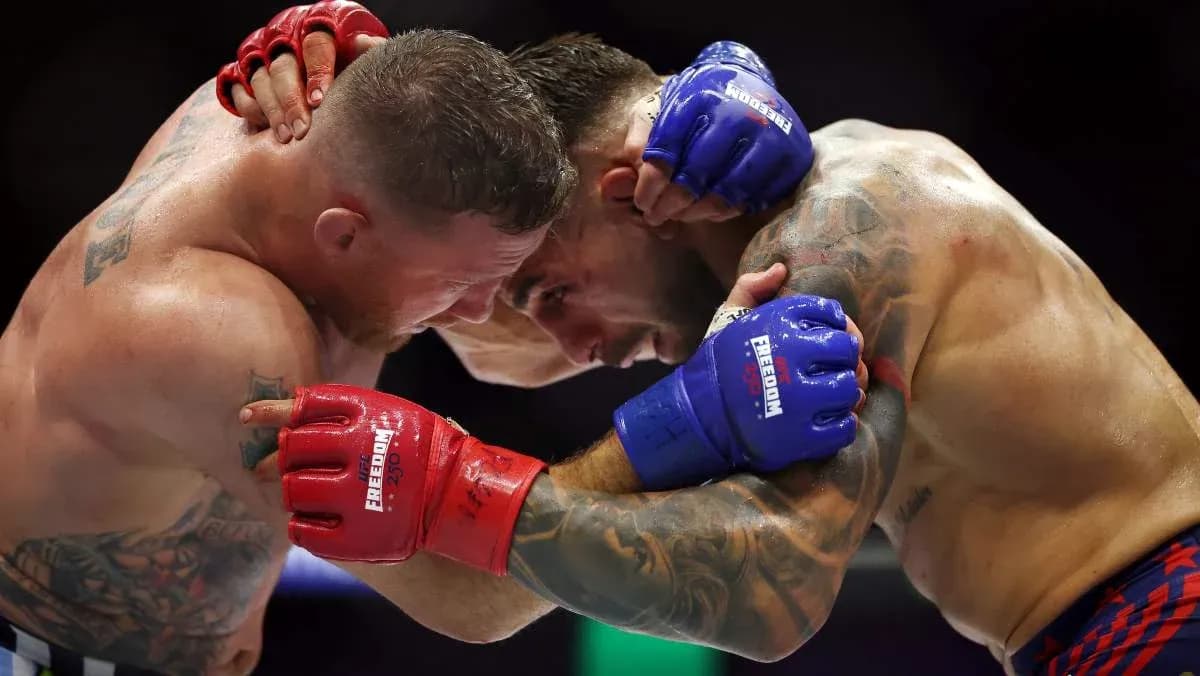
In UFC events — including the high-profile show staged on the South Lawn of the White House in June — the action unfolds inside a caged octagon that has become an emblem of the sport. Here at the Asian Games, athletes fight on a white and grey mat, with open space instead of fencing.
For many, that changes everything. Cage craft — pressing an opponent against the fence, using it to stand up, to trap, to corner — is a skill set in itself. Take away the fence and fighters must adapt, both tactically and mentally.
Tan is blunt about why that change matters. A cage, he said, “does not really align with Olympic values.” If MMA is to ever join the Olympic programme, the sport has to look and feel like it belongs alongside judo, boxing and taekwondo, not like an outsider crashing the party.
That is only one piece of the puzzle. Another is even harder: getting the fractured world of MMA to agree on a single ruleset that can be sold to the International Olympic Committee. What is legal? What is not? How are fights scored? Who oversees safety? Every answer has consequences for athletes, promoters and national federations.
On the mat in Nagoya, the debate feels distant. For fighters such as Singapore’s Teo Hui Hoon, who is already guaranteed at least a silver medal, the impact of Asian Games status is immediate and personal.
“I think it will grow the talent pool a lot,” she said. A simple point, but a crucial one. Recognition at this level gives young athletes something concrete to chase. “It will encourage more children and teenagers to take up the sport and take it seriously. Because now there’s a clear pathway, right? You can join a national team, the next step you can go to the Olympics.”
That word — pathway — is what every emerging sport craves. It turns a hobby into a career, a niche into a system.
MMA is not alone in trying to walk it. Teqball, the acrobatic hybrid of football and table tennis, is also making its Asian Games debut. So is padel, the fast-growing racquet sport that has exploded in popularity from Europe to the Middle East. All three are jostling in the same crowded lobby, waiting for the IOC to open the door a little wider.
The reality is unforgiving. Dozens of sports want in. Only a few will make it.
Tan knows that. His optimism is not naïve; it is strategic. “We have been in talks with the IOC and other relevant stakeholders that have influence or decision on the recognition,” he said, describing the slow, often opaque process of lobbying, presentations and quiet persuasion that sits behind every new Olympic discipline.
MMA does have one heavyweight ally: Dana White. The UFC president has long championed the idea of Olympic MMA, and his organisation’s global reach has dragged the sport from the margins into the mainstream. The days when US senator John McCain could dismiss early MMA as “human cockfighting” and see it pushed off American television are gone. The sport now sells out arenas, commands huge broadcast deals and produces crossover stars.
Yet the image problem has not completely disappeared. For some in the Olympic world, MMA still looks too violent, too raw, too far from the carefully framed traditions of amateur sport. Tan and his colleagues must convince them that a regulated, amateur-focused version can sit comfortably within the Olympic movement, with strict medical protocols and a clear distinction from the blood-and-hype of pay-per-view cards.
There is also the question of who, exactly, speaks for MMA. Boxing’s long struggle with fragmented governance stands as a warning. For MMA to take the next step, it needs a single recognised international body that can deliver standard rules, anti-doping measures and event organisation across continents.
Time is another opponent. Los Angeles 2028 is already out of reach. The programme is set, the window closed. Brisbane 2032 looms as the next realistic target, but even that will demand years of groundwork.
Tan refuses to treat the timeline as a barrier. “Nothing is impossible,” he said, framing the pitch not just in terms of bureaucracy, but of relevance. MMA, he argues, connects with both adults and youth, cuts across cultures and already fills arenas from Las Vegas to Manila.
To him, it is “a sport which has global appeal and a sport that is ready and capable of fitting into a major Games schedule.” The message is clear: the infrastructure exists, the athletes are there, the audience is waiting.
So the federation keeps preparing as if the call could come at any time. “If the IOC or LA28 comes and say, MMA, would you like to be in as a medal sport or demo sport, we are ready,” Tan said.
For now, the sport’s Olympic dream lives in places like this small gym in Nagoya, where fighters from across Asia trade blows on an open mat, under bright lights and hopeful eyes. If MMA does one day march into an Olympic opening ceremony, they will be able to say it started with days like these — not in a cage, but on a stage built for the Games.