The Forgotten Rivalry That Shaped Lightweight Boxing's Golden Era
Three Hall of Famers, Ten Fights, and 109 Rounds: A Rivalry Lost to Time
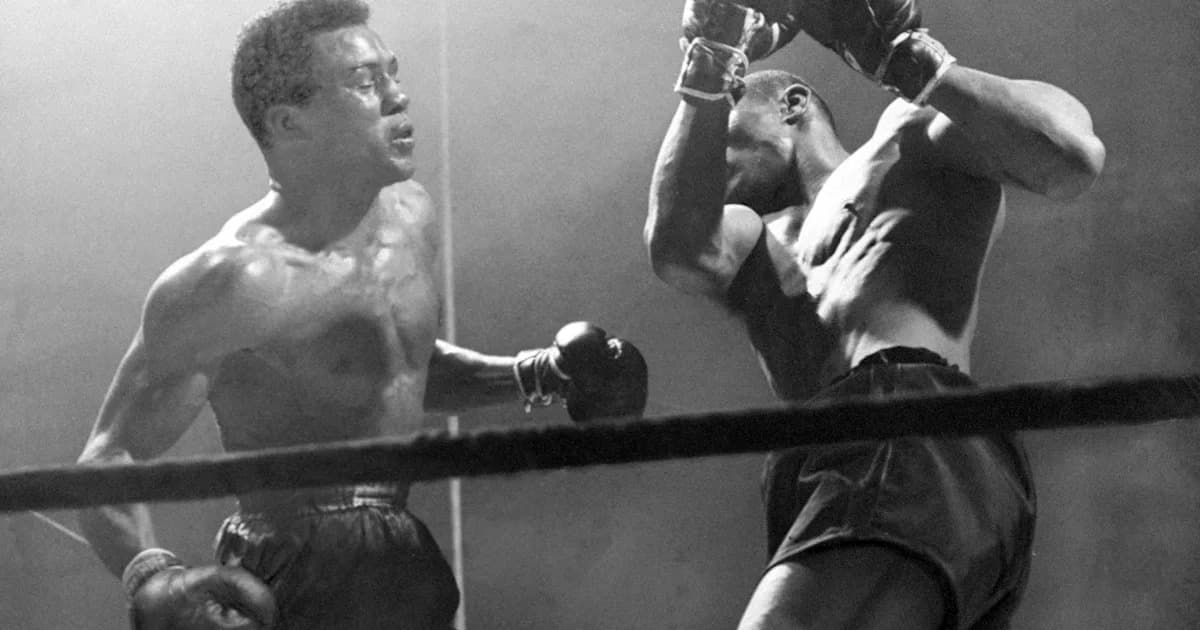
In the 1940s and 1950s, lightweight boxing thrived thanks to a fierce rivalry involving three legends: Bob Montgomery, Beau Jack, and Ike Williams. These fighters weren’t just champions; they repeatedly faced off, pushing each other through ten intense bouts spanning over 109 rounds. Their battles became a defining chapter of boxing’s golden era.
The Contrast with Today’s Lightweights
Recently, attention surrounded the so-called Four Princes — Ryan Garcia, Gervonta Davis, Teofimo Lopez, and Devin Haney — all promising lightweight talents expected to clash repeatedly. Yet, they've only met twice in the ring: Davis knocked out Garcia in April 2023, and Garcia initially beat Haney before that result was overturned due to a failed drug test. Now, most of them fight at welterweight, and it seems unlikely they’ll face each other again, hindered by politics and ego.
By contrast, decades ago, three future Hall of Famers routinely risked everything against one another to prove who was best at 135 pounds.
Origins of the Three Champions
- Bob Montgomery: Born in 1919 in Sumter, South Carolina, he moved to Philadelphia at 15, working in industrial laundries while training at a tough gym nicknamed The Slaughterhouse. Managed by Joe Gramby, a notable Black boxing figure, Montgomery earned the nickname "The Philadelphia Bobcat" for his relentless forward style.
- Beau Jack: Born Sidney Walker in 1921 in Waynesboro, Georgia, he lost his mother young and was raised by his grandmother in Augusta. As a child, he worked shining shoes at Augusta National Golf Club and fought in brutal Battle Royales. Supported by golf legend Bobby Jones, he transitioned from shoeshiner to boxer.
- Ike Williams: Hailing from Brunswick, Georgia, in 1923, Williams moved to Trenton, New Jersey, after his parents separated. Known as the Trenton Tornado, he boxed under former fighter Jesse Goss and excelled in multiple sports during high school.
All three shared difficult upbringings during the Depression, turning to boxing as a way to survive and support their families.
Fighting Styles According to Bert Sugar
- Beau Jack: Ranked #52 among boxing greats by historian Bert Sugar, Jack attacked like a wild pinwheel, using unorthodox punches from all angles, gradually wearing down opponents.
- Ike Williams: Standing 5-foot-9, tall for a lightweight, Williams was a boxer-puncher with a devastating right hand and quick left jab, ranking #60 on Sugar's list. His powerful combinations left adversaries defenseless.
- Bob Montgomery: Not ranked by Sugar but respected for his aggressive approach, he was known for ceaselessly moving forward and applying pressure, earning his "Bobcat" nickname.
A Decade of Intense Battles (1943-1955)
These three fought 10 times over 12 years, including five title fights. Their encounters drew huge crowds and showcased raw skill and heart.
- May 21, 1943, Madison Square Garden: Montgomery won a hard-fought split decision over Jack, knocking him down once and capturing the NYSAC lightweight title in front of 18,000 fans.
- November 19, 1943, same venue: Jack, guided by trainer Larry Amadee, adopted a close-quarter strategy and regained the title by unanimous decision after 15 grueling rounds.
- January 25, 1944, Philadelphia: Montgomery ended Williams’ 34-fight unbeaten run with a knockout in the final round, a punishing victory fueled by personal motivation.
- March 1944: Just weeks after suffering a stunning first-round knockout loss to Al Davis, Montgomery rebounded to defeat Jack by split decision in their third meeting.
- August 4, 1944: In their fourth bout, Jack won a close majority decision in a 10-round non-title fight, with proceeds supporting the war effort.
- August 4, 1947, Philadelphia’s Municipal Stadium: In front of 30,000 fans, Williams knocked Montgomery down twice en route to a decisive victory and undisputed lightweight championship.
- July 12, 1948, Shibe Park: Williams defended his title in a savage battle, stopping Jack with relentless body shots and forcing the referee to intervene.
- 1951: Williams won a split decision over Jack in a controversial 10-round fight booed by many fans.
- 1955: Their final two fights ended in a draw and a ninth-round stoppage in Augusta, Georgia — fittingly both men's home state.
Legacy of the Trio
Across their ten fights, only three ended early, showing how evenly matched these warriors were. Williams led their head-to-head with four wins, one loss, and one draw; Montgomery had three wins and three losses; Jack earned two wins, five losses, and one draw.
Their true mark wasn’t just in the numbers but in their courage to continually face each other despite the brutal toll. That relentless spirit forged lasting legacies and Hall of Fame careers.
Maybe today’s lightweights like Garcia, Davis, Lopez, and Haney could learn from this trio’s willingness to take on the toughest challenges — especially each other — if they want to be remembered like the greats of the past.