Morocco vs Spain: Political Battle for 2030 World Cup Final
The battle to host the 2030 World Cup final has moved well beyond the pitch and into the political arena, with Morocco’s prime minister publicly rebuking his own federation chief as Spain pushes hard to claim football’s biggest game.
The tournament, to be co-hosted by Morocco, Spain and Portugal, already has a unique shape. The opening three matches will be staged in Uruguay, Argentina and Paraguay to mark 100 years since the first World Cup. Everything after that, though, remains up for grabs – including the showpiece final.
And that is where the tension has erupted.
Prime minister reins in federation chief
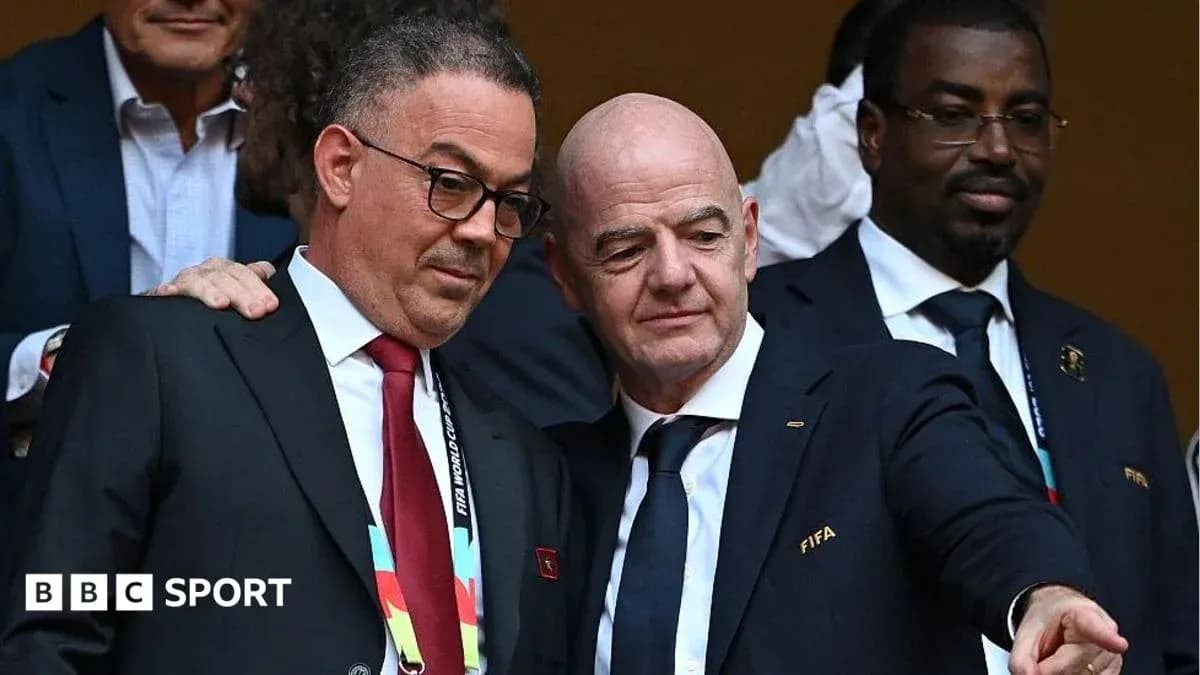
Fouzi Lekjaa, the powerful president of the Moroccan football federation (RMFF), recently stood at a political party event and declared that Casablanca would have the “honour” of staging the final. It was a bold statement. Too bold for his own government.
At a rally, Morocco’s prime minister Aziz Akhannouch cut through the optimism with a sharp warning aimed directly at Lekjaa.
“Do not offer to host the big final game in Morocco while we still have not discussed the matter with our allies, Spain and Portugal,” he said, making clear that the federation boss had raced ahead of diplomatic reality.
He did not stop there. Akhannouch called for “respect” and accused those making such promises of using “electoral” tactics, saying: “Stop using electoral promises to pull the rug out from under us. These are huge matters. Deciding where the final will be held is a major issue.”
The message was unmistakable: the World Cup final is not a domestic bargaining chip. It is a geopolitical prize that must be negotiated, not announced.
Spain turns up the volume
While Morocco deals with its internal row, Spain has been anything but shy. Rafael Louzan, president of the Spanish football federation (RFEF), has already gone on record saying the final will be held in Spain – and believes recent success has tipped the scales in their favour.
“Even though no decision has been taken, I believe Spain is the place because it cannot be any other way,” he told Cadena SER radio station. “As you know, we are currently world champions.
“I believe Spain’s organisational capacity for major events is beyond question and that is why reality dictates that the grand final cannot and must not be held anywhere other than in Spain.”
Spain beat Argentina to win this year’s World Cup in July, adding fresh weight to Louzan’s argument that the reigning champions should stage the ultimate game on home soil.
The country also leans heavily on its infrastructure. Real Madrid’s revamped Bernabeu Stadium now holds 83,000 and has been refashioned as a multi-event arena, while Barcelona’s Spotify Camp Nou will reach a capacity of 105,000 once its renovation is complete. Two global giants, both ready-made stages for a final.
Morocco’s mega-project
Morocco, though, is not stepping quietly aside. The country is building a proposed 115,000-seat stadium, which would make it the largest football venue in the world. That figure alone sends a clear signal of intent.
For Casablanca and for Morocco as a whole, hosting the final would be far more than a footballing honour. It would be a statement of emergence, a showcase of African infrastructure on a scale the sport has never seen.
Lekjaa’s enthusiasm reflects that ambition, even if it has now drawn a public slap on the wrist from his own prime minister.
FIFA holds the cards
Through all the noise, one voice has stayed deliberately neutral. FIFA, world football’s governing body, has simply stated that “a decision will be made in due course.”
There is precedent for patience. New Jersey was only confirmed as host for the 2026 World Cup final in February 2024, two years before the tournament. The 2030 hosts may have to wait for a similar timeline while politics, stadium projects and federation lobbying all play out.
For now, the bid to stage the final has split into competing narratives: Spain, armed with a fresh world title and refurbished cathedrals of football; Morocco, promising the biggest stadium on the planet and a landmark moment for the continent.
The allies who won the right to host 2030 together now find themselves jostling for the one game that defines the entire tournament. The question is no longer whether they can deliver a World Cup – it is who will own its most coveted night.