Muhammad Mokaev's UFC Departure: A Contender's Confusion
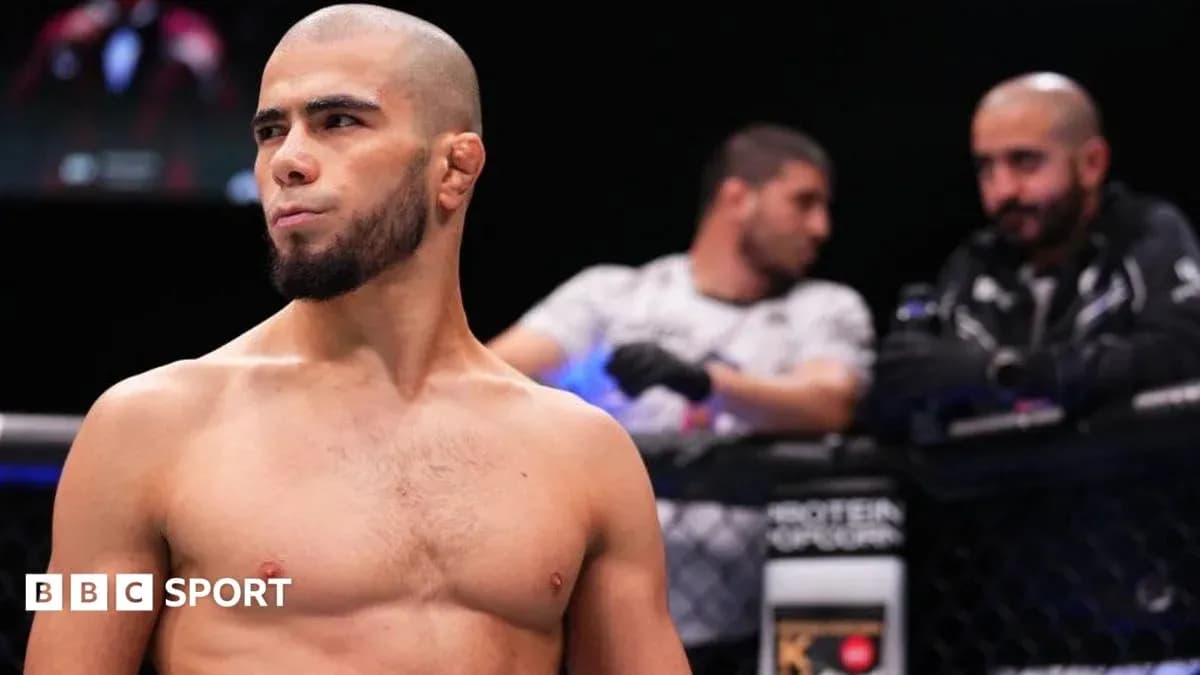
Muhammad Mokaev still doesn’t have an answer. Two years on, the question only gnaws harder.
How does a 7-0 contender in one of the UFC’s thinnest divisions get shown the door on the same night he beats a top flyweight and appears to be closing in on a title shot?
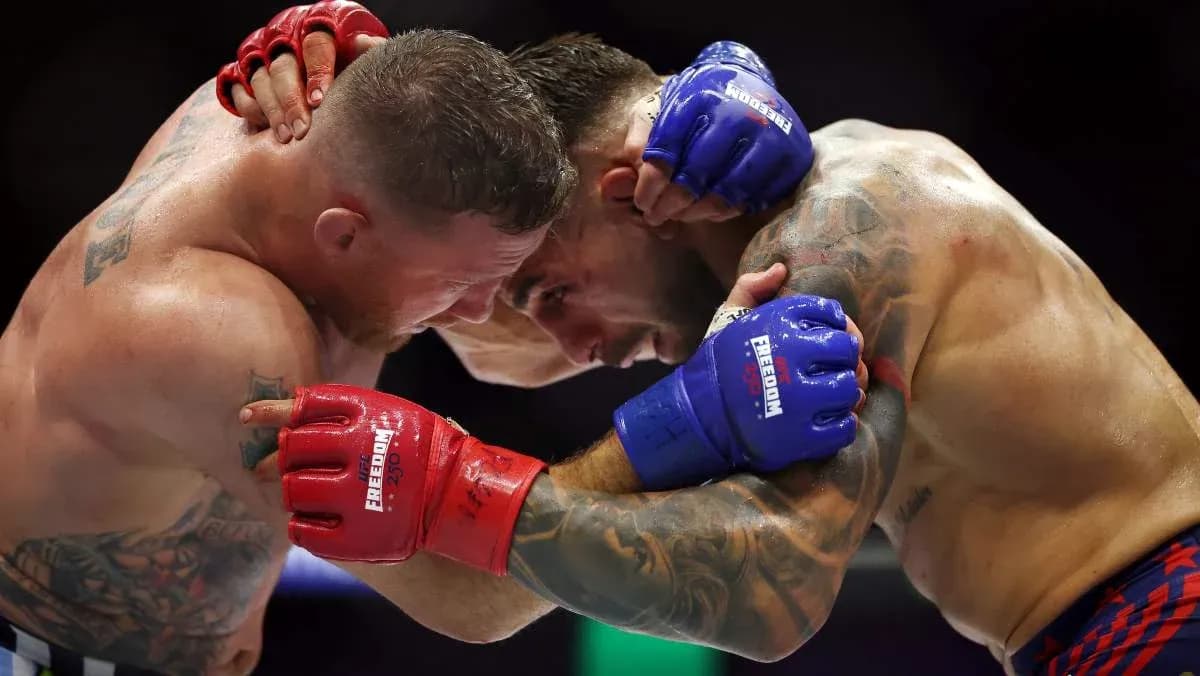
That’s the riddle that has followed the Russian-born Briton since July 2024, when he outworked Manuel Kape over three rounds at UFC 304 in Manchester. It was a clear unanimous decision, another step in a perfect start to his UFC career and, from the outside, the kind of win that usually propels a fighter toward a belt.
Instead, the promotion cut him loose.
From title trajectory to exit door
Mokaev walked into that week in Manchester as one of the most promising names at 125lb. Seven fights in the UFC, seven wins. A debut submission in 58 seconds. A grinding decision over Charles Johnson. A reputation as a relentless, suffocating wrestler with enough finishing instinct to separate himself from the pack.
The Kape fight looked like confirmation. What followed was a shock.
Later that night, UFC president Dana White announced the company would not be re-signing Mokaev. No slow fade, no step down the card, no public fall-out. Just a clean break from a fighter widely seen as a future title challenger.
Speculation rushed in to fill the silence. Had his behaviour in fight week – clashes with Kape at the hotel and again at the weigh-ins – finally pushed the UFC too far?
Mokaev rejects that idea outright.
“If we talk about behaviour, right – if I'm a bad guy, why would you let me fight seven fights and renew my contract twice?” he told BBC Sport. “If I'm a bad guy in the company and organisation, they would cut me after one or two fights.”
So if it wasn’t the scuffles, what was it?
‘Stop wrestling – we don’t want these decision guys’
The 26-year-old, who arrived in Britain as a 12-year-old refugee, believes the answer lies in his style.
He isn’t guessing in the dark. He says the UFC spelled it out to his team after that win over Johnson.
According to Mokaev, the promotion texted his manager: “He needs to stop wrestling – we don't want these decision guys.”
The message stunned him then. It stings even more now.
“I have around a 60% finish rate in the UFC. Four out of seven fights were finishes against top guys,” he said. “I don't know what else I need to do to show them – I was 21 when I was fighting these veterans and now I'm much better and much stronger.
“From 21 to 23, I beat all these guys. Even Manuel Kape, and he is ranked number two right now. I really don't understand the politics. I really don't know. I wish I knew the full story behind everything.”
For a fighter who had ticked the usual boxes – unbeaten run, youth, a strong grappling base, wins over ranked opponents – the silence from the UFC has been louder than any official explanation.
Two years of proving a point
Look at his schedule since that night in Manchester and one thing becomes clear: Mokaev has refused to disappear.
Eight fights in two years. Titles collected in Brave CF and ACBJJ. Opponents finished by chokes, body kicks, head kicks and punches. A body of work designed to make ignoring him uncomfortable.
Few flyweights on the planet have been more active. It still hasn’t moved the UFC matchmakers.
Hunter Campbell, Mick Maynard and Sean Shelby remain unmoved, at least publicly. Mokaev is even in a WhatsApp group with Campbell and Shelby, yet says every time he inches toward what he believes is the UFC’s threshold, that threshold shifts.
“Hunter made me a promise. They basically wasted two years of my life,” he said. “That's how I feel right now. I don't think what they are doing is right.”
The bitterness isn’t hidden. It has hardened into resolve.
A $10,000 offer and a hard no
The UFC did circle back with something. Just not what Mokaev expected.
He says he was offered $10,000 (£7,399) to compete in UFC BJJ, a Brazilian jiu-jitsu event, against bantamweight champion Mikey Musumeci – a five-time world champion and one of the sport’s most decorated grapplers.
The fee, he felt, was insulting. The stakes, though, were tempting.
Mokaev was prepared to accept the match on one condition: a UFC contract on the other side of it.
“They said, ‘no, this is different. BJJ is different. This is different. We have other plans.’ I told them where to go,” he said, admitting his reply was laced with expletives.
The exchange underlined where he stands. He will not play a side role, not for a one-off cheque, not without a route back to the roster he still believes he belongs on.
One-fight deals and a waiting game
That sense of limbo has shaped every contract he has signed since 2024.
Mokaev has turned down longer, more lucrative multi-fight deals to keep himself free in case the UFC door creaks open again. One-fight agreements, short-term commitments, no strings that might tie him down if the call finally comes.
He is not short of interest. The Professional Fighters League (PFL) has already put an offer on the table, inviting him to compete in its bantamweight division because it does not yet run a men’s flyweight bracket.
For now, that detail matters. Mokaev is a 125-pounder, and he wants to stay one.
The equation could change quickly. Following PFL’s merger with Jake Paul's Most Valuable Promotions in July, the possibility of a 125lb division suddenly feels more realistic. If that happens, he admits the temptation to sign would be strong.
“I want to stay active because I'm still young. I just turned 26 – most people start their careers at this age,” he said. “I'm going to do what's best for my family.”
The UFC may yet decide it has seen enough and bring him back into the fold. Or it may watch as one of the most driven flyweights of his generation builds his legacy elsewhere.
Either way, Mokaev has stopped waiting for answers. He is fighting for leverage now – and the next move, whether in Las Vegas, Riyadh or somewhere entirely new, will say plenty about who really controls the future of 125lb.