NASCAR Warns Most Drivers at Talladega for Minimum Speed Issues
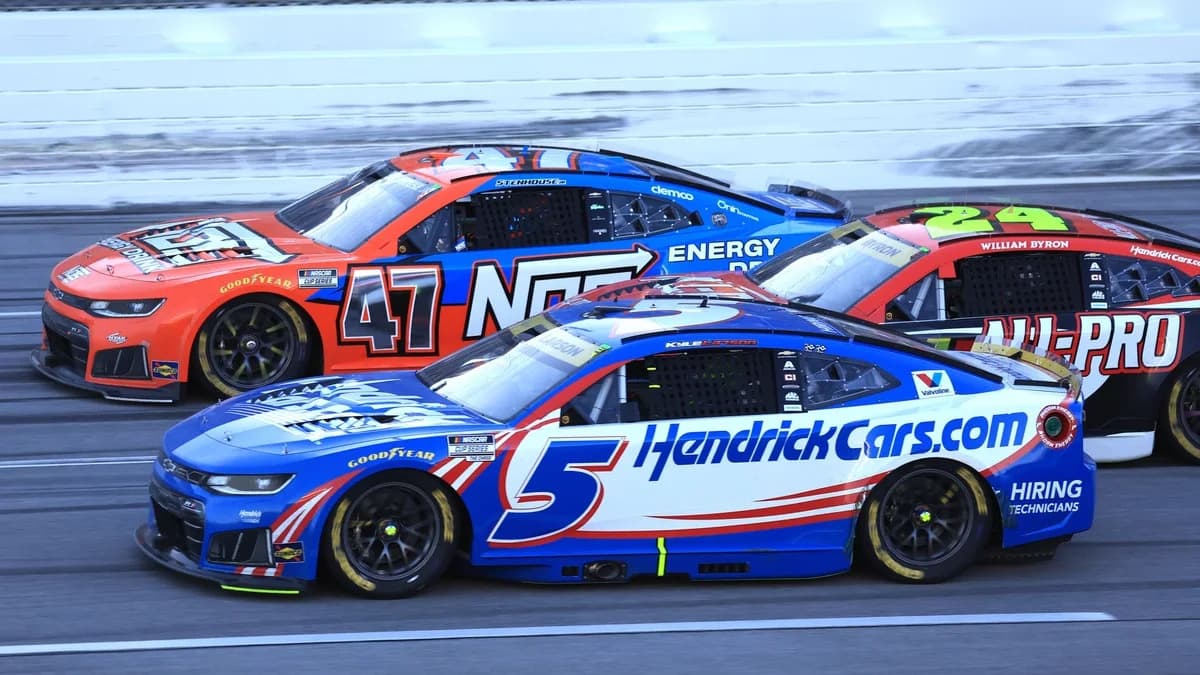
During the first stage of Sunday's Cup Series race at Talladega Superspeedway, NASCAR warned nearly all drivers for falling below the minimum speed limit. The exception was the trio from RFK Racing, who maintained pace while many others slowed down to conserve fuel around the 2.66-mile track. This triggered race control to send automatic alerts about cars running under the required speed.
Mike Forde, NASCAR's vice president of racing communications, explained the situation on the Hauler Talk podcast with Amanda Ellis and Nate Ryan. He said race control sent messages through team communications telling crews that several cars were not meeting minimum speed and warned that black flags would be issued if drivers didn't increase their pace. Shortly after, teams responded, and no black flags were needed.
At Talladega, the minimum speed is set at within 12.5 percent of the pole qualifying time. NASCAR typically allows drivers a lap or two to correct the issue before issuing penalties, but the timing is ultimately up to race control's discretion.
Protecting Teams and Fans
Forde emphasized that NASCAR aims to keep cars on the track rather than remove them. Sponsors invest heavily in the sport, and fans expect to see every driver compete throughout the race, regardless of their chances of winning. So officials prefer to encourage teams to meet speed requirements rather than penalize them harshly.
The Double Yellow Line Incident with Kyle Larson
After the race, there was scrutiny over Kyle Larson making a pass on Todd Gilliland by using the area near the double yellow line. Race control reviewed the move closely and determined Larson did not break the out-of-bounds rule because his tires never fully crossed beneath the yellow line.
"There was a little bit of time," Forde said. "The tire has to go fully below the yellow line. If even half an inch remains on it, no penalty applies. We judged it clearly did not cross."
NASCAR uses a decision process resembling a flow chart to decide if a penalty applies when drivers go below the double yellow line. The conditions are:
- Did the tires go below the yellow line?
- Did the driver improve their position?
- Were they forced down below the line?
Only if all these answers are yes does a penalty occur. In Larson's case, none applied, so the pass stood without penalty.
Denny Hamlin's Reaction
Denny Hamlin criticized the officiating and communication on social media, calling it "horrible officiating or horrible comms," suggesting frustration with how the situation was handled.
Questions About Team Tactics and Pace
Some fans speculated that Chevrolet teams, especially Ricky Stenhouse Jr. and William Byron, deliberately slowed on the frontstretch to help Larson secure points and the win, fueling rumors of coordinated strategy within Hendrick Motorsports.
Forde dismissed those theories, noting that veteran official Scott Miller monitored the race remotely and found nothing suspicious. No teams approached NASCAR with concerns about any intentional slowing or unusual tactics benefiting Larson.
Teams have access to shared SMT data and would have detected anything irregular, yet no complaints surfaced. Some teams did inquire about Larson's tires and the yellow line rule, but not about off-throttle maneuvers to influence the race outcome.
Summary of Key Points
- NASCAR warned most drivers at Talladega for minimum speed violations during the first stage.
- Race control communicated directly with teams to increase pace, avoiding black flags.
- Kyle Larson's final lap pass was reviewed and ruled legal as his tires did not cross below the double yellow line.
- Decision on penalties follows a clear three-question framework regarding line crossing, position gain, and forced movement.
- Denny Hamlin expressed dissatisfaction with how NASCAR handled communication and officiating.
- No evidence found of teams deliberately slowing to assist Larson's win despite fan speculation.