NBA Bounce-Back Candidates for 2026-27 Season
Every NBA season leaves a few good players buried under bad timing.
A knee gives out in January. A trade shuffles a starter into the background. A six-week shooting slump hardens into a season-long narrative. By the time the next draft room opens, the reputation has fallen farther than the talent ever did.
Heading into 2026-27, this group has something most “bounce-back” lists don’t: real change. Health. Money. Opportunity. In some cases, all three.
And in High Score formats, where the scoring twists the usual fantasy calculus, that matters even more.
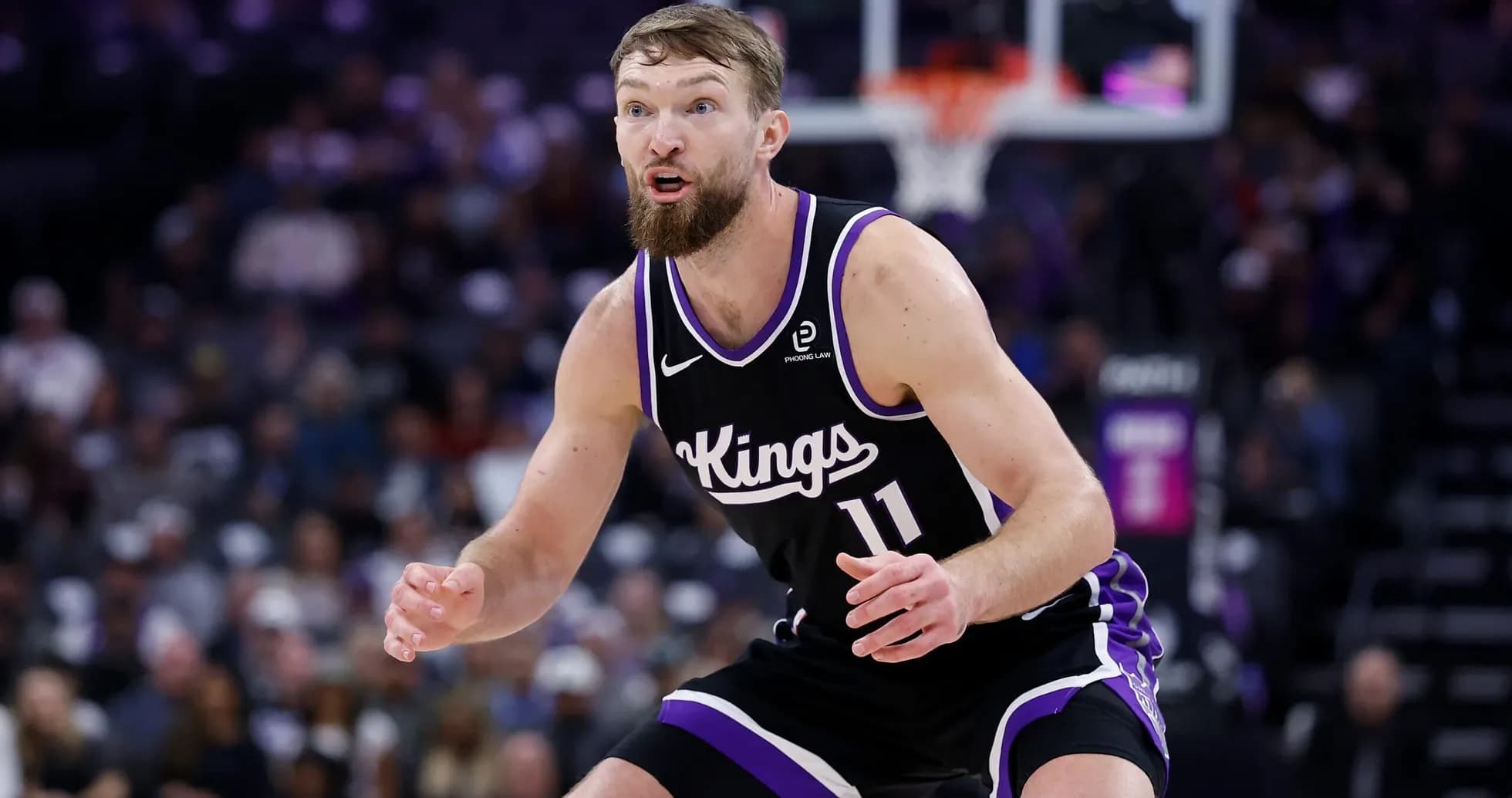
Domantas Sabonis, Kings
Triple-doubles don’t lie.
Between 2023-24 and 2024-25, only Nikola Jokić stacked more of them than Domantas Sabonis. Thirty-six in two seasons. That kind of nightly production doesn’t just disappear because a meniscus does.
The tear in his left knee wrecked 2025-26 and forced season-ending surgery, but the timeline is kind. He’s tracking toward full clearance for training camp, and he turns 30 with the exact skill set that ages well in big men: vision, touch, feel. Not vertical pop.
Sacramento is retooling around him. That’s not subtle. Sabonis walks back into a locker room where he’s the clear offensive hub again, the No. 1 playmaker on a team that needs someone to organize everything.
In standard points formats, that’s gold. When he’s right, he’s a top-15 asset because rebounds and assists drive most scoring systems, and he piles up both. Category managers know the trade-off by now. He’ll dominate rebounds, feed assists, and lift field-goal percentage, but he barely blocks shots and the turnovers bite. You don’t plug him into any roster; you build a punt-defensive-stats approach that lets him breathe.
High Score is where he turns into a cheat code. A routine Sabonis triple-double — 20 points, 12 rebounds, eight assists — hovers around 50 fantasy points with doubled assists and no penalty for turnovers. For a frontcourt slot, that’s a weekly ceiling almost nobody else can reach.
If the knee holds, the numbers will follow. They always have.
Coby White, Hornets
Teams don’t hand out three years and $74 million for a sixth man.
Charlotte didn’t. Not after sending LaMelo Ball to Minnesota and then publicly planting its flag: this backcourt belongs to Coby White.
We already know what he does when the ball finds him. In Chicago in 2024-25, he averaged 20.4 points and 4.5 assists in 33.1 minutes across 74 games. That’s not a hot week. That’s a full season of volume and responsibility.
His 21-game cameo with the Hornets after the deadline never really counted. He came off the bench, the rotation changed every other night, and the whole thing looked like an extended experiment more than a plan. Now the plan is clear. White gets a runway, a contract that says “centerpiece,” and a franchise desperate to end a playoff drought that stretches back to 2015-16.
That’s the kind of context fantasy managers chase.
Points leagues are his natural home. Usage is the currency there, and he’s about to spend more of it than ever. Category leagues demand more nuance. You’re drafting him for points, threes, and assists, then bracing for the field-goal percentage drag and the lack of steals. He makes the most sense on builds that already have efficiency covered elsewhere.
High Score smooths out the rough edges. Assists count double, misses don’t sting, and a 28-point, six-assist night sneaks into the mid-40s. His worst habits — streaky shooting, quiet defensive box scores — don’t follow him into that format.
On the right night, with Charlotte letting him hunt, he looks every bit like a guard who can swing a matchup.
Derrick White, Celtics
Ignore the three-point percentage for a moment and look at the body of work.
Derrick White just turned in one of the most complete seasons of his career: 16.5 points, career highs in steals (1.1), blocks (1.3), and assists (5.4), all while Boston leaned on him more with Jayson Tatum missing most of the year.
The problem, and the reason his stock slid, sits in one number: 32.7% from deep. That’s a cliff-drop from 38.4% the year before. It bled into the playoffs, dragged his scoring down, and left the impression of a player cooling off at the wrong time.
Everything else says variance, not decline.
The Celtics added Paul George in the Jaylen Brown deal, a blockbuster that reshapes the perimeter hierarchy. But George is entering his age-37 season and has topped 70 games just once since 2019-20. White, by contrast, has played at least 73 games every year since 2021-22. Availability has become one of his most underrated skills.
In category leagues, his profile is rare. Guards who give you better than a steal and a block per game are almost impossible to find, and that combination props up two of the thinnest categories on any roster. He doesn’t need to score 25 to matter.
High Score turns that defensive work into a weapon. Steals and blocks are worth three points apiece, so his baseline in those columns alone makes him draftable. When the shot falls and the line reads something like 20 points, five assists, two steals, two blocks, you’re suddenly staring at 45-plus fantasy points.
The three-point percentage should correct toward his career norm. The defensive counting stats are already there. The durability is banked. That’s not a fluke season; that’s a blueprint.
Walker Kessler, Lakers
For five games, Walker Kessler looked like he’d broken through.
Before his year shut down, he averaged 14.4 points, 10.8 rebounds, 1.8 blocks and 1.4 steals. That’s not just rim protection. That’s a two-way big filling every column.
The Lakers saw enough. They traded for him, then handed him a four-year, $130 million deal in July, betting that the short burst was a preview, not an outlier.
The risk is obvious. Shoulder surgery ended his season, and availability has flickered on and off since his rookie year. But the tools translate anywhere: elite finishing, serious rebounding volume, and shot-blocking instincts that don’t depend on scheme. At 25, he now steps into the best spacing and playmaking environment he’s ever had.
In category leagues, you don’t draft Kessler as a complementary piece. You build around him. He can almost single-handedly carry blocks, rebounds, and field-goal percentage. The downside is at the line. Free throws can hurt, which nudges him into punt-FT% territory rather than a plug-and-play center for every roster.
High Score is where his impact pops. Blocks and steals are tripled, so a “quiet” 16 points, 13 rebounds, three blocks becomes roughly 40 fantasy points without a single assist. With three frontcourt slots to fill, that’s exactly the kind of profile that separates teams in that format.
If the shoulder holds up, he doesn’t need the ball to be a star in fantasy terms. He just needs minutes.
Christian Braun, Nuggets
Teams don’t throw five years and $125 million at a role player unless they see more.
Denver did that with Christian Braun in October 2025. He was 24, coming off a season as a starter for a contender, averaging 15.4 points, 5.2 rebounds and 1.1 steals. He looked like a long-term piece, not a placeholder.
Last season cut against that narrative. Just 44 games. A brutal 30.1% from three, miles below his established level. It looked less like a new normal and more like a year that never found rhythm.
Trade rumors have swirled, but the expectation is that he stays. DeMar DeRozan’s arrival will eat into some possessions, yet Braun’s value has never hinged on dominating the ball. He fills gaps, defends, runs, hits open shots — the kind of connective tissue every contender needs.
Fantasy-wise, he’s the most format-neutral name on this list. Category leagues squeeze the most juice out of him: points, threes, steals, and a respectable field-goal percentage across four columns, with that three-point mark screaming for a bounce-back. In points leagues, he settles in as a stable late-round starter, the kind of player you rarely bench.
High Score is less forgiving. Without big assist or block totals, his ceiling games usually land in the low 30s. That’s useful, but not explosive, and this scoring system rewards spikes more than steady competence. He profiles as a bench piece there, not a cornerstone.
Still, Denver’s commitment tells you plenty. Players on that kind of contract, in that kind of role, don’t stay buried for long.
The question now is which of these names simply returns to form — and which one uses 2026-27 to redraw the map of the fantasy landscape.