NBA Punishes LA Clippers with Historic Penalties
The NBA dropped a hammer on the LA Clippers on Wednesday, delivering the harshest punishment in league history after a year-long probe concluded the franchise funneled millions in off-court money to Kawhi Leonard in violation of salary-cap rules.
Five future first-round picks gone — 2029 through 2033. A $30 million fine. A one-year suspension for owner Steve Ballmer. This wasn’t a slap on the wrist. It was a message.
Ballmer, Leonard, and a “novel theory” that backfired
The investigation found that Ballmer “knowingly” helped Leonard secure off-court income, most notably through a deal with Aspiration, a California environmental firm that had been a prominent Clippers partner. According to the NBA, Ballmer approved a Clippers agreement with Aspiration knowing it was a precondition for the company to sign a separate sponsorship deal with Leonard.
League investigators said the Clippers tried to thread a loophole, pushing what they described as a “novel theory”: if a player or his representative asked for introductions to business partners, the team could facilitate those connections without it counting as cap circumvention. The NBA didn’t buy it.
The report details how Leonard, through his uncle Dennis Robertson, pressed the Clippers to help him secure off-court income, then benefited from those opportunities while failing to reimburse the team for certain personal expenses it covered.
The fallout is sweeping. Ballmer is out of league activities for a year. Leonard must repay $700,000 to the NBA. Robertson is banned from engaging with any NBA teams for five years.
And the franchise’s long-term future has been stripped of draft capital that was supposed to bridge the gap between the current era and whatever comes next.
Leadership under fire
The damage didn’t stop with ownership.
Clippers team president Lawrence Frank received a six-month suspension. Gillian Zucker, the club’s president of business operations, was hit with a one-year ban. The NBA’s report drew a sharp distinction between the two: Frank, it said, was candid and consistent in his recollections, while Zucker’s interviews were described as evasive and “inconsistent.”
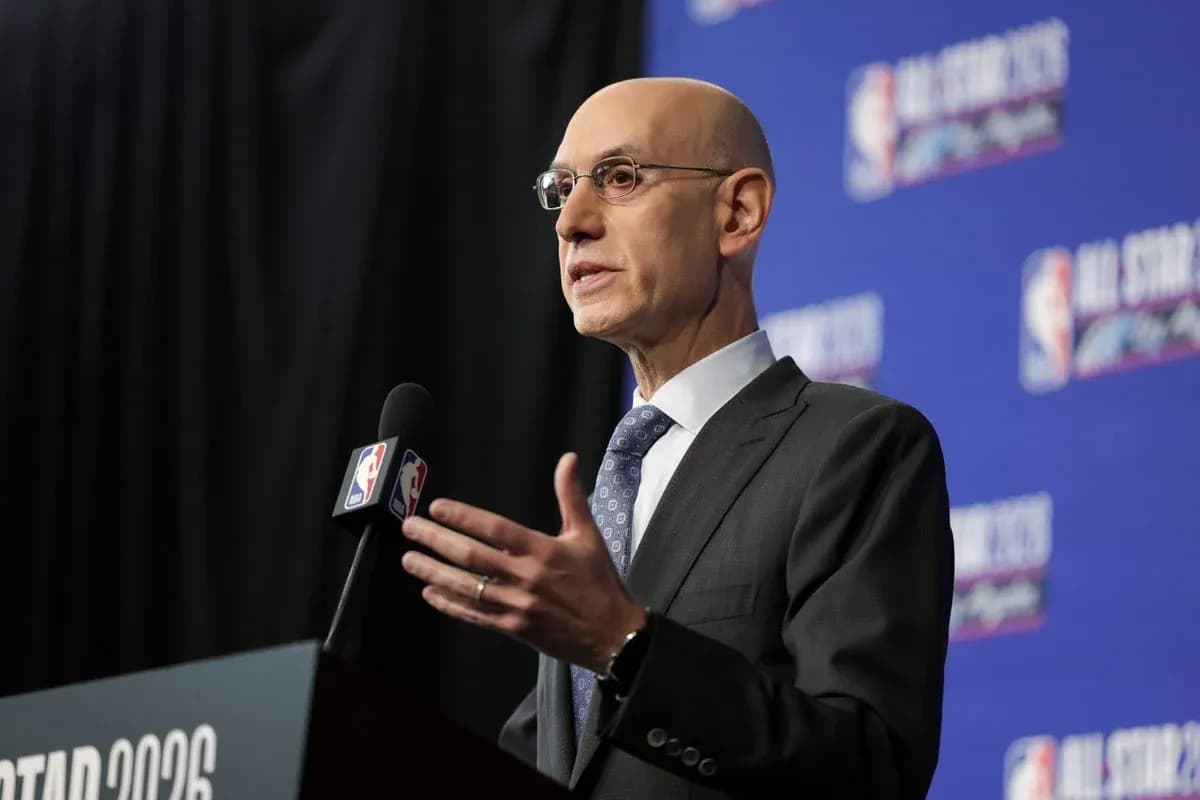
Adam Silver did not soften his language.
“The NBA’s collectively bargained system for determining player compensation is a fundamental component of the basketball competition that the league oversees for the benefit of the teams and players and ultimately the fans,” the commissioner said. “I am deeply disappointed by the flagrant violations of our rules and by the Clippers’ institutional and leadership failures that led to this misconduct. The severity of the penalties reflects the seriousness of the violations.”
The league had hired powerhouse law firm Wachtell Lipton to run the investigation. Their work traced a web of deals linking Leonard to four companies with Clippers ties: Aspiration, Boingo Wireless, Daktronics, and Lockton Insurance. The firm concluded the team not only initiated those relationships but helped facilitate endorsement deals for Leonard with each.
Even now, investigators don’t believe they’ve seen everything.
“More information will likely surface over time,” the NBA’s report stated. “Investigators continue to receive information relevant to the subjects discussed in this report, including as recently as this week.”
From a podcast tip to a league earthquake
This all began quietly, with a podcast episode.
On Sept. 3, 2025, “Pablo Torre Finds Out” reported that Leonard had a $28 million “no-show” contract with Aspiration, the same company that had adorned the Clippers’ jerseys through the 2022-23 season. The suggestion was stark: the deal might be a vehicle to pay Leonard beyond what the salary cap and collective bargaining agreement allowed.
Aspiration’s collapse dragged the arrangement into the open. The company filed for bankruptcy in March 2025, listing Leonard among its top creditors. Court documents showed Leonard was owed $7 million through his LLC, KL2 Aspire, LLC.
Within days of the podcast, the NBA turned to Wachtell. Silver publicly vowed to “get to the bottom” of the endorsement case, insisting the league would begin with a presumption of innocence and “follow the facts.”
Those facts led straight back to the Clippers’ own balance sheet.
Ballmer had poured $50 million into Aspiration in 2021 as it geared up for a planned public offering. That same year, the Clippers signed Aspiration to a jersey patch deal worth more than $300 million, designating the company as a founding sponsor of the Intuit Dome. On top of that, the team agreed to pay more than $50 million in carbon-offsetting fees to help achieve carbon neutrality, according to multiple sources briefed on the arrangement.
Aspiration never went public. The business sagged. Losses mounted. Layoffs followed. Yet Ballmer kept backing it, joining a $66 million fundraising round in 2023 and personally adding another $9,999,997.92, as previously reported. New money came almost entirely from familiar names: co-founder Joe Sanberg, board member Ibrahim AlHusseini, and Ballmer. One fresh investor emerged — Dennis Wong, Ballmer’s longtime friend and the Clippers’ vice chairman.
Sanberg and AlHusseini later pleaded guilty to federal fraud charges. The Leonard deal, inside Aspiration, had already caused friction.
In a May 2022 email obtained by The Athletic, Sanberg told leadership he was “personally contributing stock to Kawhi to make this partnership possible,” acknowledging that Aspiration’s CEO believed the deal was not worth doing. “Any and all benefit to Aspiration from the Kawhi deal is being subsidized by my contributing my equity to make this happen,” he wrote.
Some executives questioned why a low-profile, media-averse star like Leonard had been chosen as a marketing face. The contract gave Leonard wide latitude to avoid marketing appearances, and despite internal brainstorming and mock-ups for campaigns, he never publicly promoted Aspiration.
His arrangement dwarfed other celebrity deals at the company. According to a former executive, Leonardo DiCaprio and Robert Downey Jr. each received less than $2 million in equity. Drake invested $4 million for carbon offsets. Leonard’s package sat in a different financial universe.
Leonard speaks, Raptors wait
Through all of this, Leonard’s next move on the court has hung in limbo.
The Clippers had agreed earlier this summer to trade him to the Toronto Raptors, but the deal stalled while the investigation played out. With the league now announcing its findings and penalties, the path clears for that move to finally be completed.
Leonard, in a statement, accepted responsibility for what happened around him while insisting he acted in good faith.
“I accept full responsibility for lapses in judgment by people within my inner circle and regret the distraction this situation has caused the fans and my family,” he said. “I entered into my contract with the Clippers as well as the agreements in question in good faith, fully committed to fulfilling my obligations and with no knowledge of any intent on anyone’s part to circumvent the salary cap… As I return to Toronto, I am focused on what I can control, closing this chapter, and moving forward with a clean slate.”
For the Clippers, there is no clean slate. Not now.
They lose half a decade of first-round picks. Their owner is sidelined. Their top executives are suspended. Their star is on his way out, his name etched into one of the most damaging investigations in modern NBA history.
They insisted all along they had done nothing wrong, that the introductions and investments sat within the rules. The league’s verdict says otherwise.
The question now isn’t how the Clippers got here. It’s how, stripped of draft capital, leadership, and credibility, they plan to climb back.