NBA Punishes LA Clippers with Severe Penalties for Salary Cap Violations
The NBA dropped a hammer on the LA Clippers on Thursday, ending a year-long investigation with one of the harshest punishments the league has handed down in the salary cap era.
Five first-round picks. A $30 million fine. A one-year suspension for owner Steve Ballmer. And a public rebuke that brands the franchise a repeat offender in salary cap circumvention.
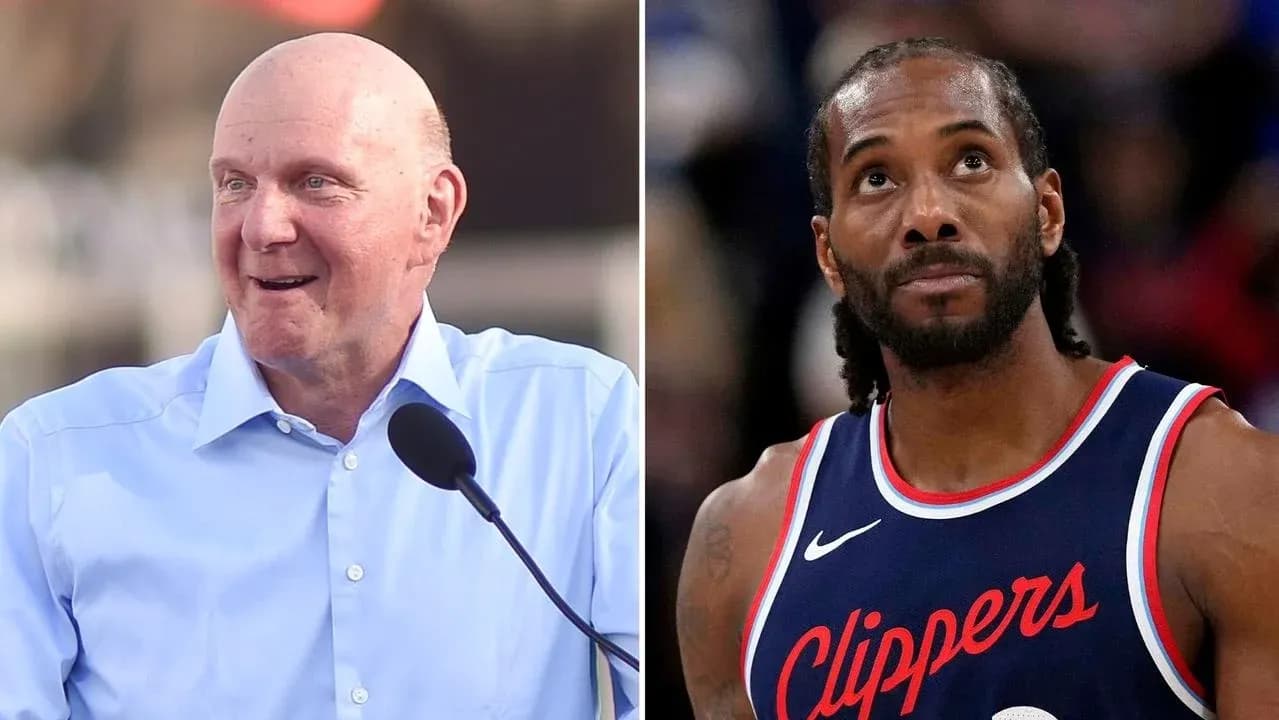
At the center of it all: Kawhi Leonard, his inner circle, and a web of off-court sponsorship deals the league says never should have existed in the way they did.
A Pattern, Not a One-Off
The league’s findings, based on a summary report prepared by law firm Wachtell Lipton, painted a picture of systemic misconduct rather than a single misstep.
Investigators concluded the Clippers “affirmatively initiated” off-court income opportunities for Leonard with four companies that already did business with the team: Aspiration Partners, Boingo Wireless, Daktronics, and Lockton Insurance.
The charge sheet was stark. The organization:
- Set up endorsement opportunities between Leonard and those companies.
- Helped facilitate the deals.
- Sweetened the pot by offering those companies team-related business as an inducement.
- Paid personal expenses for Leonard and his representatives.
- Failed to report improper solicitations made on Leonard’s behalf by his then-business manager and uncle, Dennis Robertson.
The league called it a “pattern of misconduct” and stressed that the Clippers had previously run afoul of cap circumvention rules. This time, the punishment escalated dramatically.
Leonard, Robertson and the Cap Line
The NBA didn’t stop at the franchise.
In its announcement, the league said Leonard — “through the conduct of Mr. Robertson on his behalf” — violated circumvention rules by pressuring the Clippers to assist him in securing off-court income, benefiting from those opportunities, and not reimbursing personal expenses the team covered.
The penalty: Leonard must pay $700,000 to the league.
Robertson’s fate was even more severe. The NBA banned him from conducting business or engaging with any NBA teams or affiliates on behalf of any player or employee for five years, effectively exiling him from the league’s business ecosystem.
For a star who has often preferred silence to spectacle, Leonard responded with a measured but pointed statement, released via his agent.
“Integrity and respect for this game are fundamental to who I am. I accept full responsibility for lapses in judgment by people within my inner circle and regret the distraction this situation has caused the fans and my family,” he said.
He insisted he entered both his Clippers contract and the related agreements “in good faith,” saying he had “no knowledge of any intent on anyone’s part to circumvent the salary cap.”
Leonard closed by looking ahead, tying his response to his on-court future: “For 15 years, my priority has been giving everything to my family, the game, and those I share the court with. As I return to Toronto, I am focused on what I can control, closing this chapter, and moving forward with a clean slate.“
The Cost to the Clippers
The financial hit is heavy. The competitive hit could be brutal.
The Clippers must forfeit five first-round draft picks — one each in the 2029, 2030, 2031, 2032, and 2033 NBA Drafts. In a league where first-rounders are the lifeblood of roster building, that is a generational penalty.
The organization was fined $30 million. On top of that, the league placed the franchise under a compliance and monitoring program, overseen by the league office, for five years. Every move will now be watched.
Then came the suspensions.
Ballmer, the hyper-visible, ultra-wealthy owner who has poured billions into the franchise and its new arena, is barred from all league and team activities for one year. The NBA said he knowingly sought to help Leonard obtain off-court income opportunities, approved a business deal he knew was a precondition for Aspiration to sign Leonard, and failed to create an environment where the rules were followed.
Gillian Zucker, the Clippers’ President of Business Operations, received a one-year suspension without pay. The league labeled her “primarily and directly culpable” for the improper endorsement arrangements and accused her of giving “false and misleading statements” to investigators.
President of Basketball Operations Lawrence Frank was suspended six months without pay for his involvement in the endorsement arrangements and for approving impermissible expenses for Leonard and his family.
The message from the league office was unambiguous: this wasn’t a rogue staffer, it was organizational.
Clippers Fire Back
If Leonard’s statement leaned into contrition and closure, the Clippers’ response went the other way.
“We vehemently reject the NBA’s findings, which are the result of a heavily biased investigation seeking to justify a predetermined narrative rather than facts and evidence,” the team said.
The franchise claimed a disconnect between what the league communicated privately and what it announced publicly, and accused the NBA of failing to meet the fairness standard Commissioner Adam Silver set when the investigation began.
“For the past year, we cooperated fully and in good faith and we will now fight just as hard to demonstrate our innocence,” the statement continued.
The team vowed to “vigorously challenge these findings and penalties through every avenue available” and said it looks forward to “an ethical and impartial arbitration process.”
So while the NBA framed Thursday as the conclusion of a long probe, the Clippers made it clear they see this as the start of a legal and procedural battle that could drag on.
A Franchise Under Scrutiny
The penalties land at a delicate moment for the organization. The Clippers have spent the last several years trying to recast themselves as a marquee destination, a serious, big-market contender with a state-of-the-art home and superstar talent.
Now, they carry a new label: the team that lost half a decade of first-round picks over off-court deals for its star.
The league has drawn a hard line on salary cap circumvention before, but rarely with this level of scope and reach. This case stretches from the owner’s office to business operations, basketball operations, and a superstar’s inner circle.
The Clippers insist the story is far from over. The NBA, at least publicly, has rendered its verdict.
What comes next — in arbitration rooms, front offices, and on the court — will shape how this episode is remembered: as an overreach by the league, or as the defining cautionary tale of how far a franchise can go in the chase for a superstar.