NBA's Ruling on Clippers Shakes ESPN's Credibility
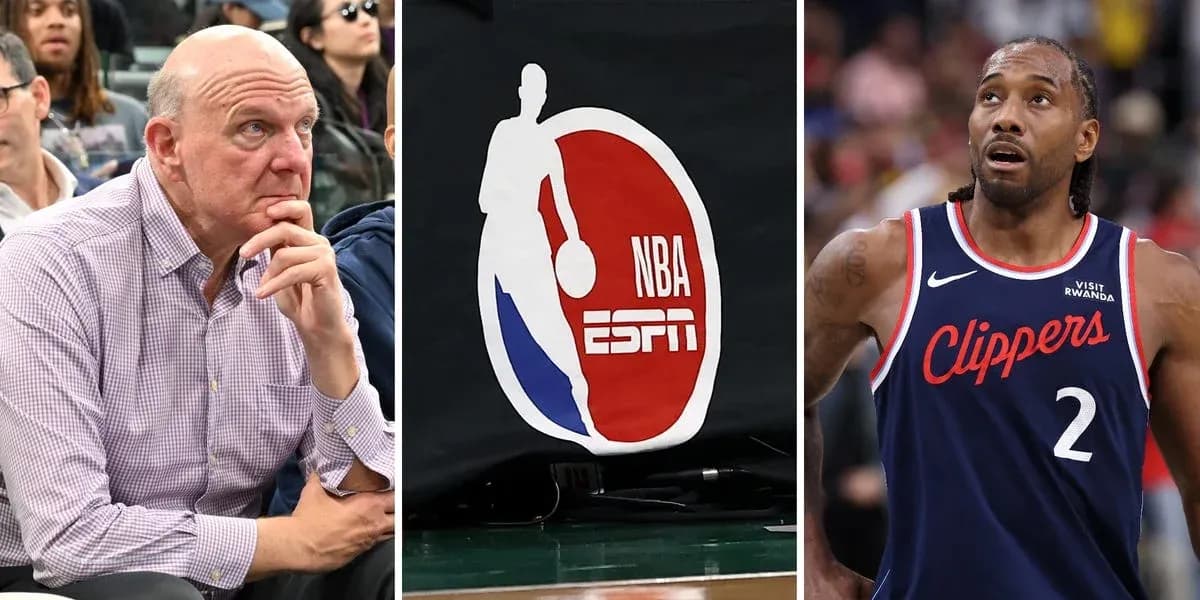
The NBA’s hammer blow on the Los Angeles Clippers didn’t just shake a franchise. It landed squarely on ESPN’s credibility, too.
What began as a salary-cap investigation into Steve Ballmer’s team has turned into a very public stress test of how the “Worldwide Leader in Sports” covers the leagues it depends on.
A ruling that rewrote the narrative
After a nearly yearlong probe, the NBA on Wednesday announced it had found the Clippers and Ballmer guilty of breaking league rules by facilitating sponsorship deals for Kawhi Leonard that amounted to salary-cap circumvention.
The penalties were historic: a $30 million fine for the franchise, a $700,000 fine for Leonard, and a one-year suspension from league activities for Ballmer, the former Microsoft chief executive.
The Clippers fired back, calling the findings “the result of a heavily biased investigation” and insisting in a statement that they “vehemently reject the NBA’s findings.” Leonard, in contrast, struck a different tone, saying he accepts “full responsibility for lapses in judgment by people within my inner circle.”
The league’s ruling did more than punish a team. It effectively validated the work of Pablo Torre, the investigative journalist whose Pulitzer-winning reporting had detailed Leonard’s ties to Clippers sponsors and raised questions about how those deals intersected with the salary cap.
And that’s where ESPN’s problem begins.
ESPN vs. Pablo Torre
Back on August 17, before the NBA’s decision, ESPN published a story that leaned hard in another direction.
Citing three unnamed sources, the report said the league had “no evidence” that Ballmer funneled money through team sponsors to pay Leonard. An anonymous source went even further, dismissing the idea that sponsor introductions could be considered cap circumvention as “dead on arrival.”
That framing — cautious in wording, confident in implication — set up a stark contrast with Torre’s reporting. Online, the battle lines were simple: “ESPN vs Pablo.”
The ESPN piece acknowledged some of Torre’s findings, but it did not include a statement from him. Torre later said he had sent ESPN a comment for the story, affirming that he stood by his reporting and was eager to see the NBA’s findings. He says ESPN chose not to run it.
When the league finally spoke, it landed squarely on Torre’s side of the argument, and ESPN suddenly looked like the outlet that had read the room — and the investigation — wrong.
“The substance of the story was very misleading,” said Brian McWilliams, VP at LA-based public relations firm Spelling Communications. The wording might have been technically defensible, he argued, but the overall message suggested the Clippers would escape severe punishment. Days later, the NBA handed down its biggest penalty ever in this category.
A trust problem, not just a bad headline
For ESPN, this isn’t just an awkward miss. It cuts at the core of its business model.
The network has bet heavily on a direct-to-consumer future, asking fans to pay for streaming products and to trust its voices on TV and social media. Any perception that it soft-pedals coverage of leagues, teams, or powerful owners like Ballmer threatens that relationship.
The sports giant could “risk a lot of damage to the brand,” McWilliams warned, noting that fans now see an outcome “starkly in contrast with ESPN’s reporting.”
Brand and communications consultant Sam Gauchier put it more simply: “The audience just needs an explanation.”
So far, they haven’t received one. An ESPN spokesperson said the company stands by its August Clippers story and declined further comment. No corrections. No editor’s note. Just silence as the criticism grows louder.
The NBA, meanwhile, did not stay quiet. League spokesman Mike Bass posted on social media that ESPN’s August report contained “numerous and significant inaccuracies,” promising those would become clear once the investigation concluded. When the findings dropped, they did just that.
Now ESPN’s PR team must convince viewers that its reporting reflects “not only the technical accuracies, but the overall expectation of truth that their readers have,” said Bradley Akubuiro, a partner at PR firm Bully Pulpit International.
In other words: being narrowly right on wording isn’t enough if the framing leads the audience in the wrong direction.
Shams, access, and the insider’s tightrope
The storm didn’t end with one story.
On Thursday, Shams Charania, one of the most plugged-in NBA reporters on the planet, added another layer of confusion. Appearing on TV, Charania said Leonard “did not have any knowledge” of the salary-cap circumvention — then immediately noted that Leonard “pocketed tens of millions of dollars” from Clippers sponsors.
The tension in that pairing was obvious. Torre seized on it, responding on X with a screenshot that appeared to show Leonard’s signature on a contract with former Clippers sponsor Aspiration Partners.
McWilliams pointed to the deeper issue: insiders like Charania live on a knife’s edge. They need to be first. They need to be accurate. They also need to maintain access to the very people they report on — access that can disappear overnight.
That balance has always been delicate. In an era when fans can cross-check everything in real time, it’s unforgiving.
A spotlight ESPN can’t duck
ESPN’s critics aren’t arguing that the network fabricated facts. The charge is more subtle and more damaging: that its coverage, tone, and sourcing created a narrative that flattered power and underestimated the seriousness of the case.
The NBA’s ruling, Torre’s vindication, Bass’s public rebuke, Charania’s on-air comments — they’ve all combined to drag ESPN’s editorial judgment into the open.
This is the cost of being the industry’s dominant voice. When the league’s biggest salary-cap punishment collides with your own reporting, there’s nowhere to hide. The audience is watching, waiting for that explanation Gauchier says they deserve.
Whether ESPN offers it — and how candid it is if it does — will say as much about the network’s future as any rights deal or streaming launch.