NBA Strips Clippers of Draft Picks and Fines Steve Ballmer
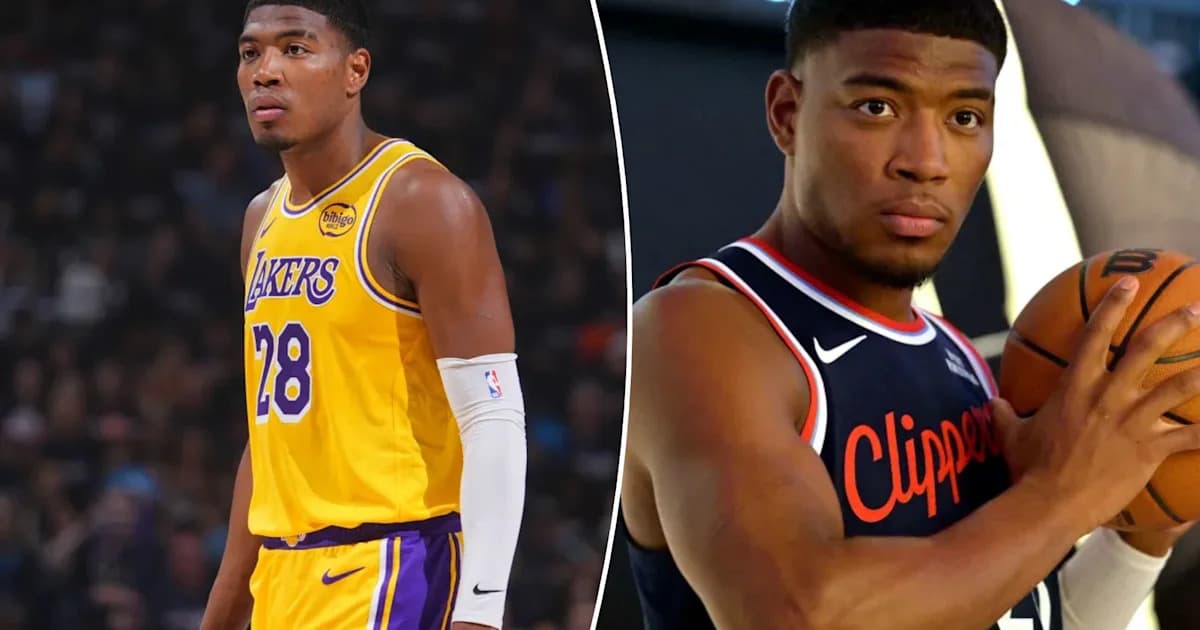
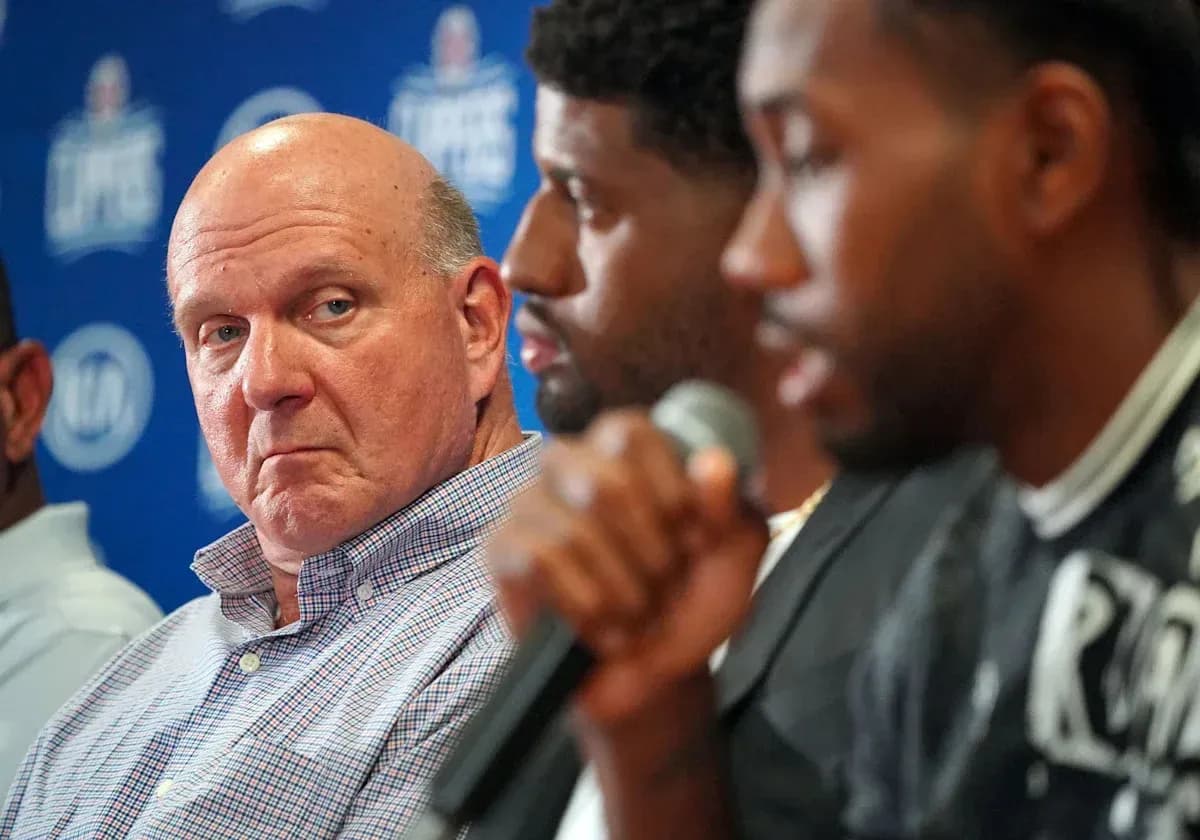
The NBA dropped a hammer on the Los Angeles Clippers on Wednesday, stripping the franchise of five future first-round draft picks and fining owner Steve Ballmer $30 million after a sweeping investigation into impermissible benefits tied to Kawhi Leonard’s time with the team.
Leonard was hit as well, fined $700,000 by the league.
The punishment is among the harshest salary-cap related sanctions in modern NBA history. The Clippers will forfeit their first-round picks in the 2029, 2030, 2031, 2032 and 2033 drafts, a decade-long crater blasted into the team’s future for what the league called violations of its “salary cap circumvention rules.”
In a statement announcing the decision, the NBA said its probe “found a pattern of misconduct and multiple significant rules violations by the Clippers organization,” pointedly noting that the franchise was “a prior offender of the salary cap circumvention rules.”
Kawhi responds as Raptors return looms
Leonard, whose trade back to the Toronto Raptors has been in limbo while the investigation played out, moved quickly to address the ruling. In a statement posted on social media, he framed the episode as a breach from those around him, not a deliberate attempt to game the system.
“Integrity and respect for this game are fundamental to who I am. I accept full responsibility for lapses in judgment by people within my inner circle and regret the distraction this situation has caused the fans and my family,” Leonard wrote.
He insisted he signed his Clippers contract and the agreements under scrutiny “in good faith,” saying he was “fully committed to fulfilling my obligations and with no knowledge of any intent on anyone’s part to circumvent the salary cap.”
“For 15 years, my priority has been giving everything to my family, the game, and those I share the court with,” he added. “As I return to Toronto, I am focused on what I can control, closing this chapter, and moving forward with a clean slate.”
His words land at a complicated moment: the Raptors are poised to welcome back the star who delivered them a championship, but now must do so with a league-sanctioned scandal attached to his name.
The Aspiration deal that triggered a storm
The case burst into public view months ago, when journalist Pablo Torre detailed a potential cap work-around on his podcast, “Pablo Torre Finds Out.” His reporting centered on a deal between Leonard and Aspiration, a now-bankrupt financial company in which Ballmer was heavily invested.
According to Torre, Aspiration agreed to pay Leonard $28 million for minimal obligations, a number that raised alarms around the league once it became tied to Ballmer’s investment and Leonard’s decision to join the Clippers. The implication was stark: that Ballmer used a third-party endorsement arrangement to funnel extra money to Leonard outside the salary cap.
On the day Torre’s story first aired, the Clippers and Ballmer pushed back hard. In a statement, the team called the idea that Ballmer invested in Aspiration to route money to Leonard “absurd” and insisted the endorsement agreement was independent of any team involvement.
“There is nothing unusual about team sponsors doing endorsement deals with players on the same team,” the Clippers said. “Neither Steve nor the Clippers organization had any oversight of Kawhi’s independent endorsement agreement with Aspiration. To say otherwise is flat-out wrong.”
The NBA responded by opening a formal investigation that would eventually stretch across months, podcasts and Board of Governors meetings before culminating in Wednesday’s sweeping penalties.
A second look at a 2019 recruitment
This was not the league’s first deep dive into Leonard’s recruitment.
Back in 2019, after Leonard left Toronto in free agency to sign a three-year, $104 million deal with the Clippers, the NBA quietly examined whether his camp had sought improper benefits. That probe focused on his uncle, Dennis Robertson, who was alleged in a 2019 report by The Athletic to have asked teams for a stunning list of perks.
According to that report, Robertson requested part ownership of a franchise, a private plane available at all times, a house, and a guaranteed level of off-court endorsement income if Leonard signed. Those asks were said to have been made to both the Los Angeles Lakers and the Raptors during Leonard’s free agency.
Months later, the league announced it had found no evidence that the Clippers had granted illegal benefits in securing Leonard’s signature. The organization skated then. It did not this time.
Ballmer’s public confidence, and the league’s burden of proof
When the NBA launched its latest investigation in September, Ballmer and the Clippers again went on the offensive. At a Sports Business Journal event that month, Ballmer said he was “quite confident” the franchise had “abided by the rules” and openly welcomed scrutiny, arguing it would “get the facts out there.”
While Ballmer spoke, Torre kept digging. He released additional podcast episodes outlining what he described as a flow of money into Aspiration that allowed the company to meet its obligations to Leonard. In December, he stitched his work into a seven-and-a-half-minute compilation video, a kind of highlight reel of the alleged cap dodge.
Inside league offices, the tone was more cautious. During a Board of Governors meeting in September, NBA commissioner Adam Silver told reporters he would need clear, convincing evidence of a rules breach to act, saying that if there were only “the mere appearance of impropriety,” he would be reluctant to punish.
The months that followed were quiet in public. Behind the scenes, they were anything but.
A blockbuster trade put on ice
The investigation jolted back into the spotlight in June, when the Clippers agreed to trade Leonard back to the Raptors in a massive deal. The move promised to reshape both franchises, but it immediately raised a thorny question: could the league allow a trade involving a player at the center of an active investigation?
A few weeks later, both teams acknowledged the uncertainty. In a statement, the Raptors said the NBA had informed them they would “assume the risk of any potential outcome of the investigation impacting Kawhi.” That warning was enough. Toronto opted to wait until the probe wrapped.
“The league office informed us that, as a result of the ongoing investigation involving the Clippers, we would assume the risk of any potential outcome of the investigation impacting Kawhi. In light of this we will wait until the league’s investigation is complete,” the Raptors said.
The Clippers, for their part, repeated their insistence that they had done nothing wrong.
Around the same time, ESPN’s Shams Charania reported that the expectation inside the league was that the trade would ultimately go through, a signal that Leonard’s personal punishment was unlikely to reach the level that would block the deal entirely. Wednesday’s fine appears to fit that forecast.
On-court surge, off-court fallout
While lawyers and investigators sifted through documents and money trails, Leonard and the Clippers tried to salvage a season that started in a tailspin.
Even with Leonard and James Harden on the roster, the Clippers opened 5–16. Leonard missed 10 of those games with ankle and foot issues, and the team stumbled to a 2–8 mark without him. When he returned healthy, the picture changed quickly.
Leonard put together one of the best offensive seasons of his career, averaging 27.9 points per game — a career high — and drawing MVP votes for the first time in four years. The Clippers clawed their way back above .500, finishing 42–40.
It still wasn’t enough. They fell in the play-in tournament to the Golden State Warriors, their furious midseason surge unable to erase the damage of that dreadful start.
With Leonard heading into the final year of his contract, the franchise mired in an investigation and the roster stuck between contention and reset, the Clippers made their choice: move on from the superstar who defined this era of the team.
Now they do so stripped of five first-round picks, tens of millions of dollars lighter, and with a stain on their record that will hang over every decision they make for the next decade.