Netball’s Quiet Revolution: First Nations Players Driving Change
For decades, netball has been the sport Australian girls flocked to, yet the national story has barely featured First Nations faces.
Three. That’s the number of Indigenous women who have worn the Diamonds dress: Marcia Ella-Duncan, Sharon Finnan-White and, after a 22-year silence, Donnell Wallam.
The gap said plenty. Wallam’s next move said even more.
When the star shooter left the Queensland Firebirds for New Zealand in 2024, she didn’t slip quietly across the Tasman. She pointed directly at the culture she was leaving behind, praising New Zealand clubs’ “respect for inclusion and culture” and making it clear that, for her, that mattered as much as court time.
Her comments landed like a shot across Netball Australia’s bows.
Accusations of a “toxic culture” at the Firebirds followed. The governing body could not look away. An investigation began, and with it a broader push to embed “cultural safety” for First Nations athletes — not as a slogan, but as a structural change.
Out of that came something the sport had never had: a national First Nations team, the Black Swans.
A new team, a new pathway
The Black Swans are the most visible symbol of this shift, formed after Netball Australia appointed Ali Tucker-Munro as General Manager First Nations. A former Diamonds squad member, she has become the architect of the code’s Indigenous blueprint.
Under her watch, the First Nations Tournament was born — a national championship now underway in Melbourne — along with the Spirit Series, launched in 2026, where the Black Swans went unbeaten against Pacific opposition.
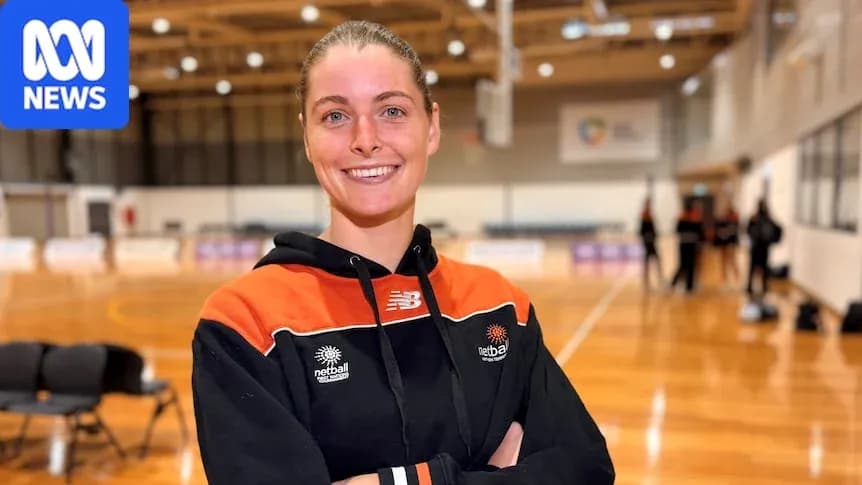
At the State Netball and Hockey Centre, Tucker-Munro stands alongside defenders Gabby Coffey and Scarlet Jauncey and listens as they describe what these initiatives mean. For them, it’s about finally seeing themselves on court, not on the margins.
The work, they all know, is only just beginning.
On the cusp, and stuck there
Coffey is 26. She represents the Northern Territory this week, one of a cluster of First Nations players who have hovered just outside the elite system.
She spent four years as a Melbourne Vixens training partner. Four seasons of pushing, waiting, watching the same names locked into the defensive circle.
“I knew there wasn't much movement in their defensive end, and the same with a lot of defensive ends around Australia,” she told ABC Sport.
The message was clear: if she wanted more than bibs at training, she’d have to leave. So she did.
Coffey headed to the UK, played two seasons with Birmingham, and then came home to Alice Springs. The professional dream isn’t dead, but it no longer defines her. If her role becomes helping other First Nations athletes chase theirs, she can live with that.
Growing up away from Country, held by community
Coffey is a Wiradjuri woman who grew up in Alice Springs, away from her own mob and Country, but wrapped in the arms of Arrente community.
“When you grow up on other Indigenous land and tell people you're Indigenous, they pull you into their culture,” she said. “So [my family and I] were super lucky and blessed to grow up in the centre of Australia where arguably their Indigenous culture is very sacred and traditional.”
The dream of netball pulled her south. Coach Gillian Lee told her she needed to move to Melbourne. The advice was right for her game. It was brutal on her heart.
“It was really hard being away from home,” Coffey said. “I was really lucky with the team I entered [the Vixens] and the support I did have, but it's not the same for everyone. There's a lot of girls who do get those opportunities to move and then don't last because there's just not that support in place.”
Coming from the Northern Territory added another layer.
“Even with competitions like these, we don't get together until we're here, and we're training away from each other, so it can be quite a challenge.”
Talent is one thing. Geography, money, and isolation are another.
‘If you can’t see it, you can’t be it’
Ask Coffey what needs to change, and she doesn’t hesitate: visibility.
“If you can't see it, you can't be it,” she said, noting that only two Indigenous players are currently in Super Netball.
Her own experience — years as a train-on without a breakthrough — underlines how hard it is to crack an Australian list. The league is fiercely competitive and heavily stocked with international stars.
“We get a number of internationals [coming to Super Netball], which I think makes the game better and more exciting, and I don't think [that] should be restricted,” she said. “But I do think there should be more focus on bringing Indigenous girls into the elite level.”
She points to Netball Australia’s plan to add two new teams. More clubs mean more contracts, more chances for Indigenous athletes to step in rather than hover on the edge.
A New Zealand side entering the competition, she suggested, could ease the squeeze on Australian players chasing limited spots.
Learning alongside the best
On the other side of the country, Scarlet Jauncey is living the training-partner life Coffey knows too well.
The Yaruwu defender from Rubibi/Broome has spent the past year with West Coast Fever, suddenly finding herself lining up at training against the likes of Jhaniele Fowler-Nembhard. For a young defender, it’s like being dropped into a masterclass.
Jauncey shares Coffey’s view that the answer isn’t to shut the door on overseas stars.
“We're happy to be playing against the best in the world, that's what we want,” she said.
Like many young First Nations players, she grew up watching Donnell Wallam and seeing, for the first time, someone who looked like her dominating at the top.
“I think it just gives us something to strive towards, knowing that we can be in that space,” she said.
In 2025, Jauncey captained the Black Swans. In doing so, she stepped into the role she once needed: a visible First Nations leader on court.
“It was the best tournament I've played in, the best teams I've been with,” she said. “I think just being able to come to First Nations tournaments and having that connection with each other has been really great.”
Coffey feels it too. She talks about “goosebumps,” about the sense of collective power that comes from playing in a team built on shared culture and experience.
“I think it gives not only myself, but a lot of players so much power and push to keep going and play at the highest level,” she said.
Building cultural safety, not slogans
Tucker-Munro listens to these stories and smiles. This is exactly what she hoped the Black Swans, the First Nations Tournament and the Spirit Series would ignite.
“These tournaments are aspirational in terms of trying to inspire the next generation of our kids — who we know love sport and netball in particular — to trial for their respective state and territory,” she said.
For her, this week in Melbourne is not just about medals. It’s about the kids in the stands and on the sidelines, deciding that they want to take the next step, into Super Netball and, one day, Australian representation.
But Tucker-Munro knows that getting First Nations players into elite programs is only half the fight. Keeping them there is the real test.
“First Nations people come into these spaces with our culture and community on our back, as well as cheering us on, so you want to do them proud,” she said. “It's also a tough journey, especially for the kids who have to relocate, so it's about thinking strategically about how we can support them.”
Since she took on the role, Netball Australia has created a First Nations Cultural Council and run a cultural safety review, working with community and canvassing views from across the game — athletes, coaches, umpires, the wider workforce.
The findings confirmed what many already knew: the barriers are “multi-faceted”. Money. Distance. Lack of support. A history of not being heard.
“For too long our voice has been very silent,” Tucker-Munro said. “We're not a homogenous people, so it's really important that we make sure we're hearing the voices of many.
“One thing we're really big on in our community is not to do things for us or to us, you've got to do it with us.”
That last line might be the most important. It marks a shift from consultation as a box-tick to genuine power-sharing.
There is still only a handful of Indigenous players at the very top of Australian netball. But now there is a national First Nations team, a national tournament, a Spirit Series, a Cultural Council, and a growing generation of athletes like Coffey and Jauncey who refuse to accept that the elite game is not for them.
“The intent and good will” Tucker-Munro talks about will be tested in boardrooms, contract talks and selection meetings over the next few years.
If netball truly wants to reflect the country that fills its courts every weekend, the question is no longer whether change is coming. It’s whether the sport is prepared to keep pace with the players already leading it.