Northwest Division Preview: Deepest Group in the League
The Northwest Division has worn a lot of labels over the years — rugged, unpredictable, awkward to scout. This season, it might earn a new one: the deepest group in the league.
Minnesota has finally handed Anthony Edwards a star point guard. Denver is still anchored by an all-time great. Oklahoma City just watched an MVP drag them to 64 wins and wants more. Portland is rolling out a backcourt that reads like a video game fantasy. Utah, quietly, might have just found its next franchise scorer.
Every night in this division is going to feel like a playoff game.
Denver Nuggets: Racing the Clock, Not the Pack
The Nuggets just won 54 games in a season where almost nothing went smoothly.
Aaron Gordon suited up only 36 times. Nikola Jokić missed nearly a month. The margin for error shrank, the rotation stretched, and Denver still marched into the postseason before bowing out in the first round.
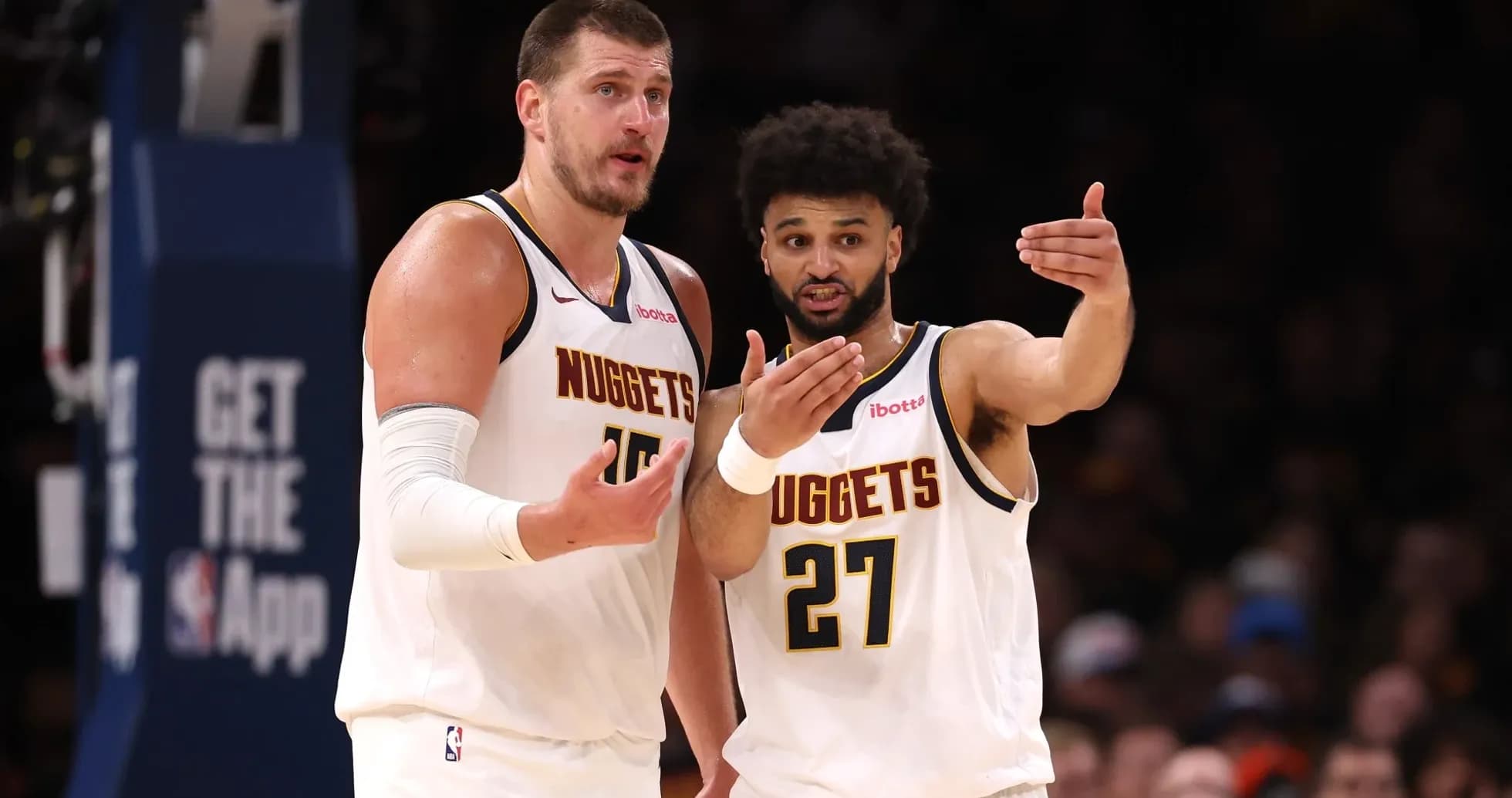
The mission hasn’t changed: squeeze every last ounce out of Jokić’s remaining MVP-level years. This is Denver’s version of the late-stage Stephen Curry Warriors or the Giannis Antetokounmpo Bucks — except the Nuggets still have a fully functional co-star in Jamal Murray and a do-everything forward in Gordon, assuming his body finally cooperates.
That trio alone is enough to pencil Denver in for 50 wins. The question is whether this roster can push beyond that.
Tim Hardaway Jr., Jalen Pickett, Jonas Valančiūnas and Peyton Watson are gone, Watson moved primarily to ease financial pressure. In their place: Marvin Bagley III, Bruce Brown, Trevon Brazile, Alpha Diallo and Bryce Hopkins. None of them changes the franchise’s ceiling on paper, but this is where the season will swing.
DeMar DeRozan, Cam Johnson, Christian Braun and Bagley now shoulder the responsibility of giving Denver the extra scoring punch and lineup versatility it lacked when injuries hit. If they hit their stride, the Nuggets aren’t just a 50-win team. They’re a contender that looks suspiciously similar to the one that already climbed the mountain.
If they don’t, Denver will be leaning on Jokić’s genius more than ever — and burning through those prime years at a dangerous pace.
Minnesota Timberwolves: Edwards Gets His Running Mate
For two years, the Timberwolves have lived in the rare air of the Western Conference Finals. Last season, they slipped just a rung, exiting in the second round despite a 49-33 record and another blistering campaign from Anthony Edwards.
Now, they’ve given him something he’s never had in Minnesota: a top-tier point guard.
LaMelo Ball arrives as the answer to a long-standing question at the one. Edwards has spent most of his Wolves career doing everything — scoring, initiating, closing — often without a true organizer next to him. That changes the moment Ball takes the floor.
LaMelo thrives as a playmaker, probing, surveying, firing passes into windows most guards don’t even see. He can be wild. He can be loose with the ball. But for the first time, he’ll share a backcourt with an MVP-level force, and that kind of talent tends to sharpen a player’s focus.
They should elevate each other. Edwards gets cleaner looks, easier drives, more chances to catch the ball on the move instead of always creating from a standstill. Ball, in turn, finally has a devastating primary scorer to unlock.
Around them, the Wolves have built the most athletic group of Edwards’ tenure: Jaden McDaniels stretching the floor and swallowing wings, Ayo Dosunmu and Terrence Shannon Jr. pushing tempo and hounding ball-handlers, Rudy Gobert still anchoring the back line. Jonathan Kuminga, Trey Lyles and Cody Williams deepen a frontcourt that can run, switch and punish mismatches.
Minnesota has reached the doorstep. With LaMelo in place, this roster suddenly looks like one that expects to kick it down.
Oklahoma City Thunder: No More Surprises
Last year, the Thunder stopped being a feel-good story and became a problem.
Shai Gilgeous-Alexander repeated as MVP and dragged OKC to a league-best 64-18 record and another trip to the Western Conference Finals. That dominance came despite Jalen Williams playing only 33 games and a crushing Game 7 home loss to the Spurs ending their bid for back-to-back titles.
That defeat stung. It also clarified the picture.
This summer brought change, much of it forced by the salary cap. Lu Dort, the heartbeat of their perimeter defense, is gone. So are Isaiah Joe and Aaron Wiggins, guards who gave the Thunder shooting, energy and the luxury of resting Shai’s legs over the grind of the season.
In their place: Aday Mara, Otega Oweh and Bennett Stirtz. The names are new, but the demand is not. OKC’s advantage has been depth, wave after wave of contributors who keep the pressure on. Now it’s on players like Ajay Mitchell and especially Jared McCain to step into the void and stabilize the rotation.
The good news for Oklahoma City is simple and stark: their stars are still ascending. Chet Holmgren earned All-NBA honors last season. A healthy Williams returns as a two-way terror on the wing. Shai remains one of the most unguardable players on the planet.
The bar hasn’t dropped. If anything, that Game 7 loss raised it.
Portland Trail Blazers: Star Power Returns to the Rose City
Portland snuck up on the league last season.
Deni Avdija blossomed into a star, the Blazers clawed their way to 42 wins, and a team many expected to drift in the lottery instead fought into the postseason before exiting in the first round.
Now they’re done sneaking up on anyone.
Micah Nori steps in as a first-time head coach at the perfect moment. He inherits a roster that not only believes it can build on last year, but now adds two All-Star guards — including a franchise icon.
Damian Lillard, who missed the entire season through injury, returns as one of the three greatest players in Portland history, alongside Bill Walton and Clyde Drexler. The nostalgia is obvious. The real intrigue lies in how he meshes with Ja Morant.
Morant arrives from Memphis looking to re-center his career and reclaim his place among the league’s elite guards. Sharing a backcourt with Lillard gives Portland a devastating blend of shooting, pace and rim pressure — if they can find the right balance of touches and tempo.
Even with Shaedon Sharpe recovering from a knee issue, the guard and wing rotation is stacked: Lillard, Morant, Avdija, Jrue Holiday, Scoot Henderson and Donovan Clingan give Nori a core that can play big, small, fast or methodical.
Jerami Grant, Kris Murray, Matisse Thybulle and Blake Wesley depart, but the talent at the top has rarely looked this rich since Lillard’s peak playoff runs. The playoffs aren’t just a hope in Portland anymore. They’re a baseline expectation.
Utah Jazz: Searching for the Next Star
Utah spent last season looking ahead, not around.
The Jazz leaned into youth, accepted the growing pains and tumbled to 22-60, well outside the postseason picture. The payoff might have arrived in June.
This franchise had never owned the No. 1 pick. It still doesn’t. But picking at No. 2, Utah may have landed a player with No. 1 talent in Darryn Peterson. Draft obsessives have circled his name for months. The appeal is obvious: real three-level scoring, from deep, mid-range and at the rim.
If that skill set carries over, the Jazz might finally have the offensive centerpiece they’ve been chasing since the Donovan Mitchell–Rudy Gobert era dissolved.
The cost of building that future became clear this summer. Walker Kessler, the seven-footer they’d carefully developed into a defensive anchor with soft hands and sharp instincts, left for the Lakers in a sign-and-trade. For a team trying to grow from within, losing that kind of homegrown big man hurts.
To stabilize the front line, Utah brought in Jaxson Hayes, still just 26, and Jusuf Nurkić, a veteran with size and craft. Josh Green and Josh Okogie arrive on the perimeter, adding defensive bite and transition juice.
But the real pressure rests on Peterson, Keyonte George and Ace Bailey. They have to be more than intriguing prospects. They must become the kind of offensive engines who can lift Jaren Jackson Jr. and Lauri Markkanen into meaningful games again.
Utah has spent years stockpiling picks and patience. Now the question is simple: did they finally draft the player who makes all that waiting worth it?