Pacific Division's New Era: From LeBron's Shadow
The Pacific Division has lived in LeBron James’ shadow for half a decade. That ends now. With LeBron gone from Los Angeles and the balance of power wobbling, the division feels wide open, restless, and suddenly very young.
Golden State still clings to the Curry era. The Lakers hand the keys, fully and finally, to Luka Dončić. Phoenix believes its surprise wasn’t a fluke. The Clippers rip up the Kawhi Leonard blueprint and start again. Sacramento waits, maybe a year too long, to decide who it wants to be.
This isn’t a reset. It’s a reckoning.
Golden State Warriors: Racing the Curry clock
The Warriors just lived through a nightmare scenario: a season-ending injury to Jimmy Butler and a 37-45 finish that left them scrapping through the play-in. Stephen Curry did his part again, but the ceiling collapsed without Butler.
The summer didn’t bring the veteran cavalry they wanted. No big-name reinforcement, no splashy trade to shove them back into the inner circle of contenders. Instead, Golden State is betting on something far more fragile: a rookie with an old soul.
Yaxel Lendeborg arrives as a 23-year-old first-round pick with championship scars from Michigan and a game built for the modern NBA. He isn’t a savior, but he might be a spark — a forward with skill, feel, and enough personality to jolt a locker room that’s seen and done almost everything.
He joins fellow additions Georges Niang and Brandon Williams, while Seth Curry, Quinten Post and Pat Spencer head out. It’s incremental, not seismic.
The equation is brutally simple. If Butler’s knee holds and he returns anywhere near his All-Star form, and if Curry can still summon an All-NBA season, Golden State has a path back to the postseason and maybe more. If either of those pillars cracks, this starts to look less like a reload and more like the slow fade of a dynasty that refused to believe in endings.
For now, the Warriors are still living in the Curry window. They just don’t know how much daylight is left.
LA Clippers: Life after Kawhi
The Clippers spent years orbiting Kawhi Leonard’s availability. This summer, they finally broke free.
Leonard is gone, shipped to the Raptors, and with him goes the last illusion that this version of the Clippers could simply “run it back” and hope for better health. The front office didn’t tinker. It detonated the old idea and began building a new one around a different kind of star power.
The headline move in the draft was Keaton Wagler, a fearless combo guard out of Illinois whose college stardom now meets the unforgiving reality of the NBA. His skill set suggests it can translate, but that leap humbles plenty of guards with shinier résumés.
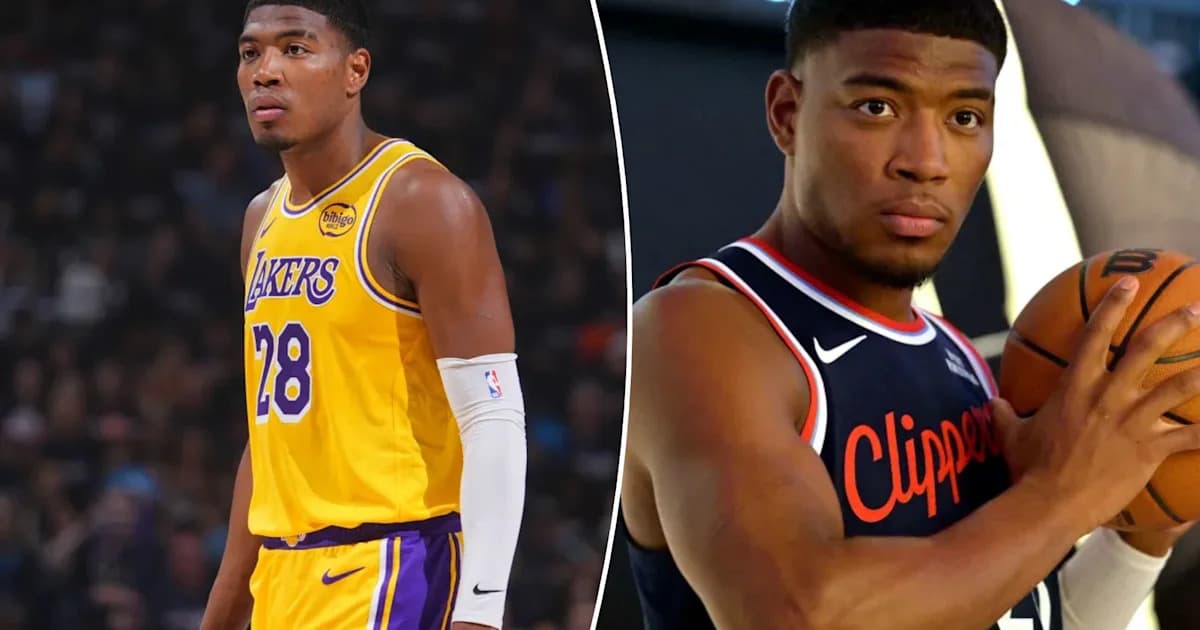
Around him, the Clippers stacked wings and guards: Brandon Ingram, Rui Hachimura, Max Strus, Johni Broome, Nick Martinelli, Baba Miller, Gradey Dick. Out go Nicolas Batum, Bogdan Bogdanović, John Collins, Kawhi Leonard and Bennedict Mathurin.
The backcourt is the intrigue. Darius Garland, now in for a full season, will share the controls with Wagler. That pairing won’t lack for creativity or tempo. Defense and durability will tell the rest of the story.
The West remains unforgiving. A 42-40 record and a play-in berth last season didn’t buy them much margin. At least now, the Clippers know what they are: a team turning the page, not clinging to the past. Whether that new direction points toward the top of the conference or back to the lottery will be decided by how quickly Wagler and Garland can grow into a partnership that defines the franchise’s next era.
Los Angeles Lakers: Luka’s team, at last
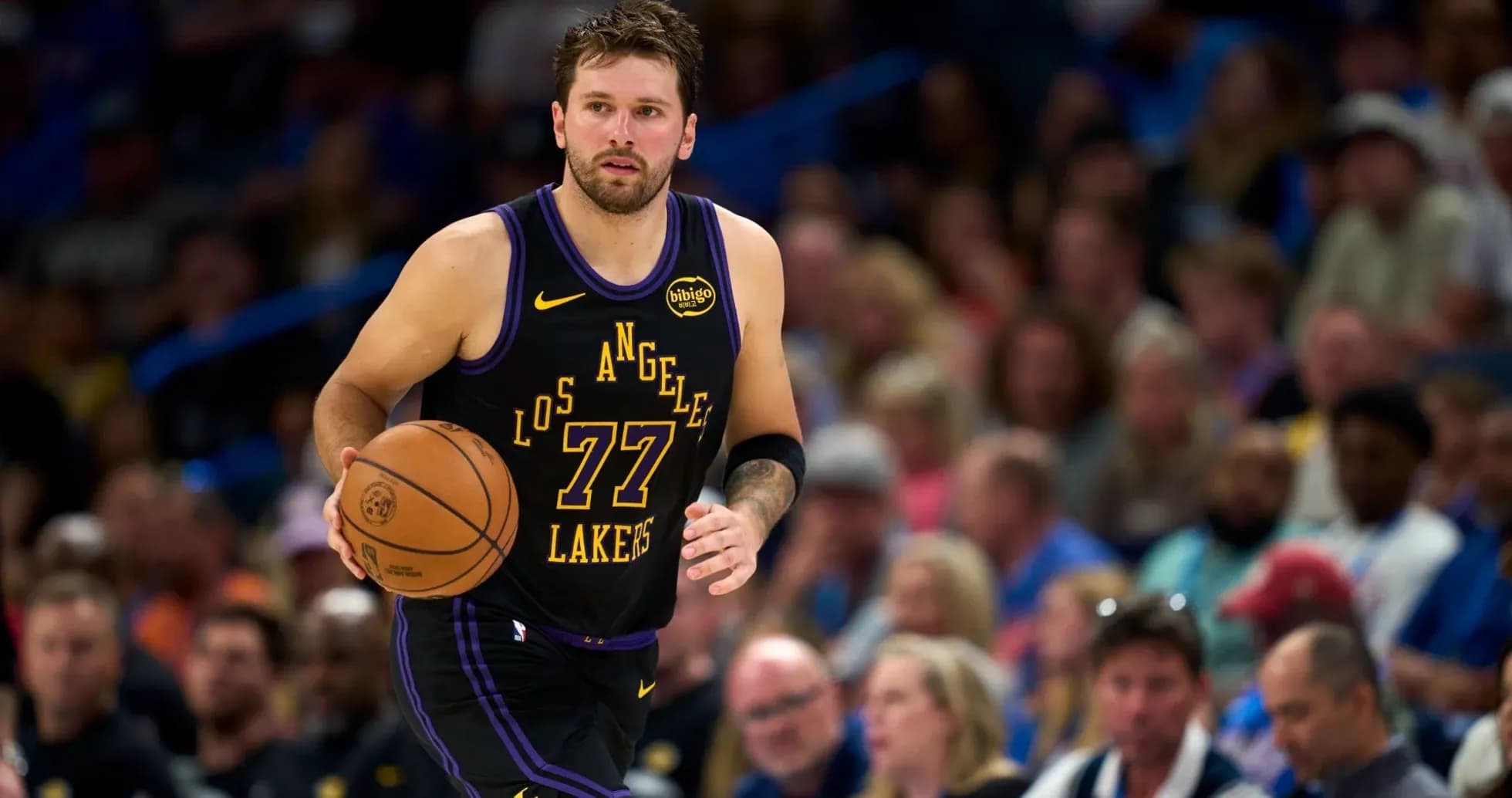
LeBron James is gone. The sentence still feels strange, even for a franchise that has cycled through superstars for generations. Yet the Lakers did what the Lakers always seem to do: they already had the next one in place.
Luka Dončić carried them through injuries to himself and Austin Reaves last season, and they still went 53-29 and reached the second round. This year strips away any ambiguity. The “transition” from LeBron to Luka is over. This is Luka’s show.
The roster around him has changed shape again.
Out go Deandre Ayton, Rui Hachimura, Jaxson Hayes, LeBron James, Luke Kennard, Maxi Kleber, Marcus Smart and Nick Smith Jr. In come Cameron Carr, Quentin Grimes, Jaden Hardy, Walker Kessler, Kevon Looney, Sandro Mamukelashvili, Collin Sexton, Matisse Thybulle and Ziaire Williams.
The hinge of the season sits at center and on the wings.
Kessler arrived via sign-and-trade with Utah and cashed in with a significant extension. If he stays healthy, the Lakers finally have a big man whose soft hands can finish Luka’s passes and whose shot-blocking and rebounding can clean up the back line. Reaves, also rewarded with a big deal, must cement himself as the reliable secondary creator and scorer this roster demands.
Around them, Sexton’s aggression, Thybulle’s defense and the depth provided by Looney, Grimes and Hardy should keep the Lakers dangerous on most nights.
Dončić alone guarantees relevance and prime-time slots. Contention, though, will depend on whether this supporting cast can stabilize quickly enough in a West that punishes slow starts. The LeBron era is over, but the expectations in Los Angeles never retire.
Phoenix Suns: Surprise no more
Last season, Phoenix was supposed to fade. Instead, it flourished.
Without Kevin Durant and Bradley Beal, the Suns went 45-37 and pushed their way into the playoffs, playing with a stubborn edge that didn’t care for preseason projections. That surge wasn’t an accident; it was the beginning of a reset.
GM Brian Gregory and coach Jordan Ott arrived as part of a housecleaning, and their early decisions have stuck. This summer, they doubled down on the core that overachieved, handing extensions to Dillon Brooks, Collin Gillespie, Mark Williams and Jordan Goodwin — all coming off career years.
Those deals aren’t just rewards. They’re a message to Devin Booker: the organization plans to keep this group around him through his remaining prime seasons.
Then came the new pieces.
Miles Bridges, a proven 20-point scorer, gives Phoenix another reliable offensive engine and a physical forward who can shoulder big minutes. Luke Kennard replaces Grayson Allen as the specialist shooter, bringing the kind of efficient spacing every Booker-led offense craves. Rookie Koa Peat adds muscle and versatility to the front line and should see the floor early.
Grayson Allen, Amir Coffey and Royce O’Neale depart, but the identity remains: tough, competitive, and deeper than it looks on paper.
The transformation in Phoenix started quickly and hasn’t slowed. The surprise label is gone now. This version of the Suns will be judged not on whether it can hang around the playoff picture, but on whether it can stay there, year after year, in a conference that rarely forgives complacency.
Sacramento Kings: Waiting on a decision
The Kings crashed hard last season. A 22-60 record, no postseason, and a year spent searching for a new voice and a new identity that never quite materialized.
You’d expect sweeping changes after that kind of collapse. Sacramento chose a different path.
The summer was quiet. DeMar DeRozan’s contract wasn’t extended, and he’s gone along with Devin Carter, Drew Eubanks, Killian Hayes, Doug McDermott and Russell Westbrook. In their place: Darius Acuff Jr., Alex Karaban, Emanuel Sharp and Ben Simmons.
It’s a shuffle, not an overhaul.
Once again, the Kings will lean heavily on Zach LaVine to carry the scoring load. This might be the final time they do it; LaVine is entering the last year of his deal. De’Andre Hunter, another player on an expiring contract after a stint in Cleveland, brings two-way competence but also adds to the uncertainty.
Simmons is the wild card. His presence raises familiar questions about health, role and fit, but the Kings’ bigger questions live higher up the roster.
What happens with LaVine and Domantas Sabonis?
Those decisions will define the next phase in Sacramento. Run it back around them and hope this past season was a blip, or pivot into a full-scale rebuild and cash in on their value. The front office seems content to wait until 2027 for a more dramatic reset.
The risk is obvious. In a division reshaping itself in real time, standing still can feel a lot like falling behind.