Patrick Dorgu: Manchester United's Versatile Solution
Patrick Dorgu arrived at Manchester United billed as a winger with upside. He might yet become something far more valuable: the solution to a problem the club failed to fix in the transfer market.
Carrick’s ‘new signing’ in plain sight
With the window closed and Manchester United coming up empty-handed in late pushes for Alejandro Balde and Rayan Ait-Nouri, Michael Carrick has been left with a glaring truth. Luke Shaw is the only natural left-back in his squad. Behind him? A patchwork of possibilities.
Patrick Dorgu now sits right at the heart of that conversation.
The 21-year-old has been back from a hamstring injury for only a short time, but Carrick already talks about him with the kind of enthusiasm usually reserved for big-money arrivals.
“You could almost argue that he played three or four times for us last season, so for me, he's almost like a new player,” Carrick said. “It's almost like a new signing in some ways because he's added so much to the group.”
That line was not throwaway. It was a hint.
From Lecce full-back to United wildcard
Dorgu’s United story has been framed around his attacking qualities. Carrick has used him exclusively on the wing so far, starting him wide at Hull City on the opening day before leaving him on the bench for the win over Ipswich.
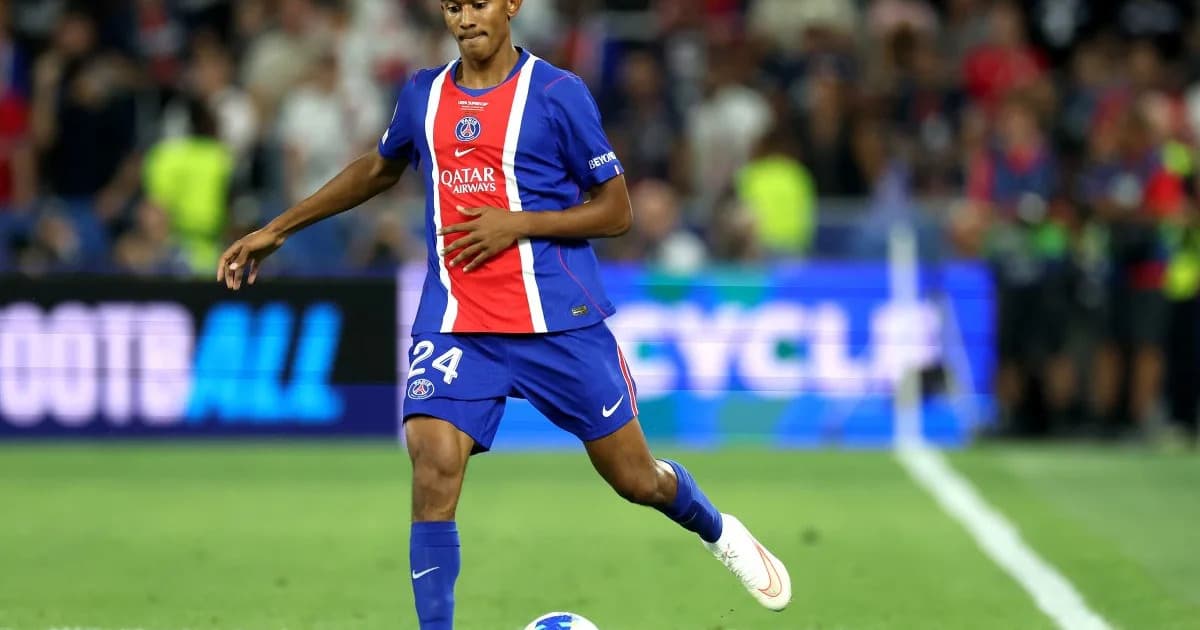
But the Dane’s path to Old Trafford tells a different tale. When United paid £25million to take him from Lecce in January 2025, he was playing as a left-back in Serie A. Before that, Ruben Amorim had used him as a wing-back. For Denmark, he has even operated on the right flank, scoring a standout goal from that side in the June internationals.
He is not a specialist. He is a tool kit.
“He can certainly play there. He has done, without doubt,” Carrick said when asked about using Dorgu at left-back. “I'm not sitting here saying he can't do that. It's just the way we've been since I've been here.”
That “way” has largely meant using him higher up the pitch, where his pace and direct running have caught the eye. But United’s squad profile is now forcing a rethink.
A squad heavy on wingers, light on full-backs
Carrick is not short of wide forwards. He is, though, short of full-backs. With no new left-back through the door, United will lean heavily on Shaw’s fitness. Behind him, the manager is left to juggle improvisations: Noussair Mazraoui and Diogo Dalot can both shuffle across, but neither is a natural fit on the left.
Dorgu changes that equation. He offers something closer to a genuine left-sided defender, without sacrificing attacking thrust.
“He's played off the right for Denmark, scored a great goal in the summer playing off the right in a forward position,” Carrick said. “He can play left-back. He's that type where he can do a number of things. I'm certainly not saying he can't do that at all.”
Those aren’t cautious words. They sound like preparation.
A role waiting to be unlocked
Carrick has not yet unleashed Dorgu in that deeper role in a competitive game, but the groundwork is already being laid.
“It's something he can, we just haven't had to explore that,” he explained. “At some point, we might have to, at some point he might do that. He can do that, absolutely no problem. There are times in training when he does it.”
That last detail matters. This isn’t a fantasy born of desperation. Carrick has seen Dorgu operate at left-back in training. He knows what it looks like. He knows what it could give him.
For a coach who values control and structure, the idea of a naturally adventurous full-back, comfortable high up the pitch and already trusted in attacking zones, is an enticing one. It would not only cover a hole in the squad, it could reshape the way United build from the back.
Young, versatile, and on the brink
Dorgu is still only 21. Carrick made a point of stressing that, along with the need to squeeze every drop from his attributes.
“Being such a young age and having the attributes that he's got, we've just got to keep trying to get the most out of him,” he said.
That “most” may no longer be confined to the wing. It may come from the touchline in his own half, facing the whole pitch, driving United forward from deep when Shaw needs a rest or when the tactical picture demands something different.
United wanted a new left-back this summer and did not get one. They might not need to look far for an answer. The solution is already in the building, already on the pitch, and, in Carrick’s own words, already “like a new signing.”
The only question now is when he steps into that old role and starts to look like the player Lecce once trusted at the back – but in a United shirt, with far more at stake.