Patrick Vieira: A New Era for Senegal's Teranga Lions
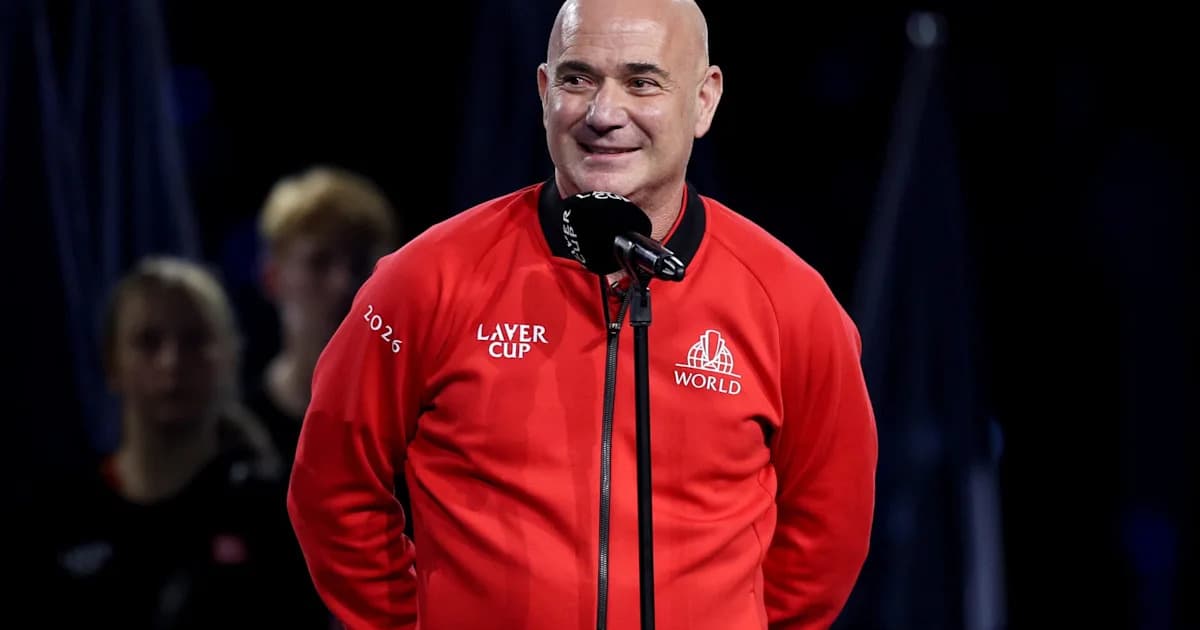
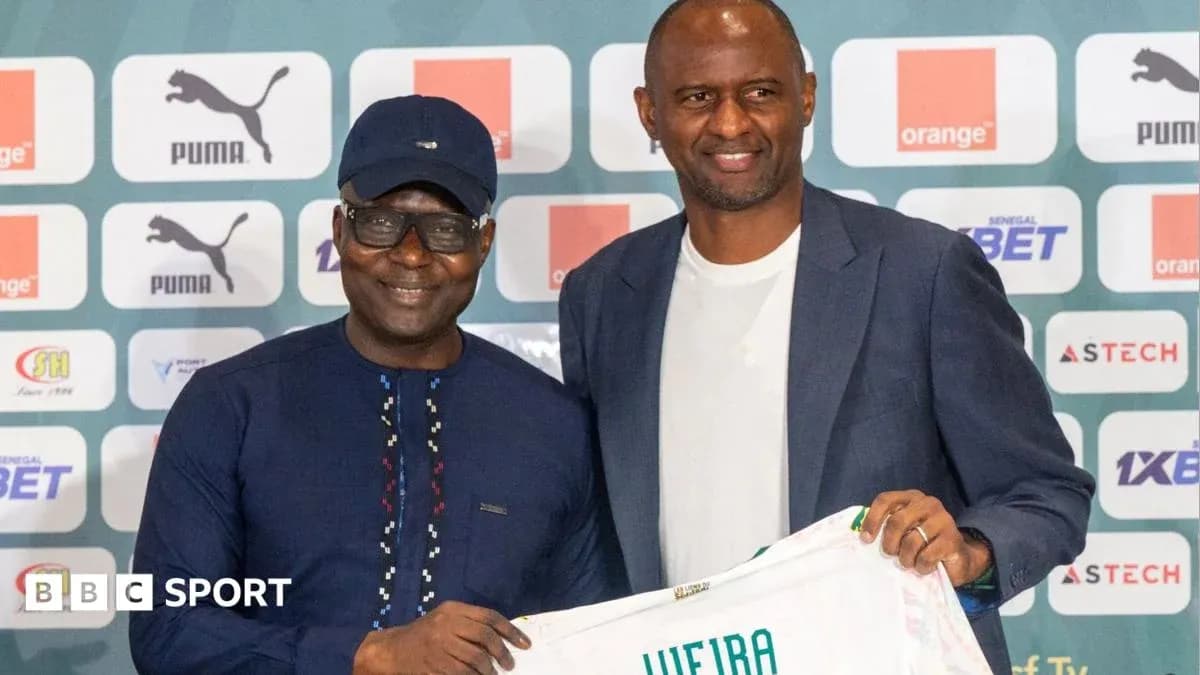
Patrick Vieira leant into the microphone in Dakar and did not bother to hide it. This was not just another job.
“It’s an honour,” he said. “A dream.”
For once, the clichés felt true.
Born in Senegal, crowned a world and European champion with France, Vieira has spent most of his adult life as a symbol of another nation’s footballing power. On Friday, at 50, he stepped into a different role: head coach of the Teranga Lions, charged with guiding a team that now expects to stand among the game’s elite.
“This is a homecoming,” he told reporters. “I was born here, my parents were born here.” The words landed heavily in a city that had welcomed him the previous evening like a returning hero, fans thronging the airport as he raised a Senegal flag above his head.
A giant with new expectations
Vieira does not inherit a sleeping giant. He takes over a side that has already woken up and started throwing its weight around.
Senegal are reigning Africa Cup of Nations winners on the pitch, having beaten Morocco 1-0 after extra time in January 2025. Yet even that triumph is tangled in controversy. A penalty decision in the final sparked a walk-off by some Senegal players and staff, and the trophy was subsequently handed to hosts Morocco in March. The final destination of the title now sits in the hands of the Court of Arbitration for Sport.
On the global stage, the scars are fresher. Pape Thiaw’s team reached the last 32 of the 2026 World Cup and looked set for a statement win over Belgium, 2-0 up after 85 minutes. They collapsed, lost 3-2 after extra time, and Thiaw’s time was over.
That is the backdrop to Vieira’s appointment: a nation that has climbed, stumbled, and refuses to step back.
“Today, Senegal is among the major nations in world football,” he said. “Senegal’s objectives aren’t what they were 10 or 15 years ago. On the back of its recent results, Senegal has moved forward, has reached new levels. The demand for results has also stepped up. We need to lay solid foundations.”
This is not a coach talking about potential. It is a coach talking about standards.
Not a revolution, a continuation
Vieira has worked in New York, Nice, south London, Strasbourg and Genoa. This, though, is his first international job. He knows he is not walking into a rebuild.
“What matters to me isn’t starting again from scratch,” he said. “It’s about respecting what the federation has put in place over the last few years and building the next stage, opening a new chapter.
“A new chapter meaning my job isn’t to tear everything down, it isn’t to throw everything out of the window. It’s about keeping this team’s strength: its identity, its unity, its ability to suffer together.”
That line – “ability to suffer together” – could be a motto for Senegal’s recent journey. They have endured heartbreak, controversy, and near-misses, yet they keep coming back. Vieira wants to harden that steel, not melt it down.
He spoke of “a very precise structure”, of intensity and aggression as non-negotiables. This is the vocabulary of the midfielder who once patrolled Arsenal’s engine room, not a theorist detached from the fight.
To make it work, he knows he cannot stand alone.
“To make this project work, I’ll need the whole nation united,” he said. “I’ll work heart and soul to restore the team’s pride.”
Thrown straight into the fire
There is no gentle bedding-in period. No ceremonial friendlies to ease the transition. Vieira walks straight into competitive football with 2027 Afcon qualifiers.
Senegal face two games in this international window, two more in November and the final rounds in March 2027. Every match counts. Every selection will be judged.
His reign was supposed to start at home, in Dakar, against Mozambique on 25 September. Instead, the city is deep in preparations for the 2026 Youth Olympic Games, and the fixture has been reversed.
“Of course, I’d have preferred to play the first match here in Dakar,” he admitted. “But unfortunately, with the federation, we all felt the best decision was to postpone the match and go and play in Mozambique. Those are difficulties we’re going to accept and deal with.”
So the first steps of this “homecoming” will be taken away from home, in Maputo, followed by another away trip to Ethiopia on 29 September. Not ideal. Not an excuse either.
Big names missing, big calls required
Vieira’s first squad sheet will not be full strength.
Long-time number one Edouard Mendy, 34, has retired from international duty. That alone would mark a new era. Then comes the headline absence: Sadio Mane will not travel, sidelined by what Vieira described as “a bit of a physical issue”.
The questions around Mane’s future have been building. At 34, and after speculation he might follow Mendy into retirement, some wondered whether this might be the moment he steps away.
Not yet, says Vieira.
The former Liverpool and Bayern Munich forward will “surely” be part of his next selection, provided he is fit. The bond between Senegal and Mane is too deep to cut lightly. For now, it is only paused.
The omissions do not stop there. Right-back Krepin Diatta is out because he is currently without a club. Ismaila Sarr, still to feature for Crystal Palace this season amid transfer rumours and a groin injury, is also missing.
These are not peripheral figures. They are pillars. Vieira’s first challenge will be to show that Senegal’s identity survives even when some of its most recognisable faces are absent.
A coach shaped by setbacks
Vieira’s playing career needs no embellishment: World Cup, Euros, Premier League titles, the lot. His coaching story is more complicated, more human.
He left Crystal Palace in March 2023 with 22 wins from 74 games in all competitions. At Strasbourg, he lasted a season. At Genoa, he guided the club to safety in Serie A in 2024-25, only to be sacked in November the following campaign after six defeats in nine league matches left them bottom.
Those are bruises, not badges. He does not shy away from them.
“I’ve always been someone who stays positive,” he said. “That means you learn, and there are always positive things to take from it. I’m a better coach today than I was in my last spell at Genoa, because that experience helped me grow and made me realise certain things.
“Given the experience I have as a manager, I’ve got no doubt about my ability to meet the expectations of fans.”
The expectations he talks about are not abstract. They have a number: 20 million. “I realise the expectations of the people – all 20 million Senegalese,” he said. It is a huge weight. It is also exactly the kind of responsibility he has spent a career preparing for.
A nation’s embrace
If he needed a reminder of what this job means, he got it the moment he landed.
“I couldn’t have been given a warmer welcome,” he said of his arrival in Dakar. “I saw the supporters’ enthusiasm and I thank them for it. Taking charge of this national team isn’t just a new stage in my career – it’s coming back home.”
Home is not always a comfort. Sometimes it demands more. Senegal now expects to compete for Afcon titles, to go deep at World Cups, to match the ambition of its players’ club careers.
Vieira has chosen that pressure. Called it “a challenge” he accepted “straight away” once talks began with the federation president, helped by what he described as “an exceptional generation of players.”
He wants to keep their unity, sharpen their edge and build something that lasts. The romance of the story is obvious: the boy who left, the man who returns to lead. The reality will be written in away days in Mozambique and Ethiopia, in tight qualifiers and tense tournaments.
The welcome has been warm. The expectations are hotter. How long can Patrick Vieira keep the fire under control?