
The Personal Journey of a Football Journalist
There’s a line in football that runs deeper than tactics or transfer fees. It cuts through cities, families, even generations. For some, it’s a straight path. For others, like this journalist, it bends, twists, and crosses borders.
The story starts in Bandung.
Nine years in the city turned Persib from just another club on television into something closer to a personal religion. The irony? His father once played for a traditional rival. In most households, that would settle the argument. Here, it only sharpened the divide.
The conversion moment came in 2006, with a Thai goalkeeper at the heart of it. Kosin Hathairattanakool stood between the posts, and suddenly Persib weren’t just a team in blue; they were a living, breathing extension of the city. The chants, the streets, the way locals carried the club as part of their daily identity – it all pulled him in. Bandung stopped being just an address. It became home, and Persib became the club that defined it.
Yet, Persib were never the only love.
Before local stadiums and Liga 1 press boxes, there was a boy watching Ronaldo in an Inter Milan shirt, falling hard for a team that always seemed to live on the brink of something bigger. Inter’s story in those years was messy: injuries, near-misses, constant heartbreak. That chaos stuck. The club’s struggles didn’t push him away; they tied him closer. You don’t forget the first time you realise football can hurt as much as it thrills.
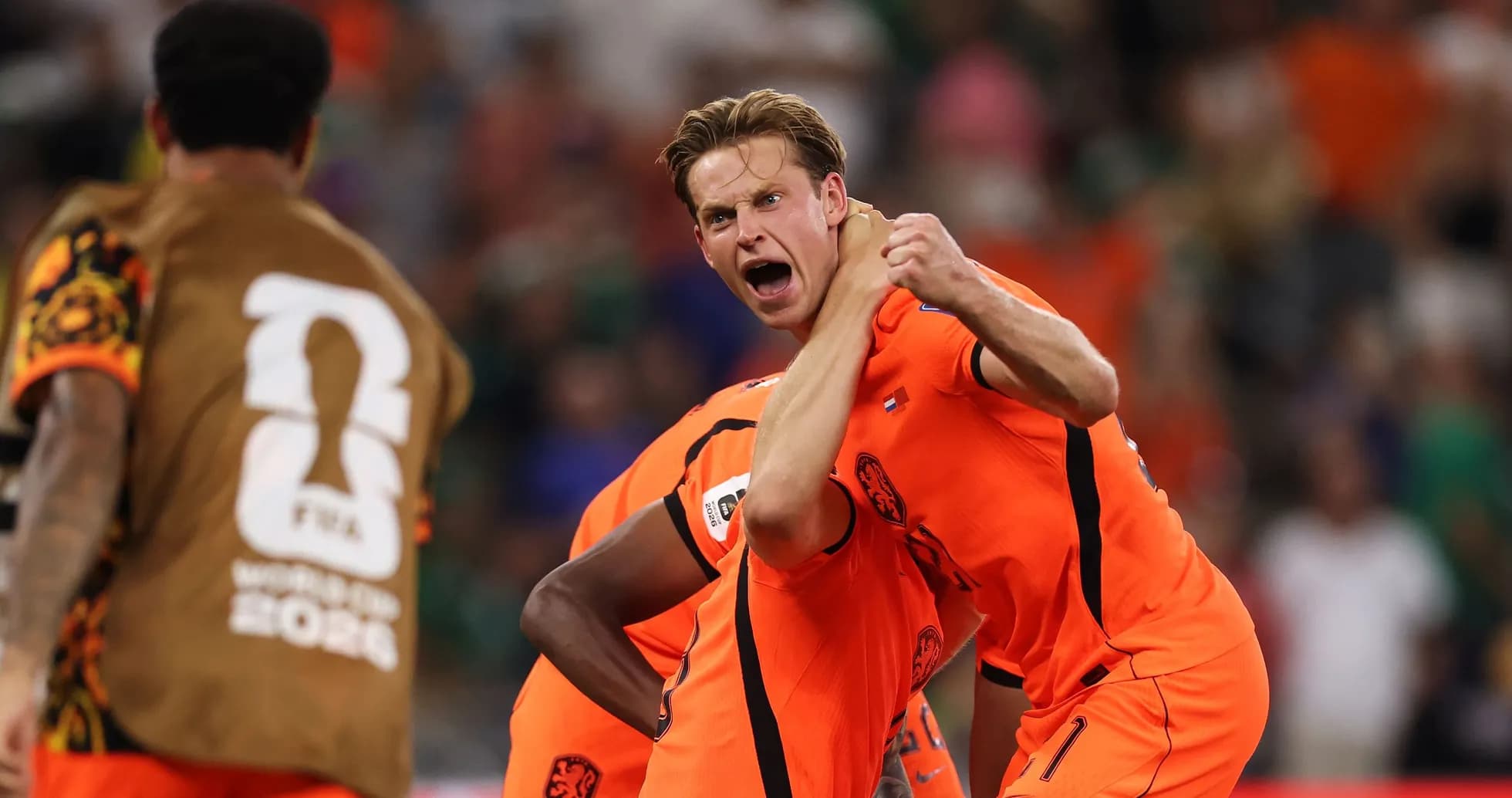
Across the continent, another thread tugged at his identity. Dutch roots in Rotterdam made Feyenoord the natural compass point. De Kuip, with its raw edge and working-class soul, matched the way he wanted to see football: emotional, imperfect, real. From there, the Netherlands national team became more than just a side to watch every four years. Oranje were family.
Some memories never leave. The 2010 World Cup final, with its brutality and beauty. A 2013 friendly between the Netherlands and Indonesia, watched live, where two worlds collided in one stadium. Oranje Indonesia watch parties that blurred the line between supporter and storyteller. Out of that orange haze, two figures still stand tallest: Arjen Robben, the relentless winger who turned predictability into inevitability, and Giovanni van Bronckhorst, the captain whose left foot and leadership framed an era.
Football didn’t just stay on the screen or in the stands. It seeped into every corner of his life.
A bachelor’s degree in History from Universitas Padjadjaran in Bandung gave him a way to understand the game beyond the scoreline. Football isn’t played in a vacuum; it grows from cities, politics, migrations, and memories. That lens shaped his writing, and later, his entire career.
The professional journey began at Tabloid BOLA, a giant of Indonesian sports media. From 2017 until its final print in December 2018, he learned the craft in a newsroom that treated football like serious literature and daily ritual all at once. When the presses stopped, the work didn’t. The byline moved instead.
GOAL came next, with its global reach and fast-paced digital rhythm. Assignments followed with FIFA as a freelance writer, and then a role inside the media department of the ASEAN Football Federation (AFF). The vantage point changed: from press box to federation office, from local angles to regional narratives. The game, however, stayed the same – a constant, whether told from Jakarta, Bangkok, Hanoi, or beyond.
At the same time, another side of the voice developed: live commentary. Since 2017, Indonesian football has been accompanied by his play-by-play calls, riding the tempo of matches, filling the gaps between whistles, and translating chaos on the pitch into words people could feel at home. It’s a different kind of storytelling, one where there’s no backspace, no second draft, just instinct and rhythm.
Geographically, the expertise sprawls across Southeast and East Asia. Indonesia and Liga 1 sit at the core, backed by data, context, and long-form features. Around that core, the map widens: Thailand, Malaysia, Vietnam, Japan, Korea. Each country with its own footballing culture, its own heroes, its own way of filling stadiums and building dreams.
The toolbox has grown with the modern game. Writing remains the backbone, but there’s more: digital and social media content, Instagram reels, podcasts, player profiles, live broadcasts, interviews, photography. Even basic français and español help open doors in mixed-language zones where a greeting in the right tongue can change the tone of a conversation.
The job, though, isn’t confined to studios and press rooms.
Backpacking became the unlikely partner to professional ambition. The idea was simple: travel light, chase stories, find Indonesian players scattered across the globe. The execution was anything but simple. Solo trips through the Netherlands, Belgium, Germany, France, and Japan turned into scouting missions, not for clubs, but for narratives.
In small towns and big cities, he tracked down Indonesians chasing their footballing dreams abroad. Some were already established, others still fighting for a place in the starting XI or even just a contract. The conversations that followed – in cafes, training grounds, modest apartments, and unfamiliar stadiums – became a body of work that means more than any single byline. These weren’t just interviews. They were fragments of a larger story about identity, ambition, and what it means to carry a flag far from home.
Those trips remain among his most cherished memories. Not because of the miles travelled, but because of the people met and the stories preserved. In many ways, they represent the purest version of what sports journalism can be: a bridge between players and the fans who might never get to see them up close.
All of this – the fandom, the travel, the work – naturally shapes how he sees the game on the pitch.
Ask for an all-time XI, and the hesitation is immediate. Football is too rich, too layered, to be pinned down to one perfect lineup. Still, some names refuse to move. In goal, it’s Manuel Neuer or Rogério Ceni, two keepers who redefined what their position could be – one as a sweeping, high-line general, the other as a set-piece artist and club icon.
Across the pitch stand Javier Zanetti and Sergio Ramos, full-blooded competitors who turned longevity into an art form. In midfield, N'Golo Kanté and Toni Kroos offer the perfect contrast: relentless energy beside surgical control. Out wide and up front, Arjen Robben, Mo Salah, and Zlatan Ibrahimović bring the chaos – cutting inside, breaking lines, bending games to their will.
To tie it all together, Juan Román Riquelme or Michael Laudrup sit at the heart of the system, pulling strings, slowing time, seeing passes others never knew existed. Lothar Matthäus, Zinedine Zidane, Ronaldo – the game’s great untouchables – miss out here not because they fall short, but because they appear on almost every list. This XI is personal, not universal.
That’s the thread that runs through his entire relationship with football: it’s always personal.
From Bandung’s Persib to Inter’s heartbreak, from Feyenoord’s roots to Oranje’s near-glories, from Indonesian stadiums to European side streets where a lone Indonesian player laces up far from home – the game has never been just content. It’s geography. It’s heritage. It’s obsession.
And for a journalist who has turned that obsession into a career, the real question isn’t where football has taken him so far.
It’s where the next story is waiting.





