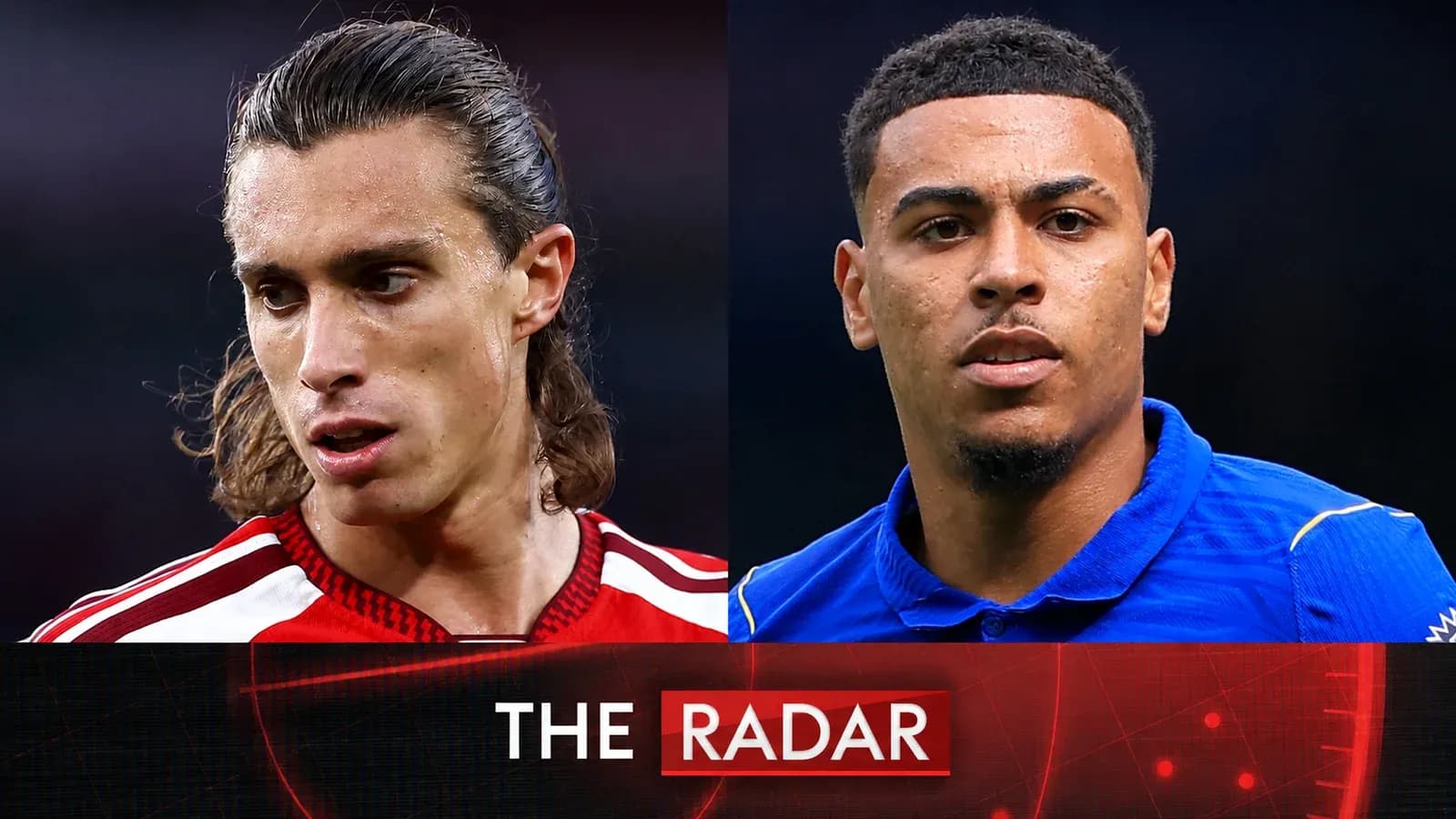
Premier League Early Storylines: Arsenal’s Defence vs Chelsea’s Attack
Arsenal’s wall of steel, Chelsea’s new spearhead, Hull’s unlikely rock and Everton’s lonely No 9. The Premier League’s early weeks have already drawn their battle lines.
Arsenal’s defence: the bar keeps rising
On Sunday at the Emirates, the league’s most miserly defence meets its most explosive attack. Arsenal have not conceded a goal. Chelsea have scored seven in two games. Something has to give.
What stands out with Arsenal is not just the clean sheets. It’s how little their goalkeeper has to do. Hull have also opened with back-to-back shutouts, but Konstantinos Tzolakis has had to earn every one of them. David Raya, by contrast, has spent most of August as a spectator.
One Jack Rudoni header. That is the sum total of shots on target Arsenal have allowed across their first two league fixtures. One.
This is not a sudden uptick. It’s a continuation of a defensive machine that has been grinding opponents down for more than a year. Since the start of last season, Arsenal have held teams to under 0.50 expected goals in 20 of 40 Premier League matches. Half their games. The rest of the division are nowhere near that level of control.
Liverpool sit next on that list with eight such games. Manchester City, last season’s runners-up, have done it only twice. Chelsea, for all their attacking promise, have managed it four times. Arsenal are operating on a different defensive plane.
That is why the mood around the Emirates is so curious. Supporters are rightly irritated that the club did not land a marquee attacker in the window. The numbers, though, underline the sheer gulf between Arsenal and everyone else when they do not have the ball.
And they are doing it without their best defender.
William Saliba’s absence would once have felt like a structural crisis. Jurrien Timber is missing too. Yet the back line has barely flinched. The club’s heavy investment in depth was meant to guard against exactly this scenario, but even so, the way the replacements have slotted in is striking.
Ezri Konsa, the headline defensive signing, has played only 11 minutes. Instead, Cristhian Mosquera has stepped in alongside Gabriel at centre-back, with Ben White shuffling across to right-back. Riccardo Calafiori completes a back four that, before this season, had never started a Premier League game together.
You would not know it from the numbers.
Behind them, Bruno Guimaraes has added more bite and ballast in midfield, even if, like Konsa, he is being eased into the rhythm of Arteta’s system. The personnel keep changing. The structure does not.
That is the crux of it. Arsenal’s defensive excellence flows less from individuals and more from the tactical scaffolding Mikel Arteta has built. Distances between players. Triggers to press. The aggression of the line. The compactness when they drop. It all looks ingrained now, not improvised.
So when Chelsea arrive with the league’s most dangerous attack so far, Arsenal will lean on what they know. Their solidity is not a nice-to-have. It is the foundation of their title defence. And if they can smother the division’s form frontline as they have so many others, the message to the rest of the league will be loud.
The champions are not going away.
Rogers at Chelsea: the one that got away
As Arsenal look to shut Chelsea down, they will also see a reminder of what might have been at the other end of the pitch.
Before the failed swings at Vinicius Junior and Julian Alvarez, Arsenal pushed hard for Morgan Rogers. He chose Stamford Bridge instead. On Sunday, he will run at them from the left flank they left conspicuously light.
From the press box at Stamford Bridge last weekend, in that 4-3 thriller against Brighton, Rogers looked every inch the £117m forward Chelsea believed they were buying. From almost pitch level, you could feel the jolt every time he took the ball and turned.
Operating off the left, he ripped through two Brighton defenders to create Chelsea’s second goal. Later, he spun sharply and threaded the pass that launched the break for their third. Power, balance, timing of the release — it was all there.
These were not isolated flashes. He had impressed in the opening game against Fulham as well. Many questioned the fee. Rogers looks intent on making the argument feel dated.
Two games in, he already has a goal and an assist. Only Bruno Fernandes has produced a higher combined total of shots and chances created so far. The next names on that list? Cole Palmer and Joao Pedro, his partners in Chelsea’s front three. The chemistry is forming quickly.
The real examination comes now. Doing it against Fulham and Brighton is one thing. Doing it against the most suffocating defensive unit in the country is another.
For Rogers, the subplot is obvious. Arsenal wanted him. They could use exactly his profile on that left side. He chose Chelsea. On Sunday, in front of the club that chased and missed him, he has the chance to show why.
Hull’s unlikely enforcer
Down the table, another defensive story is quietly taking shape.
Hull were not meant to open the season with two clean sheets. They were not meant to look this stubborn. Tzolakis has played his part, and the data loves him for it — he has kept out efforts worth 1.92 expected goals, the best underlying goalkeeping numbers in the league over the first two games.
But focus only on the man in gloves and you miss the man in front of him.
John Egan, 33 years old and once of Sheffield United, could have been forgiven for thinking his Premier League days were done. Hull’s surprise promotion rewrote that script, and this week he underlined his importance by signing a new and improved contract along with five team-mates.
He is repaying that faith in the most old-school way possible: by heading and hacking everything that comes near him.
Against Manchester United on the opening weekend, Egan made 17 clearances. Seventeen. He backed it up with 10 more against Coventry. An average of 13 per game, by far the highest in the division.
It is not glamorous. It will not flood social media with clips. But it is brutally effective. When the ball drops in Hull’s box, Egan tends to be the one who sends it back out again.
Aston Villa arrive on Sunday with plenty of attacking weapons and a clear plan to drag Hull into uncomfortable areas. Egan will not care how it looks. Hull will just want more of the same: balls away, danger cleared, points banked.
Everton’s lone striker
At Goodison Park, the story up front is very different. Bare bones. One man.
Thierno Barry goes into the weekend as Everton’s only recognised centre-forward. Not the focal point of a three-man rotation. The only option.
The club have sold Beto. Their attempts to bring in Richardson and Folarin Balogun collapsed in a transfer window that veered from frustrating to alarming. The result is stark: Barry, on his own, is carrying Everton’s attacking hopes against Manchester United.
No safety net. No alternative profile off the bench. No experienced foil alongside him.
For a club already living with the constant tension of recent seasons, it is a precarious way to enter a home game against a side with United’s firepower. For Barry, it is an opportunity and a burden rolled into one.
Four games on Sky Sports frame the weekend: Ipswich vs Liverpool on Friday, Hull vs Aston Villa on Saturday, then Sunday’s double of Everton vs Manchester United and Arsenal vs Chelsea.
Defensive walls, new attacking stars, unexpected heroes and a solitary striker. The Premier League’s early storylines are already crackling. Now they need answers.