Rio's Journey to Gold: A Tribute to His Coach in Brazilian Jiu-Jitsu
The gi felt heavier than usual. The build‑up had made sure of that.
A winter illness had knocked Rio down in the weeks before the tournament, the kind that lingers in the lungs and legs. Then came the real blow: the loss of his coach barely a month out. For many athletes, that combination would have been enough to derail an entire campaign.
Rio walked onto the mats anyway.
In the gi division, competitors wrapped themselves in the familiar armour of Brazilian Jiu-Jitsu: thick cotton jacket, reinforced pants, belt tied tight to show rank. It is a uniform designed to be gripped, yanked, twisted. Every fold of fabric is a handle, every lapel a potential choke.
Across from him stood opponents from Mongolia and Mexico, each with their own path to this stage, each ready to pull and drag on that same heavy cloth. Rio gave them very little time to settle.
The first fight ended almost as soon as it began. Within the opening minute, he latched onto a leg and finished with an Aoki lock, a brutal, precise footlock that leaves no room for argument. One mistake, one exposed limb, and the bout was over. Gold suddenly felt closer.
The second fight demanded more craft. This time, Rio closed the show with a triangle choke from his back, locking his opponent between his legs and cutting off the air and blood. It was not just another submission. It was a tribute.
His late coach, Damian Smith, had built his reputation on triangles, drilling the angles and details into Rio for years. So when the opening appeared in the final, the technique came with a flood of memory: mat-side instructions, quiet corrections, the rhythm of a familiar setup. He finished the choke, claimed gold, and carried his coach into that moment with him.
This was Rio’s first international medal at black belt level, a milestone that would sit at the top of many careers. He shrugged at the idea that the metal itself mattered most. The real satisfaction came from the way he won it, using the very move his coach had specialised in.
For all the intensity on the mats, the atmosphere around him felt almost routine once the first grip was taken. The nerves and the noise faded. It became just another day in the office, another roll, another chance to “go hard”, as he put it.
Away from the gi, the no‑gi athletes moved differently. No thick jackets to grab, no sleeves to cling to. Just tight synthetic rash guards and board shorts, forcing competitors to hunt for underhooks, wrist ties, body locks. Control came from contact with the body itself, not the cloth wrapped around it. Every slip of sweat mattered.
The structure of the event was strict: divisions by sex, belt, age, and weight. No shortcuts, no mismatches. Just clean brackets and clear tests.
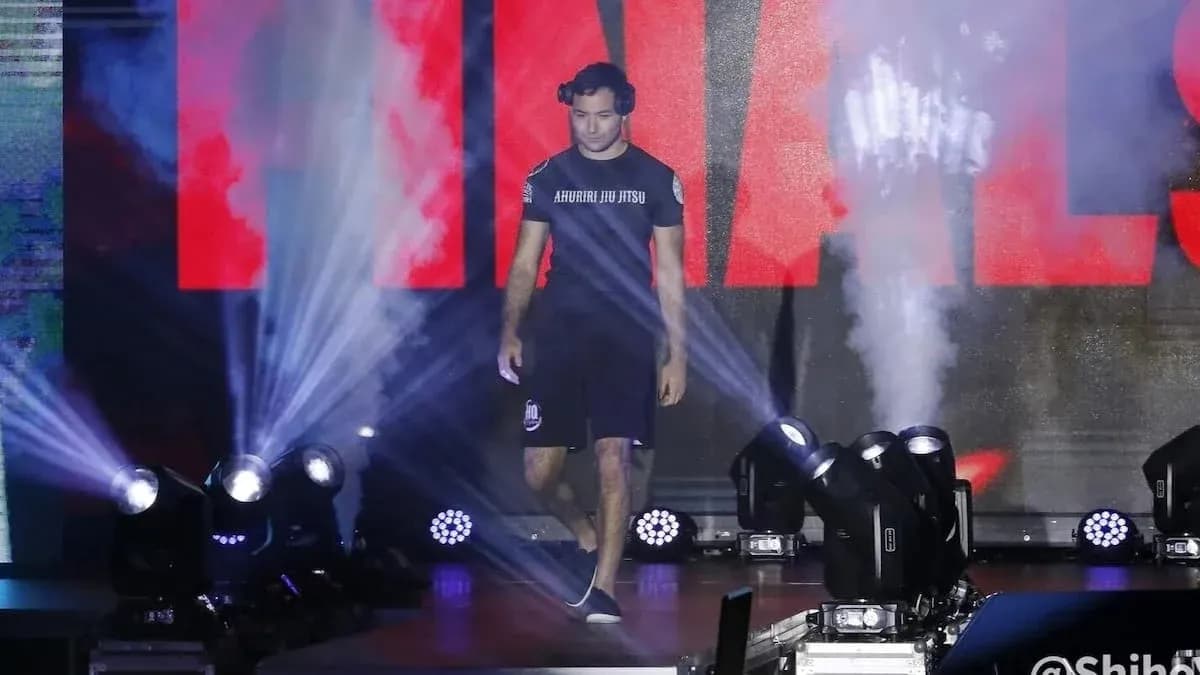
Rio’s success did not belong to him alone, and he knew it. He pointed to his team at Gracie Allegiance Ahuriri and Gracie Allegiance Team New Zealand, and to the wider Brazilian Jiu-Jitsu community in Hawke’s Bay. The region’s gyms share a tight-knit culture, where long hours on the mats mean you eventually know most faces, most styles, most stories.
“You get nowhere in martial arts without good teammates and training partners,” he said, and in his case that network stretches well beyond a single club. Friends and training partners from across Hawke’s Bay’s BJJ gyms had helped build the engine that powered him through those frantic minutes on the mat.
For now, Rio and his partner and fellow coach, Yukako Mori, are staying on in Japan. The trip has turned into a blend of reunion and refinement: catching up with friends, sharpening skills in both Brazilian Jiu-Jitsu and Judo, adding new layers to games that are already battle-tested.
When he returns to Hawke’s Bay, the plan is simple. Keep training in Ahuriri. Keep enjoying Jiu-Jitsu. Keep the sport what it has always been for him: a place to work hard without it feeling like work.
He talks about self-defence, about staying active without the grind of a traditional workout, about the friendships that outlast tournaments and medals. In a sport built on chokes and joint locks, his invitation is open, almost disarmingly so.
Anyone is welcome.