RotoWire Top 150: NBA Fantasy Draft Board Insights
Two weeks from preseason tip-off, real rotations are still being guessed at, but the fantasy board is already taking shape. RotoWire’s latest top 150 for category leagues doesn’t just rank talent — it tracks a league that’s been flipped by superstar relocations, rookies with real roles and medical files that can make or break a season.
At the top? Stability and scarcity. Then chaos.
The Untouchables: Jokic, Wembanyama and the New First Tier
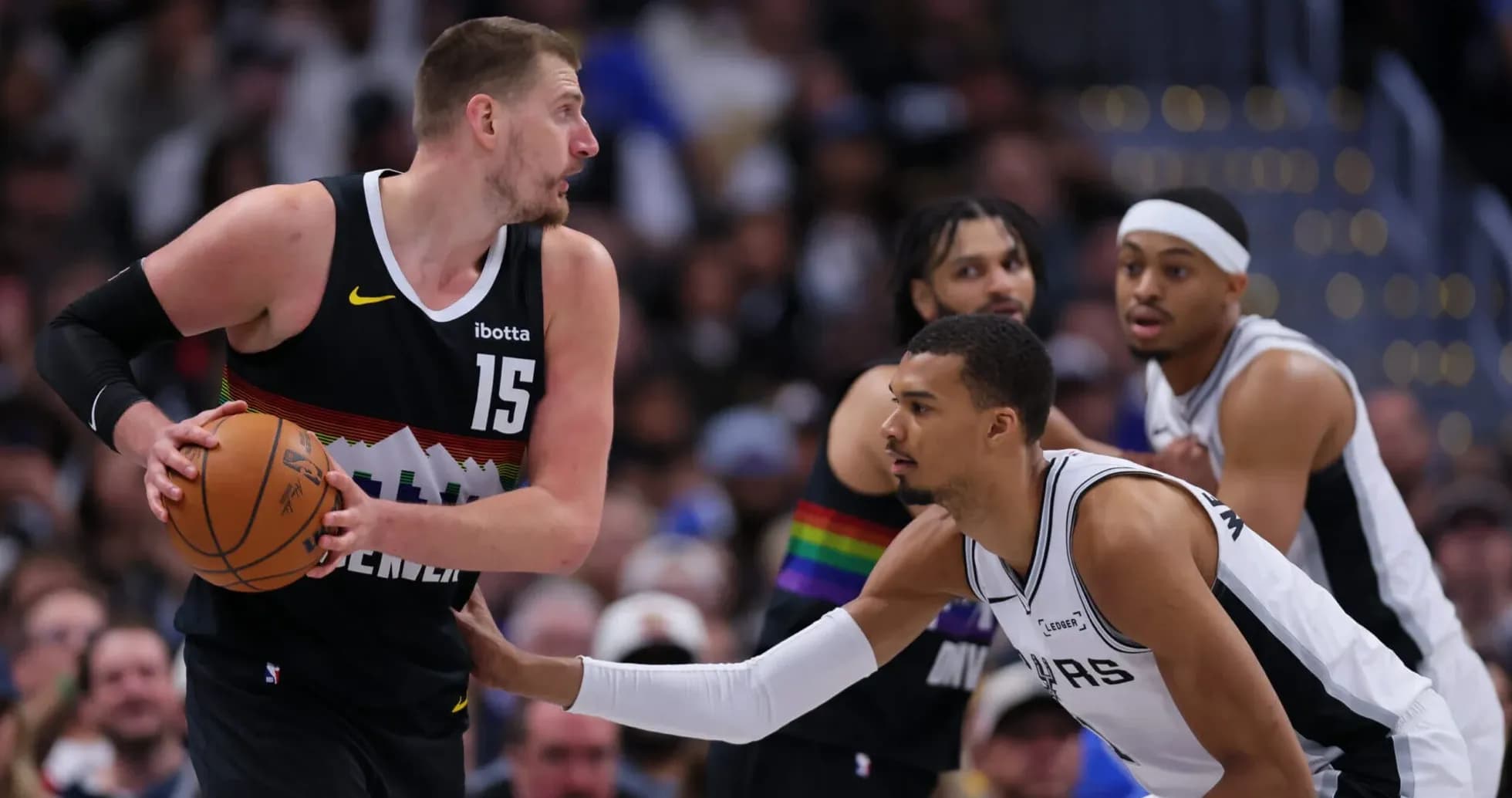
Nikola Jokić sits exactly where he should: on his own line. There’s no weak point in his profile. High-volume, high-efficiency scoring, elite assists and rebounds, real steals, helpful free throws and workable 3s. In category formats, he doesn’t just anchor a build; he lets you delay deciding what that build even is.
Victor Wembanyama joins him in the stratosphere for a different reason: scarcity. Blocks at his volume are the single most valuable individual asset in this game, and he pairs them with 3s and boards from a forward-center slot. You don’t draft him for safety. You draft him because he warps the entire league’s block market the second you click “draft.”
Shai Gilgeous-Alexander rounds out the early elite for category managers. His efficiency is absurd for a guard with that usage: high field-goal percentage, pristine free throws on big volume, plus steals that actually move the needle. In this format, he’s more valuable than in points leagues by a clear margin.
Luka Dončić, now running the Los Angeles Lakers without LeBron James, is the first superstar with real tradeoffs. The usage spike promises monstrous counting stats and 3-point volume, but the field-goal drag and league-leading turnovers keep him a notch below the three above in category builds.
Rising Stars, New Roles and the First-Round Puzzle Pieces
Cade Cunningham’s case is simple: elite assists and strong rebounding from the guard spot, with 3s layered on top. The cost is obvious too — turnovers and a field-goal percentage that still hasn’t caught up. Age keeps the door open for improvement, but drafters have to decide how much risk they’re willing to buy.
Jayson Tatum steps back into Boston as the undisputed No. 1 option, a year removed from an Achilles tear and with Jaylen Brown gone. His appeal is balance: scoring, boards, 3s, good percentages and enough defensive stats to avoid holes. He doesn’t force a punt strategy; he lets you shape one.
Anthony Edwards is turning into the archetype of the modern fantasy wing: high 3-point volume, strong free throws, steals and heavy usage. The arrival of LaMelo Ball in Minnesota should clean up his shot quality while trimming his assists, a tradeoff most managers will happily accept.
Giannis Antetokounmpo in Miami is still the classic category riddle. He dominates field-goal percentage, rebounds, steals and blocks, then detonates your free throws and 3s. You don’t take him and decide later; you draft him and commit to a punt. Do that well and he’s better than his raw rank.
Jalen Johnson’s profile is tailor-made for this format: 20/10/6 potential with steals and blocks from the forward spot on strong efficiency. Free throws and turnovers are the cost, and his games-played record adds another layer of risk.
Tyrese Maxey’s rise in Philadelphia brought volume 3s, elite free throws and a sneaky-good steal rate. The arrival of Jaylen Brown and LeBron James threatens his usage and minutes, but the tradeoff is cleaner looks and better efficiency. His value shifts shape, not direction.
Cooper Flagg in Dallas is already more than a curiosity. After an excellent rookie year, he offers steals and blocks from a forward slot with improving efficiency. Kyrie Irving’s presence should improve his shot quality without stealing too many attempts.
Tyrese Haliburton remains a category darling: elite assists, low turnovers, volume 3s and excellent free throws, with the entire Indiana offense tailored to his strengths. The Achilles issue is the only cloud, but on a per-game basis, he’s still first-round material.
Second-Round Builders: Specialists With Anchoring Power
Scottie Barnes continues to be the prototype for category versatility: steals, blocks, rebounds and assists from a forward. His weak free throws and low 3-point volume tug him down, and swapping Brandon Ingram for Kawhi Leonard in Toronto chips away at his usage, but the shape of his line is exactly what managers want.
Donovan Mitchell offers 3s, free throws and better steals than his reputation suggests. With James Harden handling most of the playmaking in Cleveland, his assists stay modest, but his role and output remain predictable — a rare commodity in the second round.
Karl-Anthony Towns, now with the New York Knicks, gives managers a center who shoots free throws like a guard, hits 3s and hauls down 12 boards a night. The glaring hole is blocks from the center spot, something drafters have to patch later.
Kevin Durant in Houston still boasts one of the cleanest efficiency lines in the league: high-level field-goal and free-throw percentages, 3s and about a block per game. At 38, rest days loom as the obvious risk, but on a per-game basis he still flirts with first-round value.
Stephen Curry remains a category monster even as age and availability creep in. League-leading 3s, elite free throws and a real steal rate keep him firmly in the early rounds, especially in formats that reward efficiency.
Jamal Murray’s role in Denver is as safe as it gets. He delivers 3s, strong free throws, a career-best field-goal percentage next to Jokić, and high-volume assists with manageable turnovers. There’s no mystery here — just bankable production.
Alperen Sengun brings a unique package from the center spot in Houston: field-goal percentage, rebounds, assists and steals. He doesn’t shoot 3s and he piles up turnovers, which keeps him behind Towns, but his all-around impact is undeniable.
Amen Thompson offers one of the rarest combinations in fantasy: steals and blocks from the wing with a strong field-goal percentage. The price is severe — you’re effectively punting 3s and free throws — but if you lean into that, he becomes a cornerstone.
Trae Young, now with the Washington Wizards, remains a polarizing build-around guard. Elite assists, 3s and free throws with useful steals, wrapped in brutal field-goal percentage and heavy turnovers. You either accept the flaws and construct around them or stay away entirely.
Austin Reaves steps into a bigger role with the Lakers post-LeBron. Elite free throws on high volume, 3s and secondary playmaking are his calling cards, with rising turnovers as the cost of that usage. Four categories lean clearly in his favor.
LaMelo Ball’s move to Minnesota gives him 3-point volume, steals and assists at the usual high rate, but his field-goal percentage and turnovers remain issues. The bigger question now is how much the offense still runs through him with Edwards in full bloom — and whether he can stay on the floor.
Chet Holmgren is a category specialist’s dream: blocks and 3s from the center position, plus strong field-goal and free-throw percentages. His raw counting stats look ordinary for points leagues, but in category formats, his shape is gold.
Third and Fourth Rounds: Health Bets, Category Unicorns and Role Shifts
Josh Giddey in Chicago offers rebounds, assists and steals from the guard spot, with newly respectable 3-point shooting. The tax is turnovers from a nightly triple-double threat who runs the offense.
James Harden in Cleveland still brings 3s, free throws, assists and steals, but his field-goal percentage and turnovers demand a tailored build. He’s no longer a plug-and-play star; he’s a structure you draft around.
Devin Booker’s down shooting year in Phoenix pushes him into discount territory. He’s still the Suns’ primary creator with strong free throws, decent 3s and assists. Positive regression on his field-goal percentage is the upside bet.
Anthony Davis, now with Washington, played just 20 games last season, but when he’s active, the line is first-round caliber: elite field-goal percentage, double-digit boards, blocks and steals. You pair him with iron men and accept the volatility.
Kawhi Leonard in Toronto remains capable of MVP-level two-way numbers. A healthy season last year cuts against a decade of caution flags, and the Raptors’ depth gives him every excuse to pull back on minutes and usage. The ceiling is still there; the floor is fragile.
Trey Murphy III is a pure category riser in New Orleans: high-volume 3s at a strong clip, excellent free throws and low turnovers. Dejounte Murray’s return trims his usage, but the profile is exactly what category managers pay for.
Evan Mobley offers blocks, steals and rebounds with typically strong field-goal percentage. Last year’s shooting slump pushed him down a round, but a bounce-back looks reasonable.
Jalen Brunson in New York delivers efficient scoring from the field and line, 3s and volume assists. He offers almost nothing in blocks and only modest steals, so managers need defensive stats elsewhere.
Domantas Sabonis in Sacramento is still a walking double-double with elite field-goal percentage and playmaking from the center spot. He doesn’t block shots and he turns it over a lot, but with Russell Westbrook retired and DeMar DeRozan in Denver, his usage should climb again.
Derrick White remains one of the format’s secret weapons: 3s, blocks and steals in the same line, plus strong free throws and low turnovers. Paul George’s arrival and Tatum’s full return mean fewer shots, but the category shape doesn’t suffer.
Lauri Markkanen in Utah gives 3s, a strong free-throw percentage and rebounds from the forward spot. Utah’s win-now push should keep him on the court while slightly trimming his volume. Limited steals, blocks and assists cap his ceiling.
Bam Adebayo in Miami offers a well-rounded center line. Giannis’ arrival might shave some rebounds but could open more 3-point attempts, nudging his profile in a new direction.
By the fourth round, the board turns into a mix of upside and medical notes. Jalen Williams in Oklahoma City still profiles as the Thunder’s No. 2 option when healthy, with a balanced two-way line. Walker Kessler heads to the Lakers as a traditional big with elite field-goal percentage and shot-blocking, now catching lobs from Dončić.
Deni Avdija’s All-Star breakout in Portland brought 3s, rebounds and playmaking from a forward, but Ja Morant and Damian Lillard now crowd his touches. Kyrie Irving returns in Dallas with elite efficiency, 3s, steals and low turnovers, discounted only by his age and ACL history.
Jaren Jackson Jr. in Utah brings the coveted blocks-and-3s combo with strong free throws for a big, but his field-goal percentage and foul trouble remain recurring headaches. Jalen Duren offers a nightly double-double and elite field-goal percentage in Detroit, with improving free throws but thinner blocks than his profile suggests.
Brandon Miller in Charlotte is the likely usage winner after the LaMelo trade, with 3-point volume as his main weapon. The bet is whether his efficiency holds as his role grows. Jaylen Brown in Philadelphia should be the second scoring option behind Joel Embiid in a rotation that includes LeBron, but his game still leans more toward points formats.
Kon Knueppel in Charlotte and Onyeka Okongwu in Atlanta headline the fourth-round upside plays: Knueppel as a second-year wing with efficient shooting and 3s in a bigger role, Okongwu as an entrenched 32-minute starter adding real 3-point range to his field-goal, rebound and block package. Desmond Bane and Paolo Banchero in Orlando round out the group — Bane as a polished 3-and-D guard with strong percentages, Banchero as a volume stat-stuffer whose efficiency and defensive stats lag behind.
Middle Rounds: Specialists, Rookies and Risk Management
From the fifth round on, the draft becomes a study in risk tolerance.
Donovan Clingan, Nickeil Alexander-Walker and Darius Garland headline the early mid-rounds. Clingan brings blocks, field-goal percentage and a double-double baseline in Portland’s open frontcourt. Alexander-Walker offers 3s, steals and clean efficiency in a locked-in 3-and-D role. Garland takes over as the primary playmaker for the Clippers with elite free throws, 3s and assists, but recent injuries shadow his upside.
Dejounte Murray returns in New Orleans with bulk steals, rebounds and assists from the guard spot after an Achilles tear. LeBron James, now in Philadelphia, remains a nightly triple-double threat with strong efficiency, but his minutes, role and games played are anyone’s guess.
Keyonte George in Utah, Dyson Daniels in Atlanta and OG Anunoby in New York all sit at the intersection of role and profile. George comes off an All-Star-level season but faces usage competition from Utah’s influx of talent. Daniels still leans on steals and solid field-goal percentage with no 3s and a weak free-throw line. Anunoby remains a premier mid-round 3-and-D asset: 3s, steals, blocks, strong field-goal percentage and almost no turnovers.
Rookies like Cameron Boozer in Memphis, Kel’el Ware in Milwaukee and Matas Buzelis in Chicago offer upside with clear warning labels. Boozer has the best immediate runway but carries the usual rookie inefficiency and turnover concerns. Ware brings blocks, boards and some stretch shooting on a rebuilding Bucks team that should hand him minutes. Buzelis, coming off a sophomore breakout, offers two-way forward stats with room to grow.
Joel Embiid’s placement in the sixth round tells you everything about the risk baked into this board. On a per-game basis, he wins categories by himself with elite free throws, blocks and strong field-goal percentage. Philadelphia’s roster upgrades point to fewer minutes and less urgency to push him, making him a high-variance swing.
Franz Wagner, Stephon Castle, Tyler Herro and Michael Porter Jr. carry their own caveats. Wagner’s 22/5/5 potential is undercut by erratic free throws, 3-point shooting and injuries. Castle’s weaknesses — efficiency and turnovers — are exactly what category leagues punish. Herro steps into his highest-usage role in Milwaukee, bringing 3s and free throws at the cost of turnovers and nonexistent defense. Porter Jr. remains a clean fit with 3s, field-goal percentage, boards and low turnovers, even with Julius Randle taking some shots in Brooklyn.
As the rounds progress, managers chase specific shapes: Ivica Zubac’s steady center stats, Julius Randle’s points, boards and assists with little defense, Zach Edey’s per-minute dominance if he can secure 30 minutes in Memphis, De’Aaron Fox’s bounce-back potential in San Antonio’s crowded backcourt and Damian Lillard’s enduring 3s and free throws amid age, injury and a busy Portland guard room.
Rudy Gobert, Alex Sarr, Naz Reid, Mikal Bridges and Paul George headline the seventh round as durable (or formerly durable) category anchors. Gobert’s role in Minnesota is locked in even as his volume dips. Sarr and Reid bring blocks and stretch shooting from the frontcourt. Bridges remains the league’s iron man with 3s, steals and low turnovers. George still offers premium 3-and-D numbers, even as absences stack up.
From there, names like Brandon Ingram, Jaden McDaniels, Payton Pritchard, Ausar Thompson, Ja Morant, Immanuel Quickley, Jarrett Allen and Zion Williamson all carry a mix of upside and red flags — whether it’s thin defensive stats, role uncertainty, health history or efficiency issues.
By rounds eight and nine, managers are targeting pure specialists and role security: VJ Edgecombe’s steals and 3s in Philadelphia, Coby White’s volume 3s in Charlotte, Myles Turner’s blocks-and-3s combo in Milwaukee, Dylan Harper’s playoff-fueled rise in San Antonio’s crowded backcourt, Ty Jerome’s pristine efficiency in limited minutes for Memphis, and Isaiah Hartenstein’s well-rounded center line in Oklahoma City.
Nicolas Claxton’s elite field-goal percentage, blocks and steals in Chicago come with brutal free throws and no 3s. Jabari Smith Jr. fights for shots in a crowded Houston offense but offers a solid floor. AJ Dybantsa’s No. 1 pick pedigree in Washington is tempered by efficiency and usage concerns alongside Trae Young and Anthony Davis.
Late Rounds: Edges, Fliers and the Final Calculations
The final third of the board is where sharp managers separate themselves.
Day’Ron Sharpe in Brooklyn, Miles Bridges in Phoenix, Ayo Dosunmu in Minnesota and Andrew Wiggins in Miami offer defined roles with clear strengths: rebounding and interior scoring, 3s and free throws, steals and efficiency, and quiet across-the-board contributions, respectively.
Keegan Murray in Sacramento, Cedric Coward in Memphis, Kristaps Porziņģis in Golden State and John Collins in Detroit all carry the same theme: if the minutes and health cooperate, they crush their price. If not, they sit right where they’re ranked.
Round 10 is pure edge-hunting. Neemias Queta’s breakout in Boston now has to coexist with Mitchell Robinson. Kevin Porter Jr. fights a crowded Milwaukee backcourt. Khaman Maluach in Phoenix could walk into a double-double with two blocks if he wins the starting job. Toumani Camara in Portland offers the ideal late 3-and-D line. Darryn Peterson in Utah, Ajay Mitchell and Cason Wallace in Oklahoma City, Zach LaVine in Sacramento, Peyton Watson in Cleveland, CJ McCollum in Atlanta, Brandin Podziemski in Golden State and Jalen Green in Phoenix all present varying blends of role, efficiency and category fit.
The final three rounds are about finding the one or two players who can swing a category by themselves. Jusuf Nurkić’s assists from the center spot in Utah, Kyshawn George’s two-way line in Washington, RJ Barrett’s empty scoring in Toronto, Jaime Jaquez Jr.’s well-rounded offense in Milwaukee, Jakob Poeltl’s traditional big-man stats, Egor Dëmin’s 3s and assists with poor finishing, Reed Sheppard’s squeezed minutes in Houston, Maxime Raynaud’s Sabonis roadblock in Sacramento, Saddiq Bey’s crowded New Orleans wing rotation, Sandro Mamukelashvili’s per-minute punch in Los Angeles, Anthony Black’s uncertain role in Orlando and Darius Acuff Jr.’s rookie volatility in Sacramento all come with clear “if-then” statements.
Jeremiah Fears, Andrew Nembhard, P.J. Washington, Ace Bailey, DeMar DeRozan, Tari Eason, Davion Mitchell, Collin Gillespie, Aaron Gordon, Paul Reed, Tre Jones and Devin Vassell fill out round 12 as specialists and insurance policies — assists, steals, 3s, efficient shooting, big-man depth and bench scoring.
By round 13, managers are mostly taking stabs: Christian Braun’s bounce-back minutes next to Jokić, Quentin Grimes’ 3s and steals for the Lakers, Yaxel Lendeborg’s chance to start in Golden State, Jrue Holiday’s aging but still sharp 3-and-D profile in Portland, Cameron Johnson’s quiet category impact in Denver and Pelle Larsson’s scoring spark in Miami.
The names change, the jerseys change, the roles shift. The math doesn’t. Scarcity still rules, efficiency still separates, and health still decides titles.
The question now is simple: with this new NBA landscape, who’s willing to build a roster around its flaws instead of chasing only its stars?