Shakhtar Donetsk Earns Point in Eindhoven as Turan’s Strategy Shines
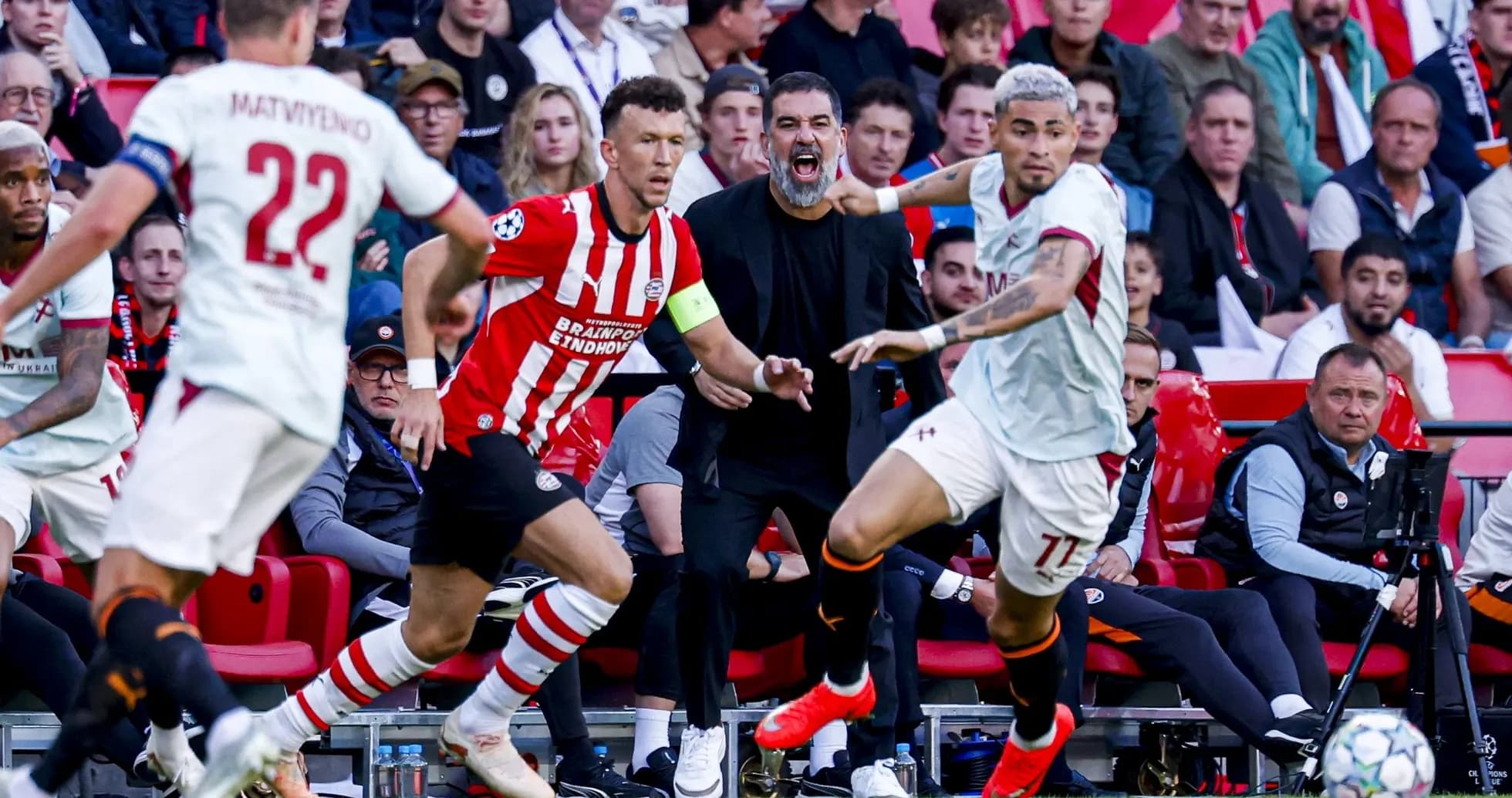
Shakhtar Donetsk opened their UEFA Champions League campaign with a point that felt far bigger than the numbers suggest, digging in for a 1-1 draw against PSV Eindhoven at the Philips Stadion and surviving a late siege from the Dutch champions.
They did it their way, too. Not by trying to mirror PSV’s ferocious pressing, but by refusing to be dragged into a fight on the home side’s terms.
Turan’s plan, Shakhtar’s punch
For long spells, PSV did what PSV do: hunted in packs, pressed one-on-one, and tried to squeeze the air out of Shakhtar’s passing game. The Ukrainian side bent, but they did not break. They thought. They waited. They picked their moments.
The breakthrough came right on the stroke of half-time. In stoppage time, Venezuelan midfielder Gleiker Mendoza found exactly the pocket of space his coach had drawn up on the tactics board. Drifting into the half-space between PSV’s lines, he shaped a curling finish that stunned the Philips Stadion and crowned his Champions League debut in style.
It was not an accident. It was the plan.
Head coach Arda Turan had warned his players all week: matching PSV’s intensity would be a trap.
“I told them: if we play like PSV, we will not win,” he said afterwards. “We needed to play our own football to be competitive. The opponents used one-on-one pressing, so I warned my players that they needed to position their bodies correctly.”
So Shakhtar focused on angles, not just energy. Diagonal movement, small tweaks in body shape, the half-second gained by receiving on the half-turn rather than square. Little details that allowed them to slip past PSV’s first line of engagement and launch counters into the spaces left behind.
The reward was Mendoza’s opener – a goal born as much from geometry as from technique.
Dest hits back, pressure mounts
The shock of going behind jolted PSV. After the break, the hosts surged forward with greater purpose, and the equaliser did not take long. Sergino Dest stepped up, levelling the match shortly after half-time and restoring the roar inside the stadium.
From there, it became a test of nerve.
Wave after wave of PSV pressure crashed toward the Shakhtar box. Crosses, cut-backs, second balls dropping on the edge of the area. The Dutch champions turned the screw, determined to turn one point into three on opening night.
Shakhtar refused to fold. They scrambled, blocked, and cleared. When they could, they tried to breathe on the ball, to stitch together just enough passes to drag PSV’s press into blind alleys. It was not pretty, but it was brave. It had to be.
By the final whistle, that single point felt hard-earned, almost defiant.
A blanket in a bombing raid
For Turan, this was more than a tactical battle. His post-match reflections drifted back to a different kind of pressure, a different kind of night.
He spoke about 19-year-old midfielder Isaque, who made his Champions League debut in Eindhoven. The Turkish coach did not talk first about the teenager’s technique or composure. He talked about a photograph on his phone.
“When I think about Isaque, I remember a photograph on my phone,” Turan said. “It was taken on the night when we were being bombed and I covered him with a blanket in the hotel lobby. I told him he has to be ready for the fight.”
That image – a young player under a blanket in a hotel lobby during a bombing raid – hangs over every European night Shakhtar now play. It explains their edge. It explains their resilience. This is a team for whom “pressure” does not begin and end at the sound of a whistle.
Turan believes that surviving those moments of real danger has forged the steel his squad now shows under the lights. The tactical discipline in Eindhoven, the refusal to panic under PSV’s late onslaught, flows from that shared experience of something far more serious than a high press.
Mendoza’s moment and the road ahead
For Mendoza, this was a night he will carry with him for the rest of his career. A first Champions League appearance, a first Champions League goal, and a finish that would stand up in any arena.
“I can’t put my emotions into words,” he admitted. The midfielder was quick to credit his coach’s blueprint, pointing directly to the half-spaces Turan had highlighted as the key to unlocking PSV’s defence. “Mister always emphasises that we should attack the half-spaces between the lines. The most important thing is that we continue at this pace and keep picking up points.”
That is the challenge now. Shakhtar have already shown they can stand up to one of Europe’s most aggressive pressing sides and walk away with something tangible. They have shown they can implement a clear idea under extreme physical and emotional strain.
The point in Eindhoven will not define their campaign. But the way they earned it – with tactical clarity, emotional scars, and a teenager who once hid from bombs now stepping into the Champions League – might just tell us where this journey is heading.