Socceroos Dominate Qatar with 3-0 Victory
The week belonged to the noise. The night belonged to the Socceroos.
After days dominated by logistics, politics and the late switch of next Tuesday’s clash with Jordan to Doha, Australia’s men finally stepped onto the pitch and stripped everything back to its simplest form: hunt, harry, punish. Qatar never stood a chance. A 3-0 scoreline flattered the hosts.
From the opening whistle, Tony Popovic’s side pressed like a team with a point to prove. They squeezed high, trapped Qatar in their own third and turned every hesitant touch into an invitation to steal. By half-time, the game was done. Qatar had not even managed a touch in the Australian penalty area until the 38th minute. By then, they were 3-0 down and being picked apart.
McGree sets the tone
Five minutes in, the tension of the week evaporated with a goal that said everything about Australia’s intent.
Riley McGree, starting for his country for the first time in a while and chasing his first international goal in more than four years, smelled panic. Mahmud Abunada, under fierce pressure from Tete Yengi, tried to thread a pass into midfield for Assim Madibo. McGree read it early, stepped in like a striker who had seen it all before and simply passed the ball into the net.
Predatory. Cold. Exactly what Popovic has been demanding.
The pattern was set. Qatar persisted with playing out from the back. Australia kept closing the net. The mistakes kept coming.
Press, punish, repeat
On 32 minutes, the pressure snapped the hosts again. Abunada shanked a clearance straight into trouble and Connor Metcalfe pounced, instantly sliding a perfectly weighted ball into Yengi’s path. One touch to set, one to guide it into the bottom corner. Clinical finish, brutal simplicity.
Qatar looked rattled, unsure whether to keep trusting the plan or just get the ball as far away from their own box as possible. They chose the former. Australia punished them again.
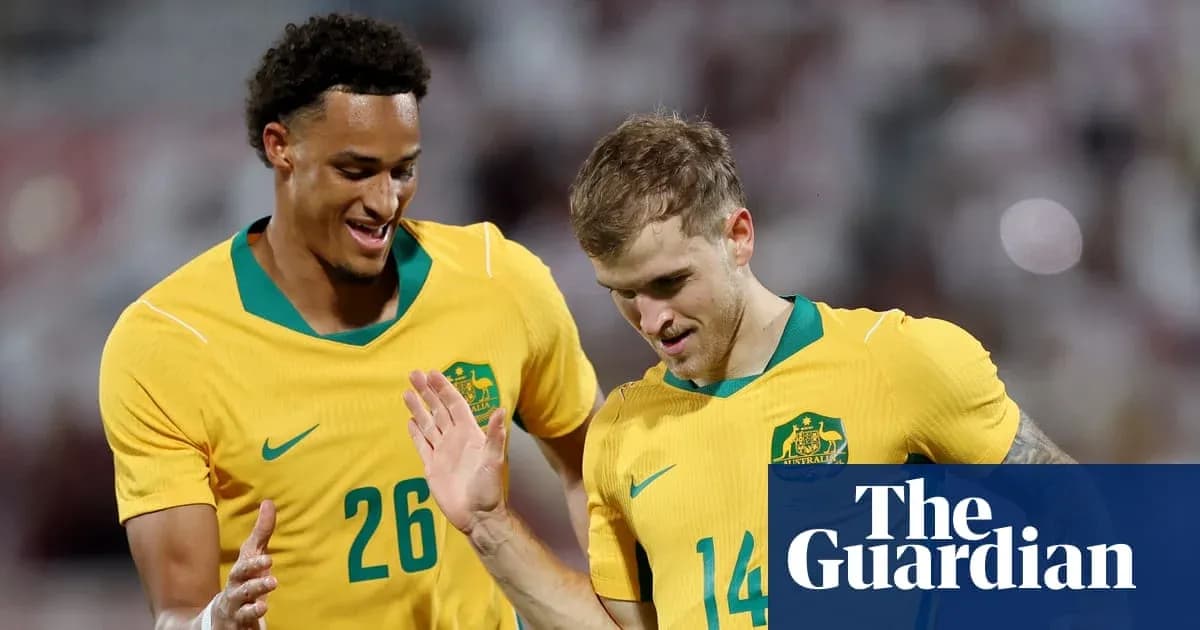
With five minutes left in the half, a bounced pass from Ahmed Fathy escaped Almoez Ali and Metcalfe was on it in a flash. This time he turned provider for Nestory Irankunda, the star attraction in green and gold. Irankunda stepped up and lashed the third beyond Abunada, a strike that felt like a line in the sand. Local media in Qatar were already asking the question out loud: why were Julen Lopetegui’s side still trying to play out under this kind of pressure?
By the interval, the contest had turned into a training exercise in structured pressing. Australia’s forwards hunted in packs, the midfield backed them up, and Qatar’s back line looked increasingly lost in their own half.
Popovic’s blueprint on show
Popovic has been clear about where he wants this team to go. The Brazil friendlies in September hinted at a side learning to do more than simply dig in against elite opponents. This, though, was different. This was Australia asked to take the initiative – and relishing it.
All three goals came directly from their press. Each one underlined the ruthlessness Popovic wants to hard-wire into this group as it matures, moving from a team of promise into one that can impose itself on Asia rather than just react to it.
“It was good to see the players who scored,” Popovic said afterwards. “To see Riley back starting a game for Australia, which hasn’t happened in a while. Alessandro Circati could have scored as a centre-back. Young Paul Okon Jr went through as a No 6. So, we’re getting the players in the right areas. Still a lot of work to do for us, but that was pleasing.”
He had gone strong with his starting XI despite the noise around his own future following the postponement of the Asian Cup. If he was looking for evidence that this is a project worth persisting with, that first half provided it in bold type.
Qatar’s slide and Lopetegui’s dilemma
Qatar, for their part, offered almost nothing. Even as Popovic emptied his bench and blooded four debutants in the second half, the reigning Asian champions could not muster a single shot that troubled Patrick Beach. When Almoez Ali finally did test the goal in the 72nd minute, substitute Sam Klein threw himself in front of it before Beach had to move.
The only time the ball found the back of the Australian net, in the 88th minute, the flag was up. Ali was comfortably offside. Symbolic of a night where Qatar never really got close.
The broader picture is grim for Lopetegui. This comes on the back of a disappointing Arab Cup and a World Cup that raised serious questions about the trajectory of a team that once sat firmly among Asia’s elite. With South Korea looming on Tuesday, another limp defeat – and back-to-back home losses – would underline how far the two-time defending continental champions have slipped. It could also force a decision on his tenure.
New faces, same intensity
The second half lacked the same cutting edge as the first, but it carried a different kind of value for Australia. With the result locked away, Popovic turned to the future.
Klein, Eli Adams, Kasey Bos and Diesel Herrington all made their debuts, thrown into a game where the structure around them was solid and the expectations clear. The press remained, the shape held, and Qatar still failed to lay a glove on Beach.
“As a coach, I’m always proud to lead these boys,” Popovic said. “I know how special that is for them and their families, and I’m sure they’ll remember this day for a very long time. I don’t think I’ll ever forget it. It might be a long night for them; I don’t think they’ll sleep too much.”
For McGree, Irankunda and Yengi, the goals will grab the headlines. For Circati and Okon Jr, the chances that came their way from deep positions hinted at a system that puts players in zones where they can hurt opponents, regardless of their starting role.
And for Australia as a whole, in a week when everything seemed to be about venues, schedules and speculation, this was something far more straightforward: 90 minutes that showed what this team can be when it presses with conviction and trusts its instincts.
Jordan await in Doha. If this is the standard, the conversation around the Socceroos may soon shift from logistics and uncertainty to something far more interesting: just how high this side can climb in Asia.