Standout Performers of the FIBA Women’s World Cup
The FIBA Women’s World Cup has reached the sharp end, and while Team USA’s star-studded roster inevitably dominates the headlines, the real drama of this tournament has unfolded elsewhere. Six nations are already through to the quarterfinals — USA, Hungary, France, Belgium, Spain, and Germany — and the non-American talent pool is not just deep. It’s spectacular.
Here are the standout performers outside of Team USA, the players dragging their countries forward and reshaping the balance of power on the world stage.
1. Emma Meesseman, Belgium
Some players just look built for this stage. Emma Meesseman is one of them.
A former WNBA Finals MVP, she has taken complete command of Belgium’s campaign. She’s averaging 18.3 points on 50% shooting, pulling down 8 rebounds and dishing 6.3 assists per game. Those aren’t just star numbers; they’re centerpiece-of-a-system numbers.
Belgium rode that production to a 3-0 sweep in Group Play, capped by a statement win over a loaded Australian side. Whenever Belgium needed control, Meesseman supplied it — on the glass, as a scorer, as a playmaker. She looks every inch the best non-USA player in the tournament so far.
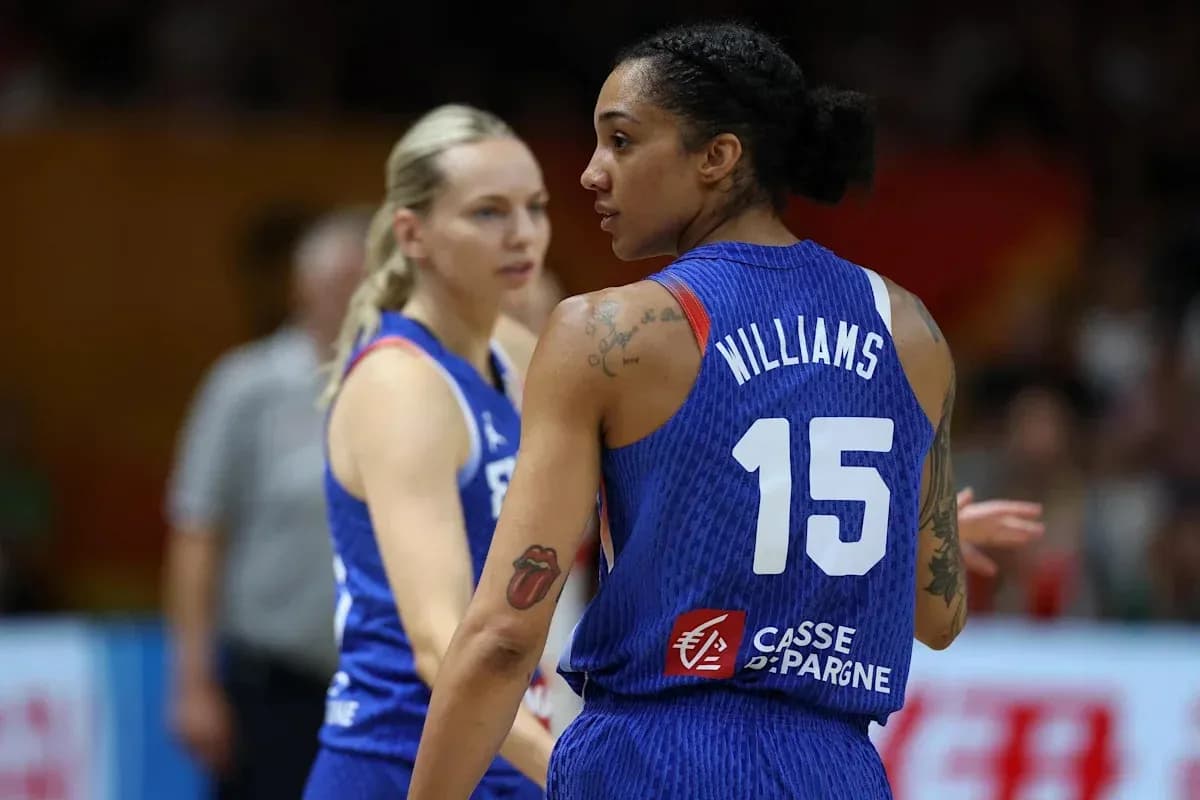
2. Gabby Williams, France
France have gone perfect in Group Play, and Gabby Williams has been their engine, their edge, and their safety valve all at once.
She’s averaging 18.7 points on a blistering 58.8% from the field, including 55% from beyond the arc, while adding 4.7 rebounds and 3.3 assists. No one in the World Cup is scoring more per game right now.
Williams has become the player who bends defenses, the one opponents game-plan around. France now wait for the winner of Puerto Rico vs. China in Thursday’s quarterfinal, and it’s clear: as Williams goes, France’s gold medal hopes go with her.
3. Iyana Martin, Spain
Every tournament produces a breakout star. In this one, Iyana Martin is making her case early.
The 20-year-old Portland Fire guard has stepped into Spain’s backcourt and immediately seized responsibility. She’s putting up 17.3 points per game on ruthless efficiency — 56.2% from the field and 43.8% from three — while chipping in 3 assists a night.
The numbers are impressive. The context is even better. Martin became the first under-21 player this century to score at least 20 points in back-to-back World Cup games. At an age when most players are just trying to survive at this level, she’s dictating terms.
4. Julie Vanloo, Belgium
Belgium are not a one-woman show. Julie Vanloo has made sure of that.
As the perfect foil to Meesseman, Vanloo is averaging 16.3 points while shooting 51.4% from the floor and 44.8% from deep, along with 4 assists per game. When defenses collapse on Meesseman, Vanloo punishes them. When Belgium need tempo, she provides it.
Their 3-0 record in Group Play rests heavily on that partnership. Meesseman sets the tone; Vanloo turns the screw.
5. Marine Johannes, France
If Gabby Williams is France’s driving force, Marine Johannes is the flamethrower.
The New York Liberty guard has been France’s second-leading scorer, averaging 17 points per game while hitting an outrageous 52% from three. She stretches defenses to breaking point and gives France the kind of perimeter threat that can flip a game in two or three possessions.
Johannes is one of the more seasoned players on this French roster. That experience shows in her shot selection, her composure, and her willingness to take big shots. If France are serious about a gold medal, they will lean on her again and again.
6. Ezi Magbegor, Australia
Australia’s campaign has been rocked by the loss of Alanna Smith to a lower-leg injury. That blow has only magnified the importance of Ezi Magbegor.
The Seattle Storm standout, and Australia’s captain, is already carrying a heavy load. Through three games, she’s averaging 15.7 points on 59.5% shooting, hitting 42.9% from three and grabbing 6.3 rebounds per game.
She’s the focal point now — the first option, the emotional anchor, the player who has to keep Australia’s belief intact. With Smith out, Magbegor’s margin for error has evaporated. So far, she’s responded with authority.
7. Dorka Juhász, Hungary
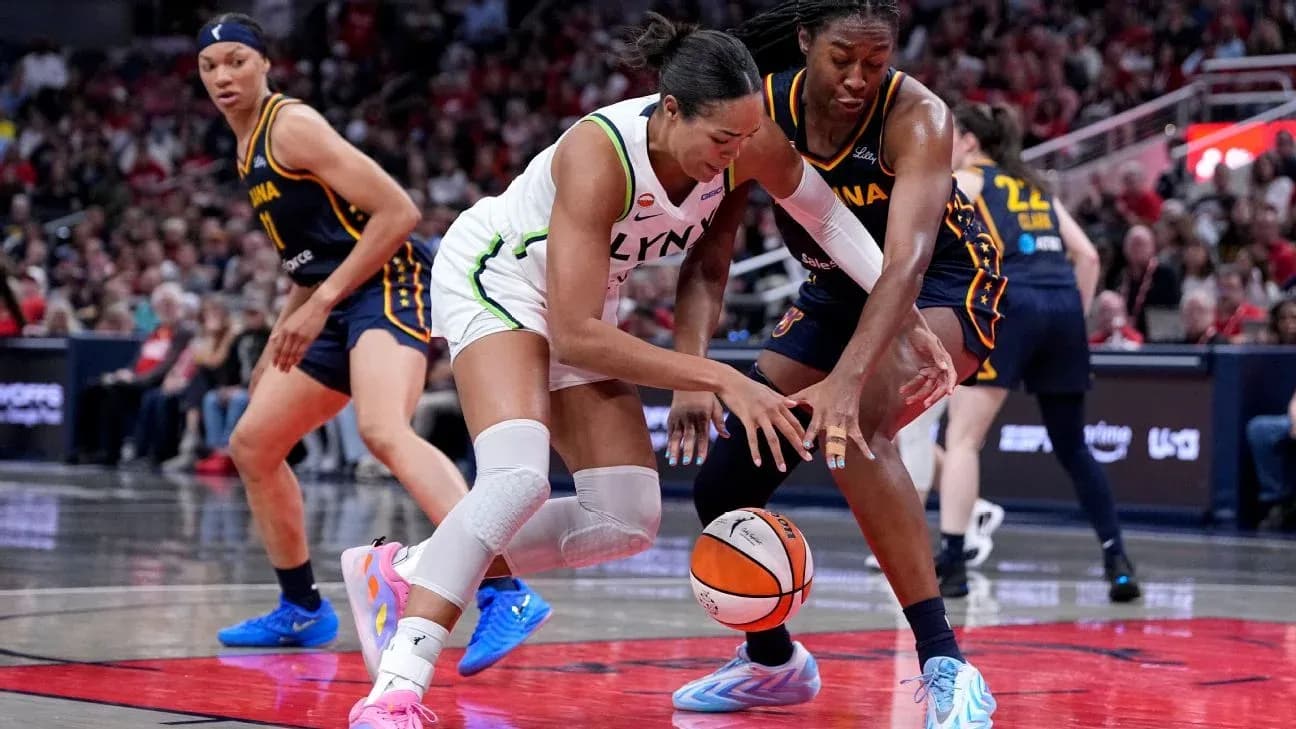
Dorka Juhász’s WNBA season with the Minnesota Lynx has had its ups and downs, but national team basketball remains her comfort zone — and her stage.
For Hungary, she has been immense. Across four games, the 26-year-old is averaging 15.3 points on 50% shooting and dominating the glass with 11 rebounds per game. That double-double presence has driven Hungary into the quarterfinals.
Every tournament needs a dark horse. Hungary, with Juhász patrolling the paint and cleaning the boards, are starting to look like one.
8. Xu Han, China
China’s path is simple and brutal: beat Puerto Rico on Wednesday morning or go home. If they are to extend their stay, Xu Han will almost certainly be at the heart of it.
The New York Liberty center has been one of the most complete bigs in the competition, averaging 17.3 points, 11.3 rebounds, and 2.7 assists per game. She’s shooting 52% from the field and a remarkable 54.5% from three, a rare combination of size and range.
If China get through, a quarterfinal against France awaits. That would mean Xu Han against the Williams–Johannes axis. That’s a matchup worthy of the stage.
9. Sevgi Uzun, Turkey
Turkey’s record reads 0-3. It doesn’t tell the full story of Sevgi Uzun’s tournament.
The former WNBA guard has been one of the most productive playmakers in the World Cup, leading all players with 8.3 assists per game while also scoring 17.7 points a night. She’s shooting 53% from the field and 45% from three, numbers that would stand out on any team, let alone one still searching for wins.
For Turkey, this campaign will sting. For Uzun, it doubles as a reminder of her quality on the international stage.
10. Djeneba N’Diaye, Mali
Mali are out, but they leave with something far more enduring than a group-stage exit: a signature win and a rising star.
Their 82-73 victory over Spain was only the second World Cup win in Mali’s history, and their first since an overtime triumph in 2010. Djeneba N’Diaye sat at the center of that shock result, pouring in 19 points in the upset and averaging 17 points on 50% shooting across three games, including 45% from three.
Mali’s tournament is over. Their impact isn’t. N’Diaye’s performance has ensured that.
Team USA may still boast the deepest, most talented roster in the field, led by Breanna Stewart, Napheesa Collier, Jackie Young, and a new wave of stars like Caitlin Clark, Angel Reese, and Paige Bueckers. But this World Cup is being shaped just as much by Meesseman’s control, Williams’ fire, Martin’s fearlessness, and the quiet revolutions happening in Belgium, France, Spain, Hungary, China, and beyond.
The question now is simple: when the medals are handed out, will the story still belong to the favorites — or to the outsiders who refused to play that role?