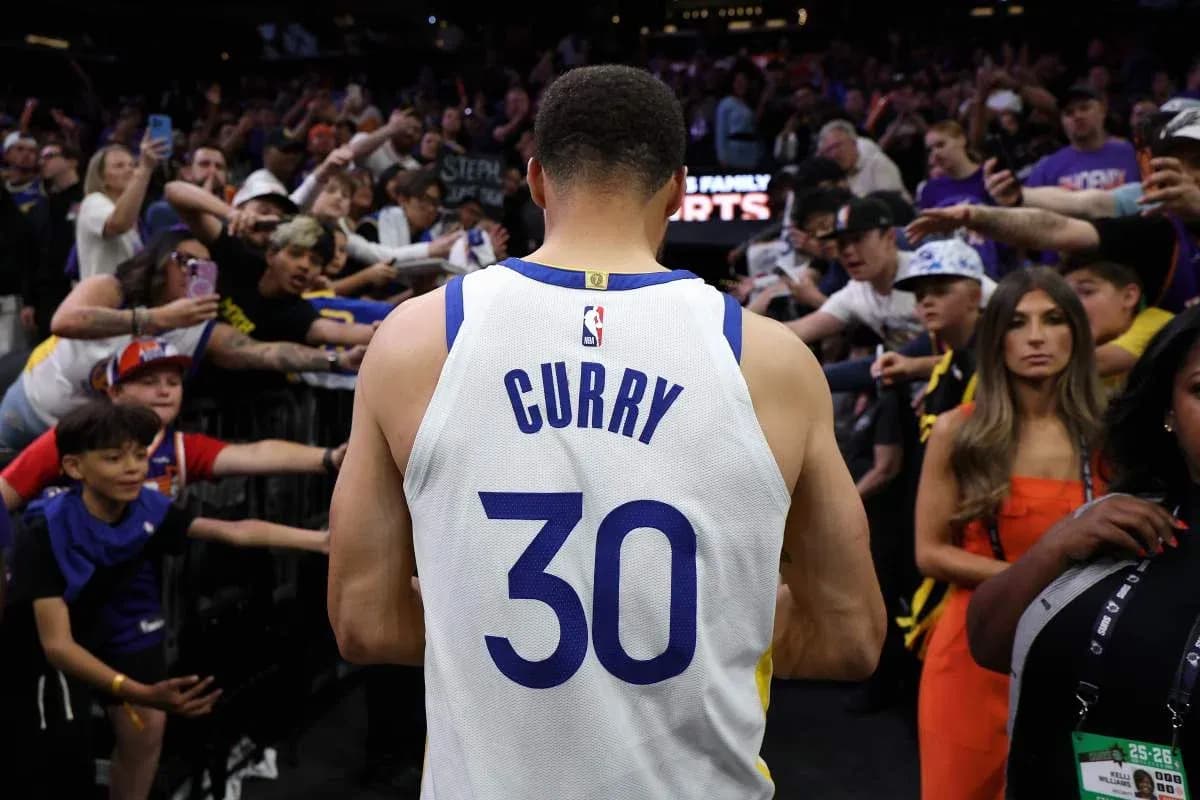
Stephen Curry's Future with the Warriors: Timing is Key
Stephen Curry is now eligible to sign another massive extension with the Golden State Warriors. He just refuses to treat it like a ticking clock.
Two days after he became eligible for a two-year, $136.7 million maximum deal, Curry’s message in Palo Alto was calm, almost casual, and very much on his terms.
“There’s no question I want to be here the rest of my career, and I’m pretty sure that’s going to happen,” he told NBC Sports Bay Area at the Workday Charity Classic.
Then he left the door slightly ajar.
“The deal and the contract stuff will happen at the right time, and we’re not letting it be a distraction from our preparation for the season, and the fact that the team we’re coming back with has a lot of familiarity.”
For the Warriors, that’s comfort without closure. The franchise icon wants to stay. The paperwork can wait.
Curry Holds the Clock, Not the Other Way Around
Curry is heading into the final season of his current contract, worth nearly $63 million. Under the NBA’s over-38 rule, Golden State can tack on only two more years, which is where that roughly $136.7 million extension comes from.
The franchise wants those years. Curry wants those years in blue and gold.
The only variable is when he chooses to sign.
That timeline gives him something he has rarely had in his Warriors life: leverage to simply observe. To see what this version of Golden State actually looks like before committing again.
Mike Dunleavy Jr. kept the core of the roster intact. Draymond Green, Al Horford, Kristaps Porzingis, Gary Payton II and De’Anthony Melton are back. Rookie Yaxel Lendeborg, Brandon Williams and Georges Niang arrive as fresh faces. Quinten Post and Pat Spencer exit.
On paper, that’s continuity. In reality, it’s a group still wobbling on the edge of uncertainty.
Jimmy Butler and Moses Moody are expected to miss the start of the season with knee injuries, stripping depth from the wings and immediately pushing Lendeborg into a bigger role than a rookie would normally be asked to shoulder.
Last year showed how quickly things can unravel. The Warriors stumbled to 37-45 as injuries shredded their rotation. Curry managed just 43 games, his own knee problem keeping him out for more than two months.
“Hopefully we can be healthy and just have a chance to show what we’re capable of, myself included, missing so many games last year,” Curry said.
That’s the backdrop to his patience. He is not racing a deadline; he is reading the room.
Trade Ammo and the Bigger Picture
The roster Curry sees on opening night might not be the one he’s leading into April.
Golden State still holds six future first-round picks between 2027 and 2033. The Stepien Rule and a protected 2030 obligation to Memphis restrict how many can be moved outright, but not the idea of a major swing.
In practical terms, the Warriors can still put together an aggressive package: up to three first-rounders and additional pick swaps for the right player. That’s enough to get into almost any serious trade conversation.
For Dunleavy, it’s a lifeline to upgrade this team before the trade deadline. For Curry, it’s part of the calculus.
If he waits, it doesn’t have to mean doubt about the franchise. It can simply mean he wants to see how Butler and Moody recover, how the rotation settles, and whether Golden State spends its remaining draft capital on one more championship push.
Year 18 is looming for Curry. His stance on the most important piece of the puzzle hasn’t wavered.
He wants to finish where he started.
The question now is whether the Warriors can build enough around him, while they still have the picks — and still have this version of Curry — to make that ambition more than just a farewell promise.