Steve Ballmer Accepts NBA Punishment for Clippers' Scandal
Steve Ballmer has stopped swinging.
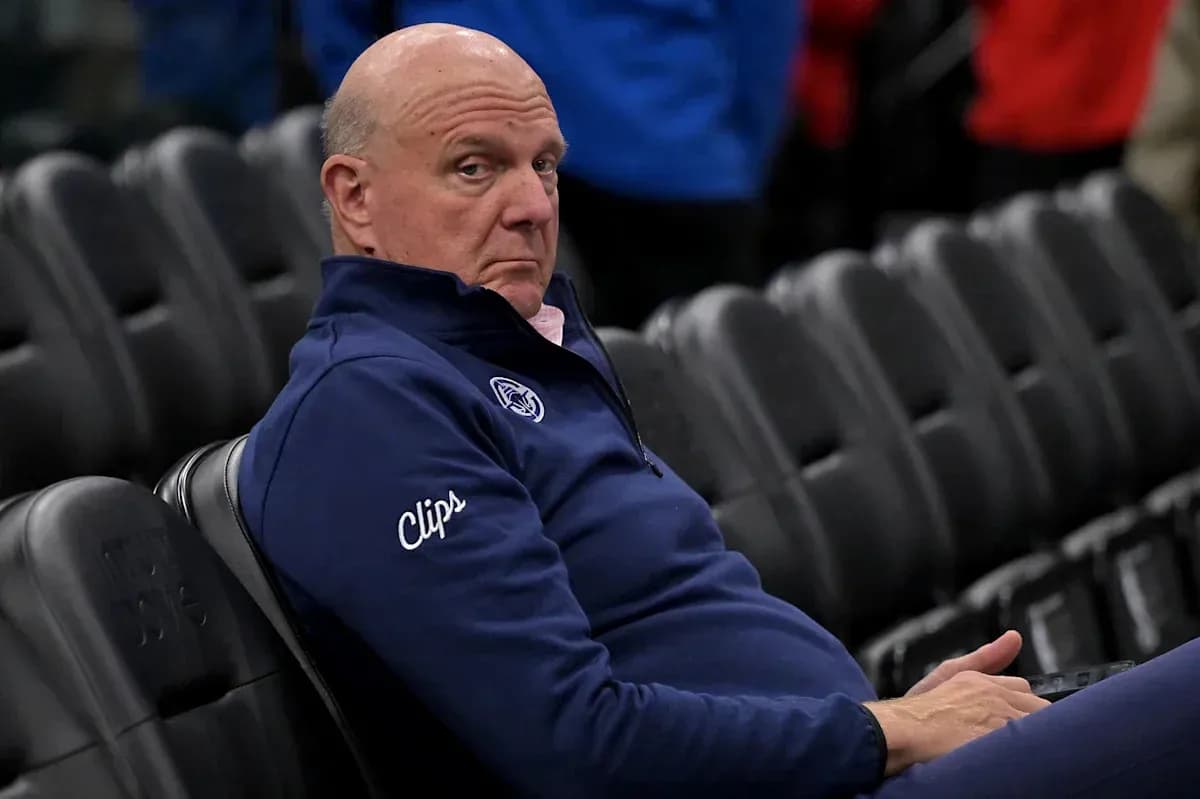
After weeks of public defiance and private fury, the Los Angeles Clippers owner has decided to accept the NBA’s sweeping punishment for salary cap circumvention tied to Kawhi Leonard — a scandal that has cost him draft capital, tens of millions of dollars and a year-long exile from his own franchise.
The fine, Ballmer said, is already paid. The fight, at least for now, is over.
“This has been a very difficult time for everybody associated with the Clippers, and for that, I have sincere regrets,” Ballmer said in a statement Sunday night. He apologized to fans, employees and fellow owners for the “distraction and distress” and said he accepts responsibility as principal owner.
Then came the pivot.
“We are committing to put this chapter behind us,” he continued. The Clippers have told the league they are complying with the penalties, have paid the fine and are “moving forward.” Ballmer stressed that he still has “disagreements” with the league’s findings, but he no longer wants to center his tenure on a legal war. “Team owners should support, not distract.”
For a man who once branded the probe a “witch hunt,” it’s a striking climbdown.
From “witch hunt” to surrender
The NBA’s sanctions landed with historic force earlier this month.
After a months-long investigation — sparked by a Pulitzer Prize-winning report from the “Pablo Torre Finds Out” podcast — the league concluded that the Clippers and Leonard had worked around the salary cap through arrangements with third-party companies. The report alleged that the team facilitated outside business dealings for Leonard and induced vendors by dangling future business with the franchise.
The punishment reflected the seriousness of those findings.
- The Clippers lost five first-round draft picks.
- Ballmer received a $30 million fine and a one-year ban from “all league and team activities.”
- Leonard was fined $700,000.
- Other team employees were also sanctioned.
The scope of the penalties drew immediate comparisons to the infamous Joe Smith case in 2000, when the Minnesota Timberwolves were initially stripped of five first-rounders for cap circumvention. Back then, the NBA later returned two of those picks after Timberwolves ownership accepted responsibility. That precedent loomed over Ballmer’s decision.
At first, he chose confrontation.
The Clippers blasted the league’s report, saying they “vehemently” rejected its conclusions. In a blistering letter to commissioner Adam Silver, the organization attacked the process, calling the investigation “heavily biased” and “flawed from the outset.”
That letter claimed Ballmer personally spent “nearly $50 million” to fund the independent law firm that ran the probe, only to see his “reputation… irreparably damaged” by the outcome. The team accused the league of issuing the report without proper notice to the Clippers or their counsel and closed with a stark charge:
“This type of witch hunt flies in the face of fundamental fairness and the integrity of the league and of this sport that we all love. We are exploring every legal remedy to address this gross injustice.”
The rhetoric was nuclear. The leverage was not.
The NBA’s 35-page report laid out detailed evidence of the alleged third-party arrangements. The league also made clear the discipline had been agreed with the players’ union and was “final and binding on all parties.” The bylaws offered no appeal route. No arbitration. No back door.
The Clippers could shout. They couldn’t overturn it.
A strategic retreat — and a costly one
With the walls closing in, Ballmer did what powerful owners rarely like to do in public: he backed down.
The decision carries immediate and long-term consequences. The Clippers are now locked into years of diminished draft flexibility, a serious handicap for a franchise trying to navigate the end of one era and the start of another. The owner, the most visible symbol of the organization, will be barred from all league and team activities for a year.
His absence will hang over everything — from the Clippers’ new arena energy to any major basketball decisions in the coming months.
There may be one piece of business that actually gets easier now. Accepting the punishment clears a cloud that had hovered over the team’s ability to finalize its trade sending Leonard to the Toronto Raptors. With the league’s case resolved and no active challenge in motion, the path to completing that deal appears far less tangled.
Ballmer, at least publicly, is now choosing to look ahead rather than relitigate the past.
“The challenges ahead of us are significant, but so is our resolve,” he said. He promised the Clippers would “continue to build our team and invest in our community,” and framed the trust of the fan base as the organization’s priority. With a “talented roster, outstanding staff and clear vision,” Ballmer said he is certain the team will “compete at the highest level” and remain a club “our fans can be proud of.”
That belief will be tested without him in the building.
The Clippers emerge from this saga lighter on picks, lighter in the wallet and carrying a stain that will not fade quickly. But the owner who once vowed to fight to the bitter end has chosen certainty over chaos.
The league has its punishment. Ballmer has his reset.
Now the question shifts to the court: can the Clippers still build a contender while carrying the scars of one of the most expensive missteps in modern NBA history?