Team USA Faces Challenge from Italy in FIBA Women’s World Cup
Team USA rattled. Italy fearless. Berlin suddenly has a story on its hands.
The four-time defending champions, rolling into Sunday’s group game on the back of a 94-61 demolition of China, found themselves in an unexpected street fight with Italy at the FIBA Women’s World Cup. The Americans, unbeaten in World Cup play since 2006, watched a double-digit cushion shrink, their offense stall and their outside shooting vanish as Italy’s belief grew with every possession.
This was supposed to be routine. It wasn’t.
A bruising start, a warning sign
The opening quarter hinted at control without comfort. Team USA led 18-8 after the first, nine different players already on the scoresheet, their depth flashing early. Paige Bueckers set the tone with four points, Chelsea Gray knocked down the game’s first jumper, and the “young and turnt” group Kara Lawson has leaned into looked ready to run Italy out of the gym.
Defensively, they were locked in. Italy shot just 21% in the first 10 minutes and coughed up eight turnovers. Team USA picked pockets and swatted shots, piling up six steals and four blocks by the 6:45 mark of the second quarter. Angel Reese arrived with instant edge: two blocks and a steal in under three minutes, changing shots and changing the temperature of the game.
On the surface, it was all going to script. Underneath, the cracks were forming.
Italy refuses to fold
Italy never matched the Americans’ talent, but they matched — and at times surpassed — their edge. Andrea Capobianco’s team tightened the screws defensively, packed the paint and dared the U.S. to shoot from outside.
The Americans couldn’t answer.
Not one 3-pointer dropped as halftime approached. A team that buried 12 triples against China went 0-for-9 from beyond the arc through the early stages, their rhythm evaporating as Italy clogged driving lanes and cut off post entries. By the second quarter, the U.S. had gone ice cold, managing just nine points in the period.
The pressure finally told on the scoreboard. A once comfortable 19-8 lead shrank as Italy strung together a 14-3 run, fueled by the inevitable name on every scouting report: Cecilia Zandalasini.
Zandalasini, who plays under U.S. assistant Natalie Nakase with the WNBA’s Golden State Valkyries, went straight at the heart of the American defense. She scored nine points by halftime and dragged Italy back into the contest, trimming the deficit to 30-24 at the break after Italy poured in 16 second-quarter points.
Her only problem: fouls. Zandalasini picked up her third before halftime, flirting with the FIBA limit of five and forcing Italy to walk a tightrope with their star.
Lawson’s verdict: physical, but sloppy
Kara Lawson didn’t sugarcoat what she was watching.
“I think we're playing physically; we're just making too many errors. We're making too many mistakes,” she said at halftime. “Italy's playing with great force. We knew they would. It's forced us into a lot of unforced errors."
It was an accurate snapshot. Team USA’s defense remained disruptive, but their offense kept tripping over itself. Turnovers, rushed shots, missed open looks. The kind of sloppiness that rarely shows up in their World Cup highlight reels.
Angel Reese still led the U.S. at the half with six points, two blocks and a steal. Three other Americans had four points apiece. But the shooting numbers told the story: 32% from the floor for the U.S., 31% for Italy. A grind, not a showcase.
Italy swings the game, USA stalls
Whatever composure the U.S. hoped to bring out of the locker room evaporated early in the third.
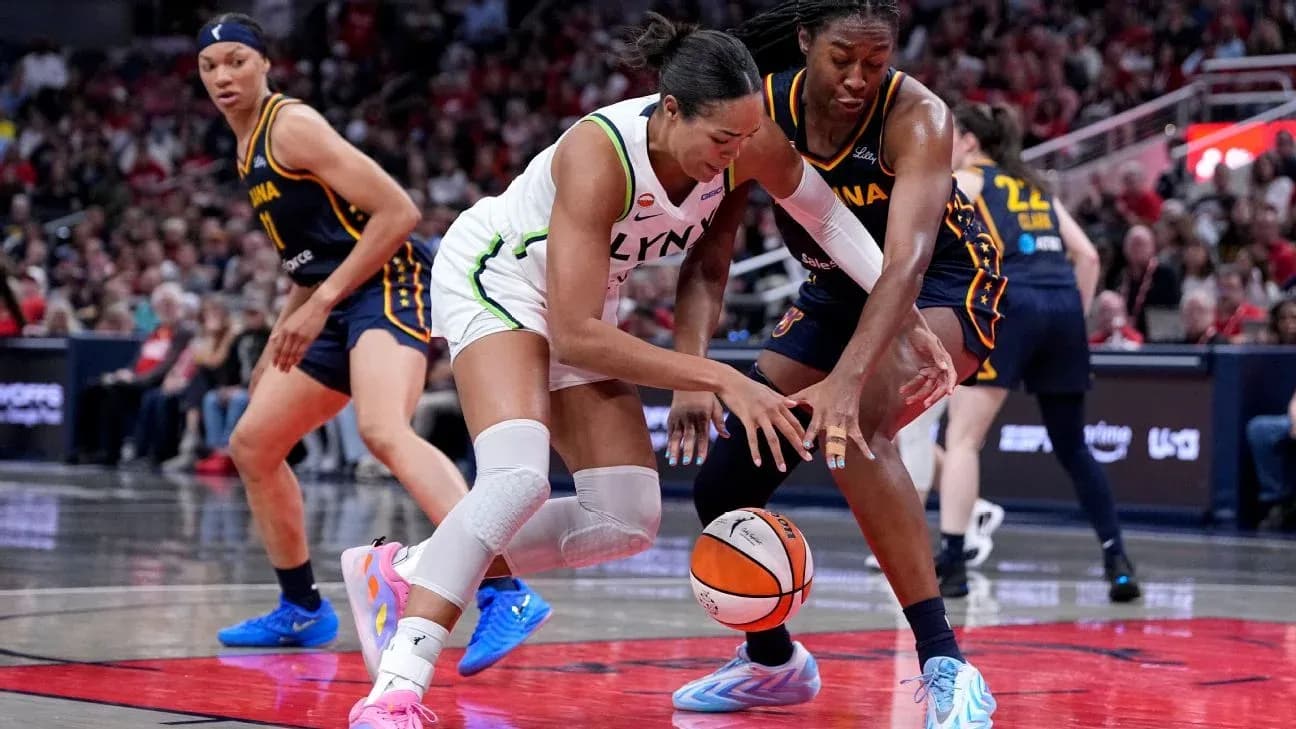
At the 7:31 mark, Napheesa Collier picked up her third foul, another key American walking the disciplinary line. Rhyne Howard checked in for her as Lawson shuffled rotations, trying to steady the group.
Instead, Italy smelled blood.
With 5:32 left in the third quarter, Italy had seized a 33-32 lead — their first meaningful foothold in the game after previously leading for just 42 seconds. The U.S. had missed seven straight field goals, the offense stuck in mud as Italy’s defense cut off every driving angle and swarmed the paint.
Team USA, so often the ones applying pressure, looked rattled by it.
Italy’s on-ball intensity, the quick help in the lane, the refusal to allow easy catches inside — it all turned the Americans into a jump-shooting team on a night when their jumpers wouldn’t fall. Every miss added to the tension. Every Italian stop added to the belief.
A giant with questions to answer
This World Cup was always going to be a test of adaptability for Team USA. A’ja Wilson, the MVP of the 2022 World Cup, and five-time All-Star Kelsey Plum were both ruled out just days before the tournament began for health reasons. Lawson responded by doubling down on chemistry and opportunity, bringing in young Washington Mystics players Sonia Citron and Kiki Iriafen to fill the gaps.
The star power remains undeniable: Breanna Stewart, Chelsea Gray, Napheesa Collier, Caitlin Clark, Paige Bueckers, Angel Reese. On paper, it’s still the deepest, most talented roster in Berlin. But this Italy game underlined a simple reality: reputation doesn’t move the scoreboard when the shots don’t fall and the execution frays.
Sue Bird, now USA Managing Director, framed the mission before the ball went up.
“I think we want to continue to work on ourselves, try to build a chemistry as we go through the tournament, but obviously respect our opponent,” she said. “It'll be a challenge, and hopefully, we can do a little bit of both."
Italy made sure it was a challenge. A real one.
The road only gets sharper
The Americans came into Berlin as heavy favorites to win the 2026 FIBA Women’s World Cup, the only team with minus-odds at the sportsbooks, with France, Belgium, Australia and Spain lurking as primary threats. They opened with a statement against China. Italy turned the second act into a warning.
Group D still runs through the United States. Czech Republic and China remain on the schedule, with a direct path to the quarterfinals on offer for the group winner. But this was the first real reminder that the margin for error tightens with every game, especially for a team trying to knit together a new core on the fly.
If this is what Italy can do in group play, what happens when the knockouts arrive and the opponents get even sharper?
For a program that hasn’t lost a World Cup game since 2006, that’s no longer a hypothetical to brush aside.