The Thames Derby at 100: A Century of Rivalry
The Den does not forget. On Saturday it staged the 100th competitive meeting between Millwall and West Ham, the first in 14 years, and the old rivalry walked back into the light as if it had never been away.
Separated by the river, joined by the river. That has always been the paradox. Both clubs were born out of the same world: the smoke and clang of east London’s docklands in the late 19th century, when work was brutal, uncertain and fought for.
Back then, they were near neighbours in more than name. Millwall were on the Isle of Dogs; Thames Ironworks – the works team that would give way to West Ham – operated around Canning Town. Before Millwall crossed south of the Thames to New Cross in 1910, both clubs stood north of the river, barely two and a bit miles apart. You could almost walk the rivalry.
The nicknames still carry that past. Millwall, now the Lions, were once the Dockers. West Ham’s Irons trace directly back to the Thames Ironworks and Shipbuilding Company. Men queued at the gates each morning, never sure if they would earn a day’s pay. Those who did were picked from a crowd, in a world where strength, graft and a certain unforgiving edge were currency.
That harshness bred an identity: toughness, loyalty, hard work. More than a century on, both clubs still lean on that story when they talk about themselves.
Where Myth Meets Memory
When histories run this deep, folklore creeps in. One of the most enduring tales says the rivalry was born in the General Strike of 1926, when West Ham dockers supposedly backed the strike and Millwall men did not. It is a clean, simple origin story – and, according to historians David Sullivan and Brian Belton, an inaccurate one.
Belton argues the strike held firm in the Millwall docks, with only a few breaking ranks near Canning Town. The facts undercut the legend. The legend survives anyway, passed down on terraces and in pubs, stitched into the mythology of the fixture.
The first crossings of these paths go back to the 1890s, when Millwall Athletic met Thames Ironworks. Belton warns against treating Thames as a straight-line ancestor to West Ham: the company team was dissolved before the modern club formed in 1900. Sullivan and Belton also challenge the idea of some timeless “Dockers Derby” stretching unbroken into the past.
The real hostility came later.
Heat of the Seventies
The rivalry hardened in the 1970s, just as the docks and the world that created both clubs were slipping away.
In 1972, Harry Cripps’s testimonial – a game for a man adored by both sets of fans – descended into serious disorder. Four years later, a Millwall supporter died after falling from a train, with some believing West Ham fans were involved. When the clubs met competitively again in 1978 after a long gap, violence shadowed the fixture.
Look at the wider picture and the timing feels grimly logical. London’s docks were closing. Traditional industries were collapsing. Tens of thousands of jobs disappeared. Communities built around the yards and wharves were left to absorb the shock of unemployment and decline.
It would be lazy to blame hooliganism purely on industrial collapse. But both ran side by side. Football became one of the last places where territory, masculinity, belonging and local pride could be declared in public, loudly, at a time when other institutions that gave people those identities were crumbling.
Through the 1980s, 90s and early 2000s, the rivalry’s reputation hardened around a handful of flashpoints. None looms larger than Upton Park in 2009, when a League Cup tie was overwhelmed by fighting in the streets, a stabbing and pitch invasions that turned a football match into a national story.
The Championship meetings in 2011-12 were far quieter, closer to normal, and then the fixture vanished again – until this season.
A Derby Under Watch
The modern Dockers Derby arrives with baggage. Both clubs are still linked in the public imagination to violence, their images burnished and caricatured by films such as ID and Green Street. This game amplifies that mythology.
Yet in the build-up to Saturday, there was a sense this might be different: loud, hostile, charged, but not catastrophic. That is largely how it played out.
Security framed the day. The match was live on ITV, kick-off dragged forward to 12.30pm to cut down drinking time. Around 400 police officers were deployed. West Ham’s allocation was restricted to 1,774 tickets in a crowd of roughly 20,000, and many away fans chose not to wear club colours. They were told to travel via London Bridge to South Bermondsey, then escorted directly to the away end.
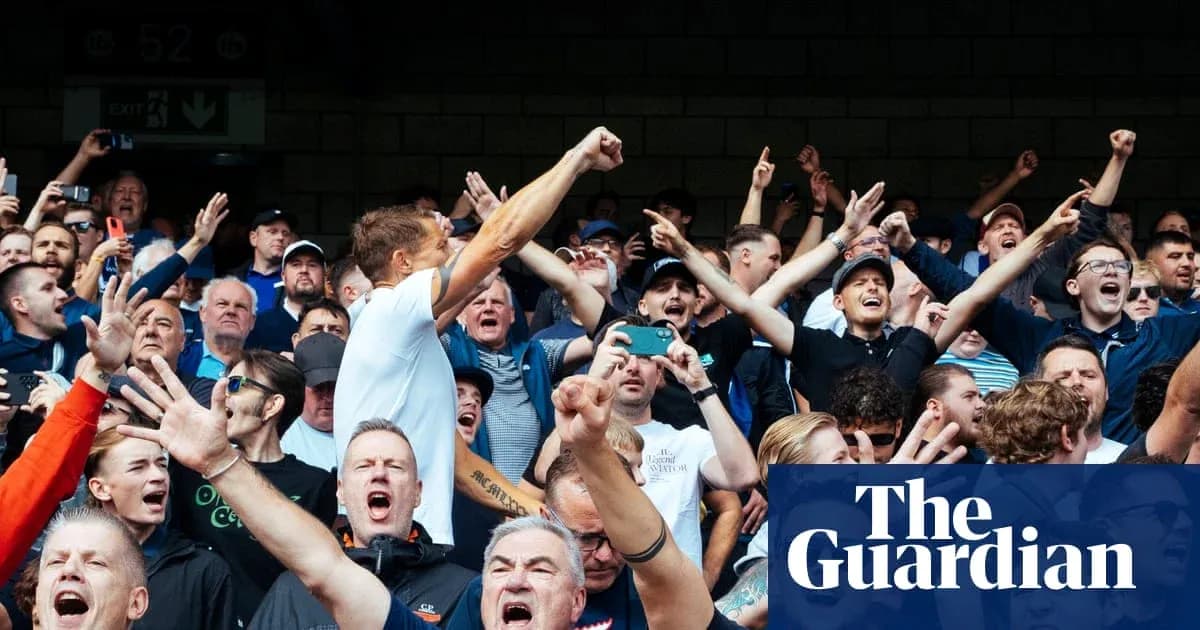
There is still suspicion of journalists and photographers among both sets of supporters. Warnings to “be careful” come easily. A few choice words flew around, but they came from a minority. What stood out more was the sense of community: families, long-time regulars, groups of friends, the warmth and easy conversation that sits alongside the edge.
Inside the Den, the noise took over.
Millwall Strike, West Ham Respond
West Ham arrived top of the table, fresh from dismantling Wrexham 6-0. On paper, they were the form side. On grass, for much of the first half, Millwall ripped up the script.
Despite a list of injuries, the Lions swarmed and snapped into challenges, pressing high and playing with the energy of a club that had waited 14 years for this. They dominated long spells and went into the break two goals clear, their aggression matched in volume by the stands.
The atmosphere crackled. Every tackle felt like a statement. Every set piece carried a roar.
West Ham, though, have too much quality to vanish. Slowly, they found a foothold. Passes started to stick, attacks began to flow, and the pressure finally told. With 10 minutes left, they dragged themselves level.
The equaliser detonated the away end and sent a jolt through the stadium. For the first and only time, the crowd felt close to spilling over. Extra police moved in. Voices rose. Tempers flared, then steadied.
The game still had one more twist.
In the 89th minute, Kyrell Lisbie broke clear, the chance to write himself into derby folklore opening in front of him. Mohamadou Kanté dragged him down. No hesitation from the referee: straight red. Millwall had been denied a clear run at a potential winner; West Ham were down to 10 and hanging on.
The final whistle came at 2-2. Both sides could walk away frustrated and satisfied in equal measure – Millwall for letting a two-goal lead slip, West Ham for needing a comeback to salvage a point.
On the streets outside, a few brief scuffles flickered between Millwall fans and police, but they fizzled quickly. Within minutes, the scene shifted. Young supporters waited for autographs. Groups stood around dissecting the match, not the policing.
Same Values, Different Badges
From the outside, the similarities between these clubs can look greater than the differences. Many fans have family or close friends on the other side. Both sets of supporters speak the same language of working-class London: toughness, loyalty, authenticity.
Yet when the shirts face each other, something sharper cuts through. There is real animosity in parts of both fanbases, a need to draw a hard line.
That tension gives the fixture its intensity. Millwall and West Ham are not just playing for points; they are contesting who best represents a shared place, culture and identity. Each wants to be seen as the truest expression of that lost dockland world, the one that carried those values forward without compromise.
Three centuries have now seen these clubs collide. The docks that named the derby are largely gone. The stadiums have shifted. The distance between the grounds has grown. Competitive meetings have become rare events rather than regular battles.
What has not disappeared is the argument over meaning – over what each badge stands for, and which one, in the end, can really claim to be the authentic voice of that vanished waterfront London.