
Thomas Tuchel's Selection Strategy: Loyalty Over Form
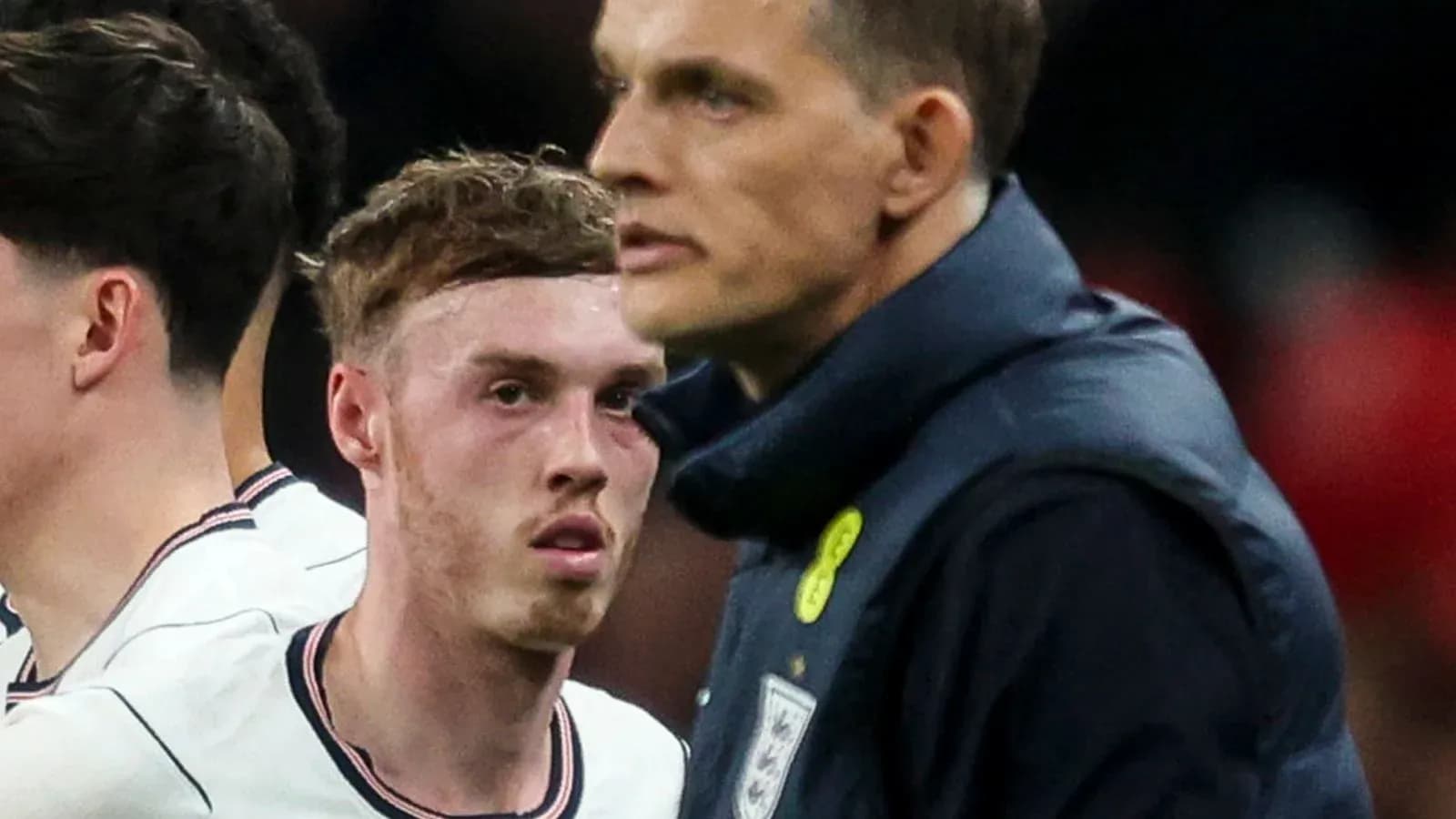
Thomas Tuchel has drawn a hard line in the sand – and Cole Palmer is on the wrong side of it.
England’s head coach insists there is nothing “personal” about leaving out one of the Premier League’s form players, but the decision is as pointed as it is public. Palmer is fit, firing and cleared by England’s medical staff after checks with Chelsea. He will play this weekend for his club. He will not, however, play for his country.
Tuchel has chosen loyalty over form. Availability over reputation. Camp currency over highlight reels.
Tuchel rewards the ones who “walk the talk”
This is not a tactical tweak around the edges of the squad. It is a statement of how Tuchel intends to run England.
“It’s always the ones who are in camp, the ones who don’t withdraw,” he said. “The ones who walk the talk, and come to camp and show it matters and put the quality in. That’s what we will always reward.”
Those words sting a little more when set against Palmer’s recent England history. Since Tuchel took charge in January 2025, Palmer has been unavailable through injury five times. On two of those occasions, he was named in the squad and then pulled out. He has played just three matches in the Tuchel era.
In September, after Palmer withdrew with injury, Tuchel publicly remarked that the Chelsea forward “misses too many opportunities to impress”. The manager has now backed those words with a ruthless selection call.
The message is clear: being good is not enough. You have to be there.
No 10 logjam – and no room for Palmer
On paper, Palmer’s numbers scream inclusion. Six goal involvements in nine Premier League games for Chelsea this season, eight in 11 in all competitions since Tuchel came in. Better output than Eberechi Eze or Morgan Gibbs-White, both of whom keep their England places.
Yet the No 10 corridor is crowded, and Tuchel has decided not to disturb the furniture.
Jude Bellingham, Gibbs-White, Eze and Morgan Rogers all stay in from the last international window, when England beat Croatia and Czech Republic twice and pushed world champions Spain close in a narrow defeat. Nineteen-year-old Josh King, part of the pre-World Cup training group, steps in as the fresh face – but even he arrives with a caveat.
“We have Josh King as a new player in there, but I want to see him on both wings,” Tuchel said. “He’s kind of an extra player. We can cover all four eventualities because Josh can play all four positions.”
Tuchel’s logic is brutal in its simplicity: the last camp worked. The players there “built something extraordinary” over two-and-a-half weeks. They get the credit, they get the trust, and they keep the shirts.
“It matters what you do in camp,” he stressed. “The last camp was an excellent one, so the trust and belief is on the players who were there.”
For Palmer, that cuts deep. His commitment is not in doubt, Tuchel insisted. His presence is.
A warning that goes beyond Palmer
This is about more than one Chelsea playmaker. Kobbie Mainoo, who also withdrew from the last squad and now finds himself omitted, is folded into the same argument. Tuchel is drawing a direct line between turning up and being picked.
“I think it’s naturally coming through, without needing to talk about it,” he said of the message his selections send. “That was always the message since early when we took charge: it matters when you’re in camp.”
Inside St George’s Park, examples are already pinned to the wall. John Stones, Jude Bellingham and Declan Rice have all reported for duty even when not fit enough to play, choosing to spend time around the squad rather than disappear back to their clubs. Tuchel admires that. He expects it.
So when Palmer withdrew in September with what was described as a minor injury, it became a tipping point. If Tuchel had now recalled him and dropped another No 10 to make space, it would have undermined everything he has been preaching about loyalty and continuity.
Instead, he has made an example of a player who scored in a European Championship final two years ago. Status offers no shield here.
“The door is always open. Nothing has changed,” Tuchel insisted. “We decided to do this camp without him.”
Open, yes. But not revolving.
The squad that stayed, and the stakes ahead
Tuchel’s latest England squad underlines where his faith lies.
Jordan Pickford, Jason Steele and James Trafford are the goalkeepers. At the back, Trent Alexander-Arnold, Djed Spence, Ben White, Ezri Konsa, Jarell Quansah, Jarrad Branthwaite, Marc Guehi and Lewis Hall form a flexible defensive unit.
In midfield, Elliot Anderson, Jude Bellingham, Myles Lewis-Skelly, James Garner, Declan Rice, Josh King, Jobe Bellingham and Morgan Gibbs-White carry the creative and controlling burden.
Up front, Rio Ngumoha, Dominic Calvert-Lewin, Harry Kane, Eberechi Eze, Anthony Gordon and Morgan Rogers offer a mix of power, pace and guile.
This group now heads into the final two Nations League A3 fixtures knowing a single point against Croatia will seal a place in the quarter-finals. That is not a backdrop for experiments or indulgence. Tuchel is doubling down on the players who have already delivered for him in this competition.
The pressure is real, the margins thin, and the manager has chosen trust in the room over talent outside it.
Palmer, watching on from Cobham, has his answer. The next time the England squad is named, will he be on the list of players who turned up, or another reminder of what happens when you don’t?





