Tribute Run from Aggborough to Anfield: A Father's Mission Against Meningitis B
Anthony Mills stood outside Anfield and, for the first time since January, allowed himself to feel something close to calm.
His son Aaron, just 18, had died suddenly from meningitis B. The shock never really left. But this weekend, as a family friend finished a gruelling tribute run in his memory, Mills felt something shift.
“I’m kind of at peace,” he said. “A lot of people know Aaron’s name, they know Aaron’s story, and it’s really helped me a lot.”
From Aggborough to Anfield
The journey began at Kidderminster Harriers’ Aggborough Stadium and ended more than 100 miles away at Liverpool’s Anfield. Five days on the road. More than 100 miles on foot. All for one purpose: to make sure what happened to Aaron doesn’t happen in silence.
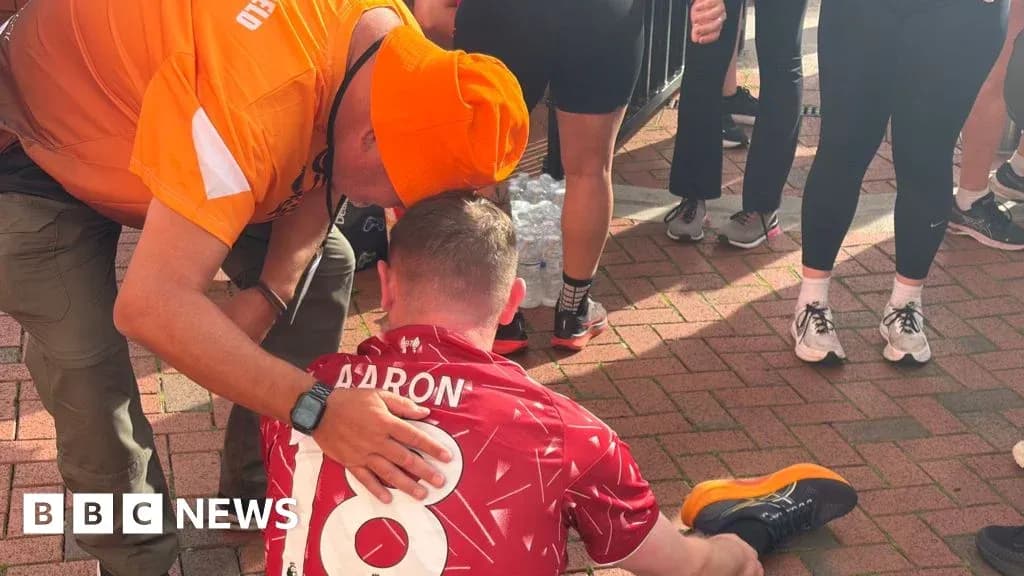
The man who ran it, family friend Shaun McEntee, arrived in Liverpool exhausted, drained, but absolutely certain it had been worth every step.
“I’m exhausted, so tired, but it’s been so worth it,” he said. “I feel like we’ve actually got the message across.”
This was not a charity stunt dressed up for social media. McEntee and Mills used the route as a moving classroom, stopping at universities and colleges to talk to students about meningitis B – MenB – the bacterial infection that killed Aaron.
They visited the University of Wolverhampton, Harper Adams University in Shropshire, Reaseheath College & University Centre in Nantwich and the University of Chester. At each stop, the message was blunt and urgent: know the symptoms, know the risks, get vaccinated.
Most of the students, Mills said, had never really heard about MenB at all.
“Most of them had no idea about the bacterial infection,” he told BBC Hereford & Worcester. That ignorance, he knows too well, can be fatal.
A generation that missed out
Babies in the UK have been routinely vaccinated against MenB for more than a decade. Aaron’s age group fell between the cracks. They missed the programme. Many still aren’t vaccinated.
Mills has thrown himself into trying to change that. It is part grief, part mission.
“Aaron was an incredible person and to just let him go like that… it just felt so wrong,” he said. “I’ve really tried to get his legacy over the last nine months to what it should be because his potential was unlimited.”
Family and friends have rallied around him, pushing awareness, urging people to check their vaccination status. He knows progress has been made, but he’s blunt: “There’s still work to be done.”
The run gave that work a new platform. On the road, in lecture halls, in corridors and car parks, conversations started. Questions were asked. Decisions were made on the spot.
“There were a couple of moments that in my head could have saved a couple of lives,” McEntee said. “Those people said they’d get the vaccine as a result of what we’ve done, which is obviously massively worth it.”
Running with Aaron’s ashes
The physical challenge was brutal. Five days of pounding the roads, battling fatigue and worsening weather.
“Thursday and Friday were really tough,” McEntee admitted. “It was probably the lowest I had been. The weather was against us and I was already exhausted and I knew I had lots to go.”
What kept him going wasn’t a stopwatch or a fundraising total. It was Aaron.
“I had a little cannister of [Aaron’s] ashes that I’ve been carrying with me for the full five days and that’s what has pushed me through,” he said.
Step after step, mile after mile, the weight in his pocket was a reminder of why he was out there at all.
For Mills, watching that effort unfold, the emotions were complicated. Pride, grief, gratitude, and, to his surprise, enjoyment.
“The whole experience was just amazing,” he said. “I feel a bit guilty because I enjoyed every single minute of it. I owe Shaun a lot, he’s done all this in Aaron’s memory and it’s been phenomenal.”
A legacy taking shape
Nine months on from losing his son, Mills has been fighting to make sure Aaron’s name stands for more than a tragic headline. He wants it tied to lives saved, to students informed, to vaccines taken.
“I’m kind of at peace,” he said. “I feel like I can move forward a bit… I’ve healed a lot of wounds from it and it was incredible, the whole thing.”
Peace, for a father in his position, doesn’t mean forgetting. It means knowing that his son’s story is changing other people’s futures.
And somewhere between Aggborough and Anfield, between the first step and the last, that legacy started to feel real.