Tuchel's England: Balancing Past Scars with New Opportunities
Thomas Tuchel says 99.9% of England fans he meets don’t mention Argentina. They want to talk about Mexico, about the Democratic Republic of the Congo, about that wild bronze-medal win over France. About the good bits.
He should be listening harder to the other 0.1%.
For a sizeable chunk of the country, the semi-final in Atlanta still sits in the throat. England led Argentina, then shrank. The substitutions, the retreat, the slide into a 5-4-1 that invited pressure and then collapse – that is what lingers. Tuchel may choose to frame the mood as largely positive, but outside the Wembley press room the atmosphere is far more conflicted than he cares to admit.
A squad shaped by scars
Tuchel wants to look forward. The Nations League is coming, with Spain, Czechia and Croatia on the horizon. He jokes about the FA hierarchy ribbing him over his defensive changes against Argentina, then stiffens his tone and insists the real story is England 6-4 France, not England 1-3 Argentina.
But this squad cannot be separated from what happened at the World Cup. Every name on his list carries the imprint of that month.
Noni Madueke is out. So are Ollie Watkins and Ivan Toney. On paper, those omissions are the ruthless calls of a manager sharpening his group. In reality, injuries have done much of the pruning for him. Dean Henderson, Dan Burn, John Stones, Reece James, Djed Spence and Jordan Henderson are all missing, forcing Tuchel to open the door to a fresher, more experimental England.
The result is a squad that feels both familiar and quietly radical. The spine remains, the brotherhood preserved, as Tuchel likes to say. Around it, though, the edges are being redrawn.
Alexander-Arnold, back from the cold
Nothing underlines that tension more than the recall of Trent Alexander-Arnold.
The Real Madrid defender has not been near an England squad since June 2025. His form in Spain has flickered rather than burned. He has never truly convinced any England manager that he is indispensable. Now he is back, at 27, with no promise of a new role and no guarantee this isn’t simply an injury-driven detour.
Why now? Would he be here if Spence, James or even Ben White were fit? Tuchel insists he does not see Alexander-Arnold as a midfielder. The message is blunt: a call-up is not a medal, it is a test. Perform in an England shirt or drift back into the shadows by November.
Tuchel claims he has slept soundly over his World Cup selections. He wants to preserve the camaraderie, the togetherness, the sense of a group that survived the pressure of a long tournament. That matters. But it does not erase the tactical and technical shortcomings that were brutally exposed when Argentina cranked up the tempo.
So when a reporter asked whether the inclusions of Alexander-Arnold, Alex Scott and Cole Palmer pointed to a concern about England’s lack of forward passers in Qatar, Tuchel paused. The silence said plenty. So did the memory of his own line after the Argentina defeat, when he suggested ball possession was not part of England’s “DNA”.
Between chaos and control
When he took the job, Tuchel spoke about harnessing the pace and power of the Premier League. England, he argued, should lean into their identity: intensity, aggression, verticality.
At the World Cup, that vision surfaced properly only once – the second half of the opening win over Croatia. For 45 minutes, England were a storm. They ran, pressed, broke lines, overwhelmed. Then the tournament settled into something far more cautious. The team relied on solid defending and the individual brilliance of Harry Kane and Jude Bellingham to drag them through.
In the end, England found themselves stuck in a no-man’s land. Not a possession machine in the Spanish mould. Not a relentless Premier League whirlwind. Something in between, and not in a good way.
Tuchel says he wants more balance now. He wants his side to “rest with the ball” at times, to manage games with control. Yet he also talks about “embracing the chaos” and recreating the fury of that Croatia blitz. That is a delicate tightrope to walk in international football, where the smartest passing teams usually dictate the terms.
He admitted England were not the “most economical” side at the World Cup. The Premier League’s physical demands leave his players drained by the time they report for duty. But that is only half the story.
Midfield regrets and second chances
Tuchel’s own choices boxed him in against Argentina. As Declan Rice tired, England needed fresh legs and a fresh mind alongside Elliot Anderson. They had neither. Jordan Henderson, 36 and nursing a broken wrist, was hardly an ideal option. Kobbie Mainoo, selected for his ability in tight spaces, never left the bench.
That was a mistake, and Tuchel knows it. This time he has promised to look at Mainoo properly.
There were other routes he could have taken even then. Myles Lewis-Skelly finished last season strongly in Arsenal’s midfield. Scott was excelling at Bournemouth. Both are in the squad now. Adam Wharton is not. Tuchel remains unconvinced, and that will divide opinion.
It always does. Morgan Gibbs-White and Josh King can feel aggrieved. Liam Delap might reasonably wonder why Dominic Calvert-Lewin, not him, has been chosen as Kane’s understudy. Every international squad leaves bruises.
But step back from the arguments over the last three or four names and the overall picture is encouraging. This is a good group, with depth across the pitch and just enough youth to jolt it out of its comfort zone.
New faces, new possibilities
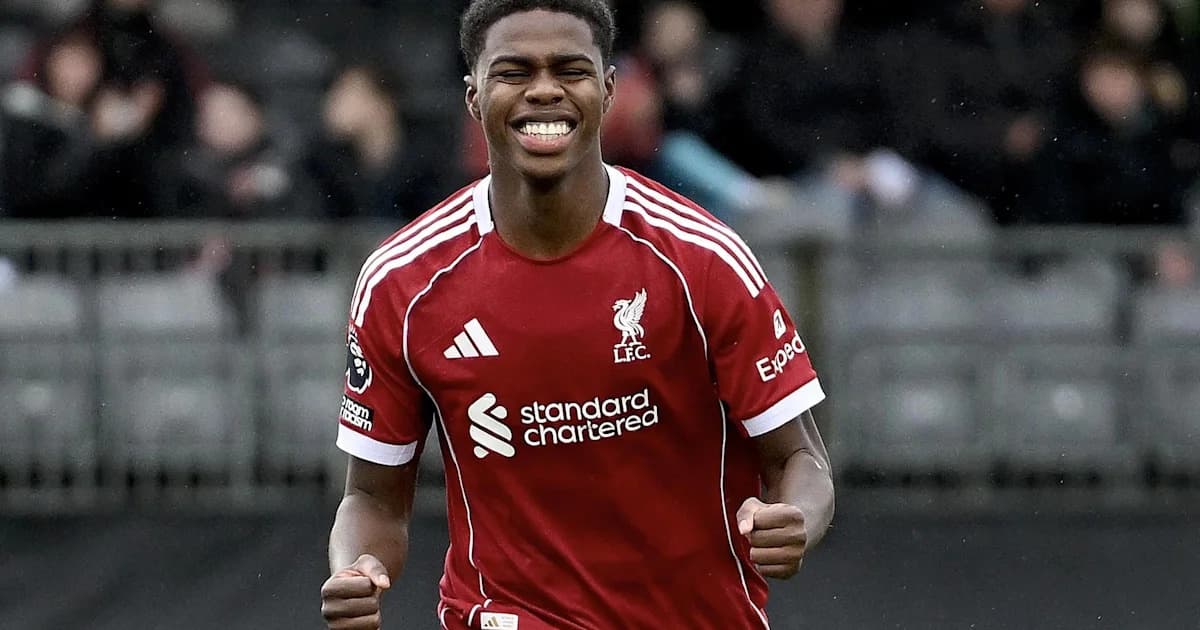
Rio Ngumoha’s inclusion is a statement. The Liverpool teenager represents something Tuchel has occasionally been accused of resisting: pure, unfiltered risk. Jarrad Branthwaite, who has edged out Levi Colwill, looks like the new Burn – a towering, left-footed centre-back with the calm to play and the steel to defend.
Lewis Hall has a chance to stake a claim at left-back, a position that has rarely felt truly settled for England. And then there is Palmer.
Leaving out Madueke for Palmer feels significant. At the World Cup, Tuchel leaned heavily on like-for-like swaps. Wingers for wingers, eights for eights, full-backs for full-backs. Systems were protected; imagination was rationed. Palmer breaks that pattern.
Chelsea’s No 10 does not hug the touchline and sprint in straight lines. He drifts, sees pictures, stitches play together. He is, quite simply, a better all-round footballer than Madueke. Selecting him hints at a manager ready to embrace more fluidity and more craft in the final third.
England have technicians. They are not condemned to live off set pieces and counterattacks. The supporters know it. They do not want to see another big game suffocated by fear and caution.
Next Saturday, Spain come to town for the opening game of the Nations League campaign. The noise around Tuchel’s substitutions in Atlanta will not vanish with one team announcement or one press conference quip. It will only fade if his England look braver, smarter, more coherent when the pressure rises again.
By then, the 0.1% will not be a minority voice. They will be the measuring stick. Has Tuchel really learned, or is this just the same story with a fresher cast?