
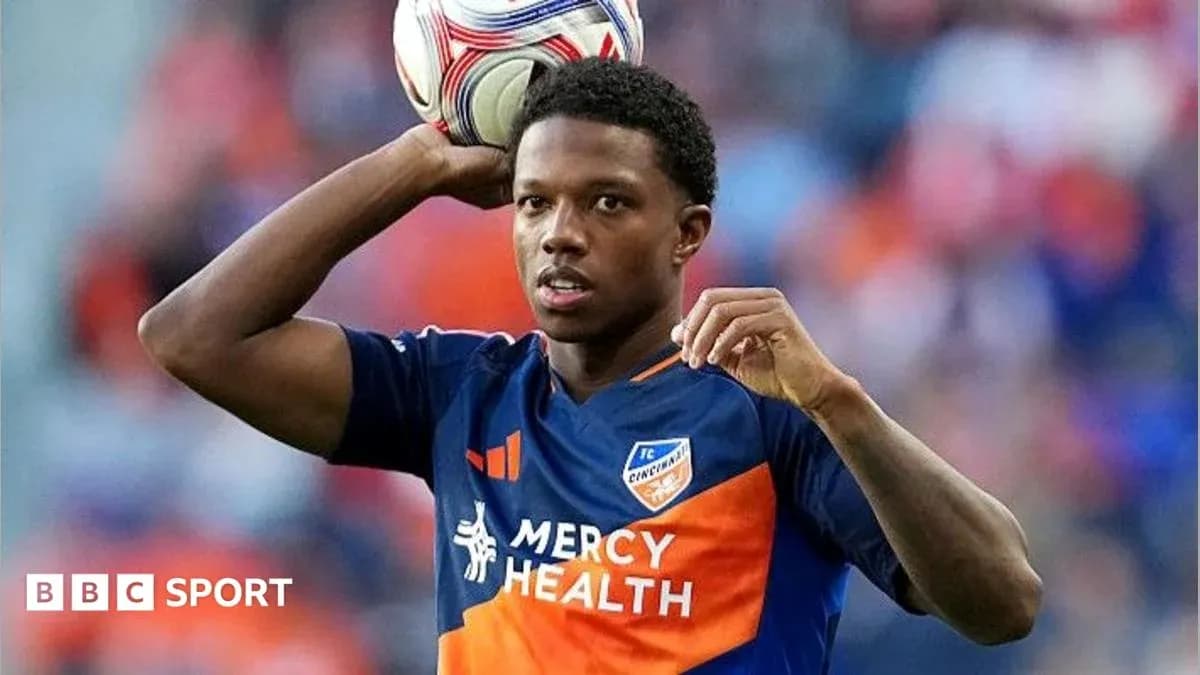
Tyrell Malacia's Journey: From Manchester United to FC Cincinnati
Tyrell Malacia leans back and thinks about it for a moment. Manchester United. The exile. The empty months in the gym and the lonely training sessions with teenagers who grew up watching him on TV.
"I wouldn't regret anything, not one bit."
He means it.
From Old Trafford’s glare to a fresh start with FC Cincinnati, the Dutch left-back has taken a route few would choose and even fewer would survive with his conviction intact. At 27, he is no longer the bright young thing from Feyenoord, but a player rebuilding in Major League Soccer with a story that has already carried more twists than most careers manage in a decade.
From Old Trafford high to the operating table
Malacia arrived at United in 2022 as part of Erik ten Hag’s first wave, a £13m signing from Feyenoord with the intensity and bite the new manager wanted. That first season felt like a breakthrough: 39 appearances in all competitions, big nights, big stadiums, the sense that he belonged.
Then his knee went.
He finished the 2022-23 campaign with discomfort in his left knee. The summer did not fix it. Surgery in the Netherlands followed, then a second operation when the first did not heal as planned. By the time he finally pulled on a United shirt again, it was for the Under-21s in an EFL Trophy defeat at Huddersfield. Ten Hag had gone. Ruben Amorim was now in charge.
"I had a good first season and then I had my injury," Malacia says. "I don't want to talk too much about it, but certain things happened in my rehab."
He had been out for a year and a half. A lifetime in elite football.
Amorim gave him a handful of games. Eight appearances in total before a loan to PSV Eindhoven for the second half of the 2024-25 season. It was not the comeback he had imagined, but it was at least a pitch, a ball, a rhythm.
"Even at that time I still wasn't 100%, but it was good for me to get game time and adapting to the game," he says. Six months in Eindhoven, then back to Manchester in the summer with a simple thought: now it starts again.
"After that period of six months, I came back in summer I thought 'OK, now it's going happen, I'm going to get a fair chance'.
It never came.
The ‘bomb squad’ and the lonely grind
Just before pre-season, United made their position brutally public. Malacia, Marcus Rashford, Jadon Sancho, Alejandro Garnacho and Antony would train away from Amorim’s main group. All were available for transfer if the right offer landed.
The other four moved on. Malacia did not.
No one could quite explain why he was in that group. He was not disruptive, not a dressing-room problem. Yet he found himself in what he bluntly calls the "bomb squad", training in a group as small as five players, then drifting down to the Under-21s, Under-18s and even Under-17s at Carrington just to keep sharp.
"I don't know where that came from, I don't know if it was Ruben or higher up or anything," he says. "I just kept working and doing my thing even though it was difficult sometimes training in a group of five.
"At some point Marcus, Garnacho and even Antony left. Then I stayed on my own, training with the second team, even with the under-18s and below. It's tough. It's tough mentally."
He could have kicked off. Refused to report. Forced the issue.
"I could have said 'OK, I'm not coming into training'. But I thought 'that's not going to help me'. It's a reason for them to say 'this is the reason you are with them or training on your own'. I just kept my head down and did the work."
He insists he was fit from November 2024 onwards. Fully ready. The outside world, seeing only his absence from matchday squads, assumed otherwise.
"I always stayed fit since I came back from my injury, but people didn't know that. They were like 'why is he not playing?'.
The answer lay in selection and strategy, not in his body.
Carrick’s call and a blocked exit
Malacia finally returned to the first-team fold at the end of September 2025. He made Amorim’s squad for the 25 October game against Brighton and appeared on United’s team sheets from 24 November onwards.
The minutes were token. Two at home to Newcastle on Boxing Day. Five in the reverse fixture at St James’ Park on 5 March. A farewell cameo at Brighton on 24 May. That was it.
By then, Michael Carrick had arrived as manager. Malacia wanted out in January. Carrick said no.
"I had a good conversation with Michael [Carrick] when he came," Malacia explains. "Obviously, I wanted to leave, then some injuries came so I couldn't leave because of the numbers in the squad.
"That was difficult to accept. I was like 'I'm not going to play but I'm not allowed to leave so what's the point of me staying here'. Then he explained to me."
He understands the logic, even if it cost him months of football.
"At the end of the day everybody is there for themselves. I'm there for myself obviously in the first place and then obviously the team but also the manager is there for himself, he needs to save his job or do his job well."
He pauses, then circles back to the bigger picture.
"Still, I don't regret anything. I had a great time in my first season and the people who worked there and the players I met there were amazing, so, nah, I really enjoyed my time."
A fresh start in orange and blue
The reset button sits 3,800 miles from Manchester, in Ohio.
Malacia’s move to FC Cincinnati has given him something he craved more than any badge or brand: minutes. Real ones. Consecutive ones. His start in the 2-1 win over DC United on 21 October marked his fourth in a row, the first time he had strung together that many since September 2022 at the very start of his United career.
For a player who lost a year and a half to surgery and another to politics, that kind of run matters.
"As a football player you want to play. I'm able to do that now and consistently, so I'm happy," he says.
Cincinnati sit eighth in the Eastern Conference with four regular-season games left. The top nine reach the play-offs. The margins are thin, the stakes obvious.
"This opportunity came on my path and the people I spoke with were very positive. That gave me a good feeling."
He has committed to the 2027 sprint season, with an option to stay for 2027-28 when MLS aligns with the European calendar. This is not a short holiday in a softer league. It is a project.
"I've played for Man Utd, I've played for Feyenoord, I've played for PSV, so I have a lot of experience. I want to bring that to the club. I want to bring my energy, I want to bring my quality.
If you come into the play-offs, at the end of the day, it's all finals. The one that shows up the best that day is going to go through till the end."
No regrets, just games to chase
For all the frustration of his final years in England, Malacia refuses to frame his United spell as a cautionary tale. He sees growth, not waste. Lessons, not scars.
"Even if I could do it over, I would do the same thing because otherwise I wouldn't be the man I am now," he says.
The knee is sound. The fitness is there. The anger, if it ever burned, has been channelled into something more productive: a hunger to play and keep playing.
"The more games for me, the better. I've been out for so long now, I just want to play as many games as possible."
From Carrington’s back pitches to MLS play-off pressure, Malacia has travelled a long way to get back to something simple: a left-back, fully fit, finally trusted, with a ball at his feet and a season to shape.





