UFC 331: Joshua Van vs. Alexandre Pantoja Title Rematch
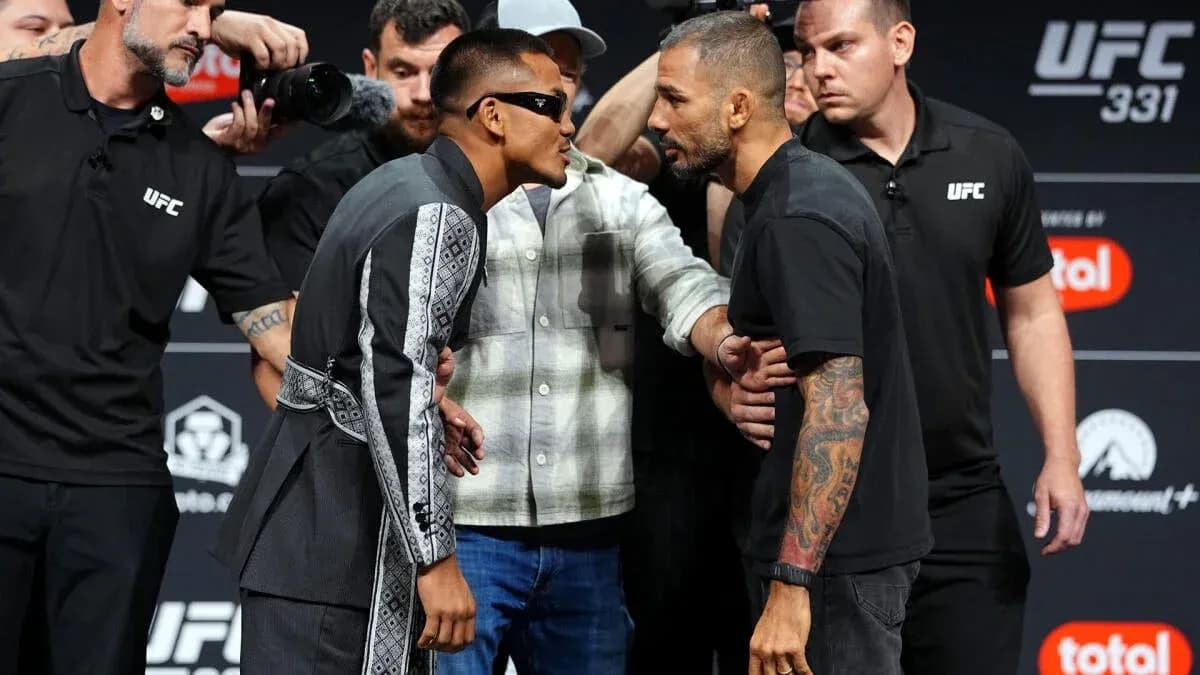
Joshua Van and Alexandre Pantoja share a cage again on Saturday night in Los Angeles, but this isn’t just a routine title rematch. It’s a do-over with teeth.
Their first meeting barely started. Twenty-six seconds in, Pantoja’s elbow gave way, his title went with it, and Joshua Van walked out as UFC flyweight champion with more questions than answers attached to his belt. Van got the gold. He didn’t get the closure.
Now he wants to rip that doubt out by the roots.
Pantoja, 36, arrives with a different kind of burden. He didn’t get outclassed. He got injured. For a man widely viewed as one of the best flyweights the UFC has ever seen, losing the crown like that stings in a way a clean knockout never could. The Brazilian has spent the months since stacking slights, real and perceived, into fuel. Underdog odds. Questions about his age. Whispers that the division has moved on.
He’s heard it all. He intends to answer it in blood and pace.
Van, 24, has already shown he’s more than a paper champion. His first defense against Tatsuro Taira turned into a five-round crucible. He got taken down, tested, pushed to the brink — then adjusted mid-fight, turned the tide, and finished a surging contender. That night, he looked less like a placeholder and more like a problem the division will have to solve for years.
But Pantoja still brings something Van has yet to fully conquer: layers. Championship miles. The kind of veteran grime that doesn’t wash off in one camp. His late-career surge to the title came after years of sharpening every edge of his game, and even if the clock is ticking louder now, his toolbox remains deeper than most.
Stylistically, this is youth against craft. Van’s speed, aggression and confidence against Pantoja’s grappling, experience and dogged toughness. The CBS Sports panel splits along those lines. Brian Campbell and Shakiel Mahjouri see Pantoja weathering the early storm and snatching a submission in the championship rounds. Brent Brookhouse, Michael Mormile and Brandon Wise lean toward the younger man’s momentum, picking Van by early stoppage or clear decision.
One thing is certain: this time, nobody expects it to end in half a minute.
Tsarukyan chases lost time
If the main event settles old business, the co-main is about reviving a stalled destiny.
Arman Tsarukyan was supposed to be fighting for the lightweight title in this city back in January 2025, opposite Islam Makhachev. Instead, an injury during his weight cut ripped that chance away. Twenty-plus months later, he walks back into Los Angeles with the same goal and a different obstacle: Mauricio Ruffy.
Ruffy is dangerous, no question. A rising contender with a flair for chaos, he’s won twice this year in the kind of wild, crowd-pleasing fashion that fast-tracks names up the marquee. His striking is sharp, his kicks venomous, his confidence obvious.
His wrestling, though, remains the question mark.
Benoit Saint Denis exposed that side of his game in 2025, mauling him on the mat. That tape has been playing on loop in every breakdown of this fight, because Tsarukyan lives in that world. He’s taken down everyone he has faced in the UFC who didn’t go to sleep first, including Makhachev in his own debut. Pressure, chain wrestling, suffocating top control — this is where he thrives.
Campbell expects Tsarukyan to drown Ruffy over five rounds, using that relentless pressure to sap his gas tank and open the door to a late stoppage. Brookhouse and Mahjouri see a similar script: Ruffy’s kicks turning into opportunities, Tsarukyan dragging him down, testing his cardio and finishing once the sting leaves Ruffy’s shots. Mormile and Wise both go Tsarukyan by decision, banking on dominance more than devastation.
Ruffy insists he’s leveled up, especially after work with Alexander Volkanovski. On Saturday, he finds out if that evolution can withstand a man many already view as a future champion. For Tsarukyan, anything short of a statement win risks turning that future into a story of what might have been.
Choi vs. Pitbull: pure violence on a timer
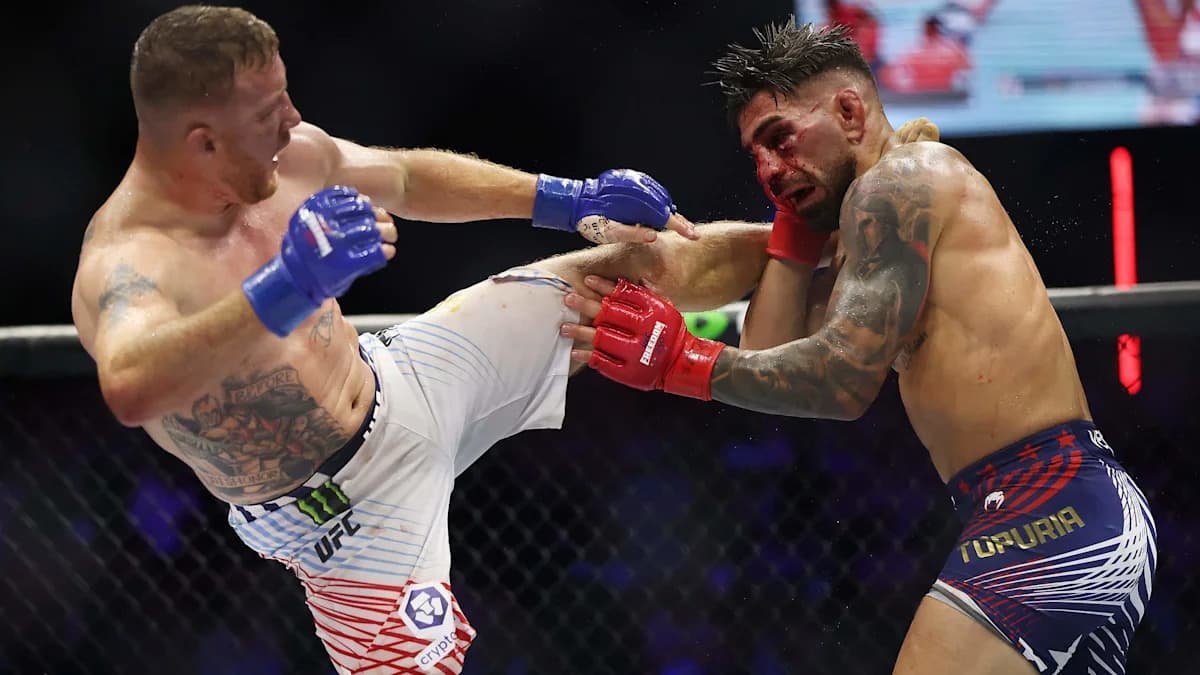
Then there’s the featherweight collision that almost guarantees chaos: Dooho Choi against Patricio Pitbull.
Choi, once seen as a fading prospect after three straight losses, has quietly rebuilt himself. Four fights unbeaten. Three consecutive TKOs. “The Korean Superboy” has rediscovered his timing and his bite, and he now walks into this matchup with the kind of momentum that makes matchmakers smile and opponents nervous.
Across from him stands a legend.
Pitbull is Bellator royalty, a two-division champion with a résumé as thick as anyone outside the UFC. He’s seen every style, traded with every archetype, and built a career on walking into danger and coming out with a finish.
But he’s 39. The wars have left their mark. Aaron Pico’s brutal assault didn’t just take a loss from him; it took a chunk of what his body can reliably give.
That’s the tension here. Pitbull still owns the more complete game, especially in the grappling. On paper, he can change levels, slow the tempo, and force Choi to solve problems he hasn’t seen in his recent run. In reality, can his body cash the checks his skill set still writes?
Campbell leans toward the younger man surviving the storm and pushing the pace until Pitbull breaks, calling for a Choi TKO in a firefight that doesn’t see the final horn. Mahjouri echoes that sentiment, expecting Pitbull to have moments — maybe even rounds — before Choi’s pressure and power finally crack him. The rest of the CBS panel lines up behind Choi as well, whether by decision or late stoppage.
It feels like a passing-of-the-torch booking. Whether Pitbull allows that narrative to play out is another matter.
Steveson, Baraniewski and a card built for chaos
The main card opens with raw danger at light heavyweight. Iwo Baraniewski and Alonzo Menifield don’t do slow burns. Both men carry fight-ending power, and every expert on the CBS panel sees the same thing: someone goes out early, and they like Baraniewski to be the one standing when it happens.
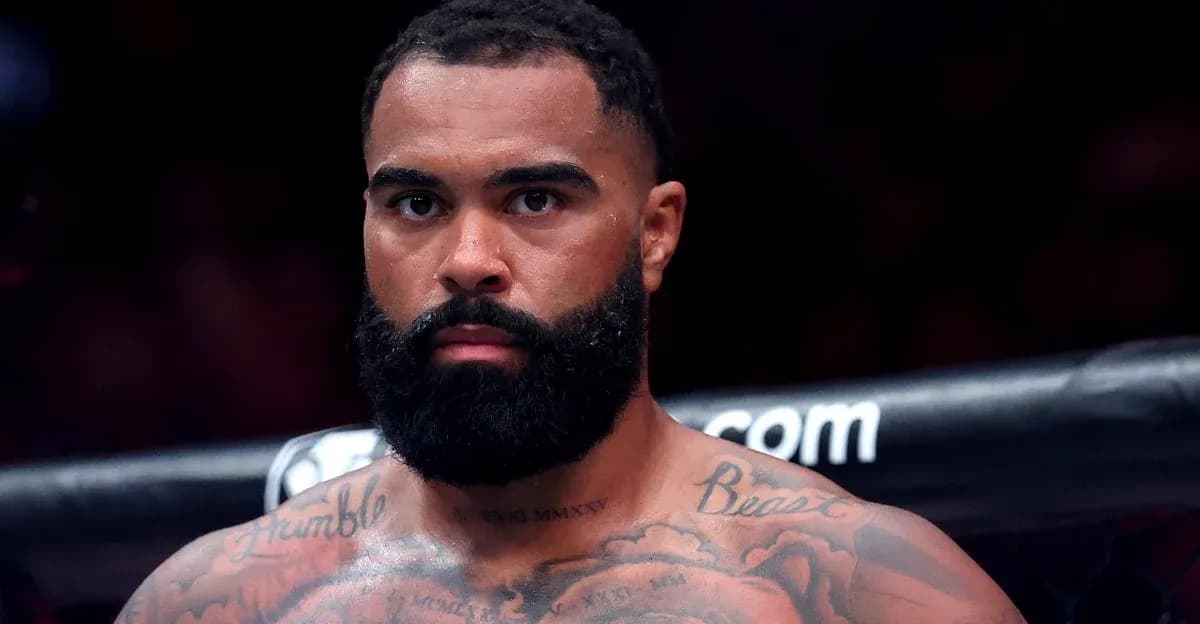
Heavyweight brings its own spectacle. Olympic gold medalist Gable Steveson continues his MMA education against Sean Sharaf, and the odds tell you everything about expectations. Steveson sits as a massive favorite, with every picker backing him to finish quickly — whether by thunderous ground-and-pound or a suffocating submission once he inevitably drags Sharaf to the mat.
The undercard is stacked with names and matchups built to keep the tempo high: Charles Jourdain against Marlon Vera at bantamweight, Robelis Despaigne trading bombs with Tai Tuivasa, Joanderson Brito meeting Giga Chikadze in a striking showcase, and Casey O’Neill trying to reassert herself at women’s flyweight against Eduarda Moura.
From top to bottom, UFC 331 feels less like a slow-played pay-per-view and more like a pressure cooker. A champion trying to prove he’s real. A former king desperate to show he’s not done. A lightweight contender hunting down the title shot that slipped through his fingers. A legend walking into the fire one more time.
By Sunday morning, the flyweight belt will still be in Los Angeles. The only question is whose waist it’s wrapped around — the young champion finally validated, or the veteran reclaiming what he believes was never truly lost.