
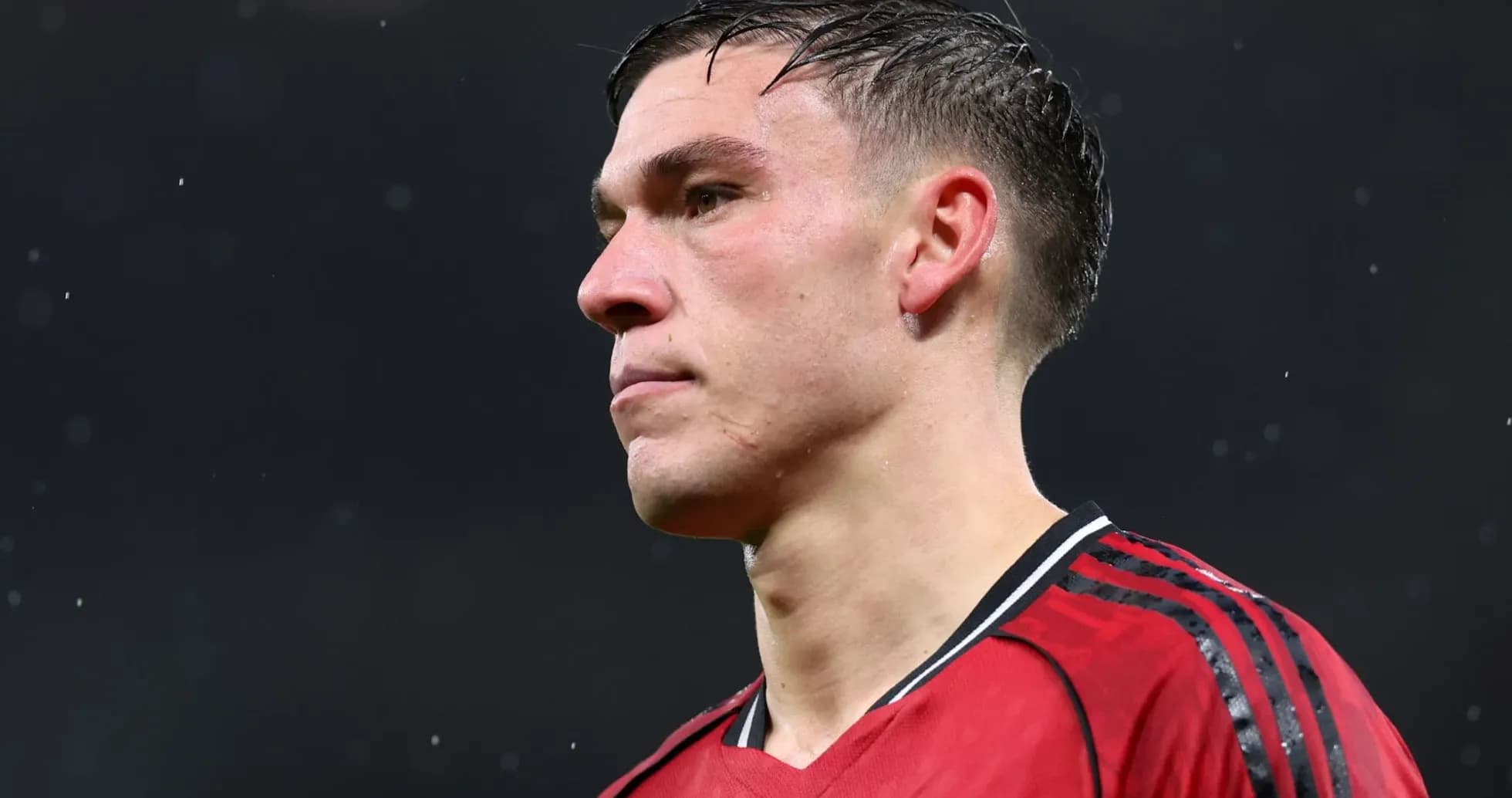
Ugarte’s Future at Manchester United Depends on His Return to Fitness
The summer window came and went without a whisper of serious movement for Manuel Ugarte. His injury at FIFA’s flagship tournament in North America shut that door before it even opened. No club was ever likely to commit major money to a midfielder facing months in the treatment room.
Attention quickly turned to January. If the rehabilitation went well, if the knee responded, if the sharpness returned, then perhaps a deal could be revisited. Few inside or outside Old Trafford truly believed a revival under the current regime was on the cards. Ugarte’s Manchester United story felt like it was drifting towards an early epilogue.
It has been a strangely muted spell for a player signed to be a heartbeat. United paid £42 million to prise him from Paris Saint-Germain in August 2024, convinced his snarling, combative style would give their midfield some badly needed steel. Sixty-nine appearances later, the impression is of a player who never quite managed to grab the club by the collar.
He arrived to anchor the side. Instead, he watched that anchor role slowly harden around someone else’s boots. Casemiro, the veteran Brazilian, claimed ownership of the holding position and, even as his own form fluctuated, Ugarte slipped backwards in the queue. When United reshaped the squad ahead of the 2026-27 campaign, the message grew louder.
Youri Tielemans came in with his passing range and experience. Andrey Santos brought youthful energy. Carlos Baleba added another layer of competition. Each new face nudged Ugarte further towards the margins, even before injury made his situation more precarious.
All of this has played out against the backdrop of a team that still can’t find a stable rhythm under Michael Carrick. United remain maddeningly inconsistent, veering from promising patches to flat, disjointed displays. That kind of volatility always fuels speculation, and the head coach’s position has inevitably been dragged into the debate. By the time Ugarte is fully fit, there is every chance a different manager will be picking the midfield.
From Uruguay, one of his country’s most recognisable exports has been watching closely. Asked about Ugarte’s future, former international Gustavo Poyet, speaking to GOAL in association with Gambling.com, cut through the noise and went straight to the basics.
“He needs to come back first,” Poyet said. For all the tactical talk and transfer gossip, that is the blunt reality. Until Ugarte laces his boots, feels the grass again and strings together competitive minutes, nothing truly moves.
Poyet’s perspective carries an extra edge because he knows how sliding doors have already shaped Ugarte’s career. “When he left Portugal [at Sporting], he was coming to Chelsea. I was desperate for him to join Chelsea and he went to Paris and then he went to Manchester. Decisions that were made in his career,” he reflected.
Those decisions have left Ugarte at a crossroads. Paris offered a platform, Manchester United offered a stage, but neither has yet become his home. Injury now forces him into a different kind of fight, one that Poyet understands on a personal level.
“I think first he needs to get back. I don't think he will move before playing a few games, or it will be difficult at least,” Poyet said, recalling his own long lay-off. “I remember I had a serious injury and the only thing you focus on is to get back on the pitch and prove that you're okay. And then yes, make a decision.”
That is the sequence Ugarte must follow. Recovery, proof, then choice. Not the other way around.
What gives the midfielder a sliver of leverage is the current state of United’s engine room. For all the names on the squad list, for all the fees and reputations, there is still a vacancy for a reliable, relentless presence in the middle.
“But obviously, and with all respect to the players at Man United, I would fancy my chances to play. Then it depends on the coach and how he is,” Poyet added. It was a pointed line. In this United side, with its fluctuating standards, a fit and focused Ugarte would back himself.
“In this Manchester United, you will fancy Ugarte in the middle of the pitch after getting back to fitness. So, let's wait and see if there's any changes from now to the moment he's back.”
United’s hierarchy can afford to wait. When Ugarte moved to Old Trafford, he signed a five-year deal running through to the summer of 2029. That contract length gives the club control. They are under no financial pressure to sell, no obligation to invite cut-price offers from opportunistic suitors.
Control, though, is not the same as clarity. Big decisions still loom. Ugarte is 25, entering what should be the prime of his career. The question facing United is stark: does this hard-working, combative midfielder still fit into the club’s long-term blueprint, or has his chance already passed in all but name?
The answer will not come in the gym or the medical room. It will come when he steps back onto the training pitch, when coaches can judge his mobility, his timing in the tackle, his ability to knit play and disrupt opponents. Only then can anyone inside Carrington honestly assess whether he is ready to reclaim a place in the rotation, or whether his future lies elsewhere.
For now, everything hangs on that first clean session back, that first matchday squad, that first crunching challenge that tells him—and everyone watching—that Manuel Ugarte is truly back in the fight.





