Untold Raygun: Breaking Badly - A Love Story Meets Olympic Chaos
On Netflix, the Raygun documentary opens like a love story. Not the Olympics. Not the backlash. A marriage.
Rachael Gunn — better known now as Raygun — and her husband Samuel Free, “Sammy (Sex)” in the film, meet on the shared ground that would later catapult her into global notoriety: dance. He becomes her coach in breaking, the partner who helps turn living-room moves into Olympic ambition. The cameras linger on their wedding, a sequence stitched together with choreography and laughter. Even here, in white dress and suit, there are routines, spins, playful steps. Dance is the language of the relationship.
Then Paris crashes the party.
Before the memes, before the late-night punchlines, Gunn was an academic. A “normal suburban girl,” as her mother Beverly recalls, who cycled through ballet, tap and jazz as a child before finding breaking. The documentary, Untold Raygun: Breaking Badly, tracks that journey with a quiet, unnerving tension. As the countdown to the 2024 Paris Olympics begins, the film shows an athlete who looks brutally unprepared for the scale of what is coming.
She doesn’t have a big coaching team. She doesn’t have a sophisticated support structure. She has Sammy, a small circle, and a sport stepping into the Olympic glare for the very first time.
Breaking’s Olympic debut was supposed to be a celebration. Instead, Raygun’s routine became the story.
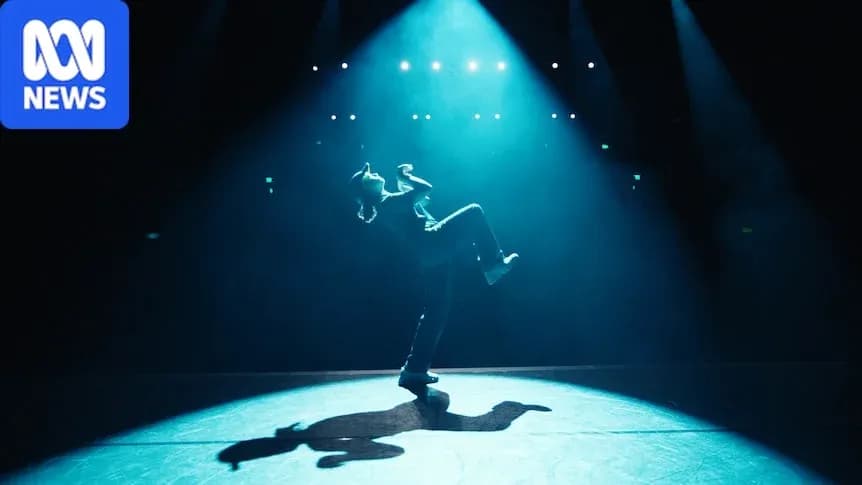
Her performance in Paris went viral at warp speed. The kangaroo. The sprinkler. The exaggerated, theatrical moves that split opinion in an instant. Clips ricocheted across social media. Memes and comedy skits followed. Conspiracy theories, too. Was it a joke? Was it performance art? Was she trolling the Games?
The world weighed in. Snoop Dogg. Adele. Strangers on every platform. Some defended her creativity, others tore into her with venom. Overnight, Raygun stopped being just a B-Girl and became a pop culture lightning rod.
The documentary doesn’t look away from any of it.
In one of its most revealing moments, Gunn sits in therapy on the eve of the Games, panic rising. Her therapist asks the standard question: “What’s the worst that could happen?” Gunn’s answer lands like a premonition. The worst, she says, is that the whole world could laugh at her.
Paris delivers that nightmare almost to the letter.
Her father Russell jokes that when he flew to France, he thought he was going there to console his daughter. The laughter in the family’s recollections is brittle, the kind that knows what came next. Their suburban girl walked onto the biggest stage in her sport and left without a single judge’s vote in any of her Olympic rounds.
The film cuts back to earlier footage from her Olympic qualifier, where she faces B-Girl Molly. Both dancers look stiff, the battle lacking the swagger and polish audiences associate with elite breaking. Neither appears especially professional in those clips, a detail the documentary uses to underline how raw the whole Olympic project still was.
Not everyone in the breaking community finds any of this amusing.
B-Girl Tinylocks, who chose not to try out for the Olympics, speaks with open disgust about Raygun’s performance. She cares about breaking as an art form and sees Paris as a betrayal of that craft. “Who could have imagined it would have gone so wrong?” she asks, the disappointment cutting through the screen.
B-Girl Flix, a friend of Raygun’s for 15 years, goes even further emotionally. She describes feeling “offended” and “embarrassed” by the routine. For her, this wasn’t just an off day. It was a moment that reflected on an entire culture now being judged by a global audience that barely understood it.
The documentary gives these critics space. It doesn’t soften their words or hide their faces. It lets the tension between friendship, loyalty and artistic standards sit there, unresolved.
At the same time, it hands the microphone back to Raygun.
Across the film, she narrates the build-up, the Olympic experience and the storm that followed. “Sometimes this all feels like a really wild dream,” she says in voiceover at the start. “It’s like I’ve been charged with some crime.” The line frames the whole piece: not as a simple sports documentary, but as a kind of trial — of one woman, of a sport, of what happens when niche culture collides with mass entertainment.
The love story that opened the film never disappears, but it’s no longer the headline. It becomes context. A reminder that behind the viral clips is a couple trying to navigate a maelstrom they never truly prepared for.
By the end, Gunn has stepped away from her academic job, leaving her future deliberately vague. No neat redemption arc. No clear next move. Just an Olympian whose name became a punchline and a case study, standing at a crossroads.
Untold Raygun: Breaking Badly doesn’t answer whether Paris was a farce, a misunderstanding, or a brutal growing pain for a young Olympic sport. It leaves a sharper question hanging instead: when breaking returns to the world stage, who will dare to dance like themselves, knowing exactly how loud the world can laugh?