USA Women's Basketball Reaches FIBA World Cup Final Against France
BERLIN — For two weeks, the U.S. had sliced through this World Cup field like it was a walkthrough. On Saturday night, Spain finally made them sweat.
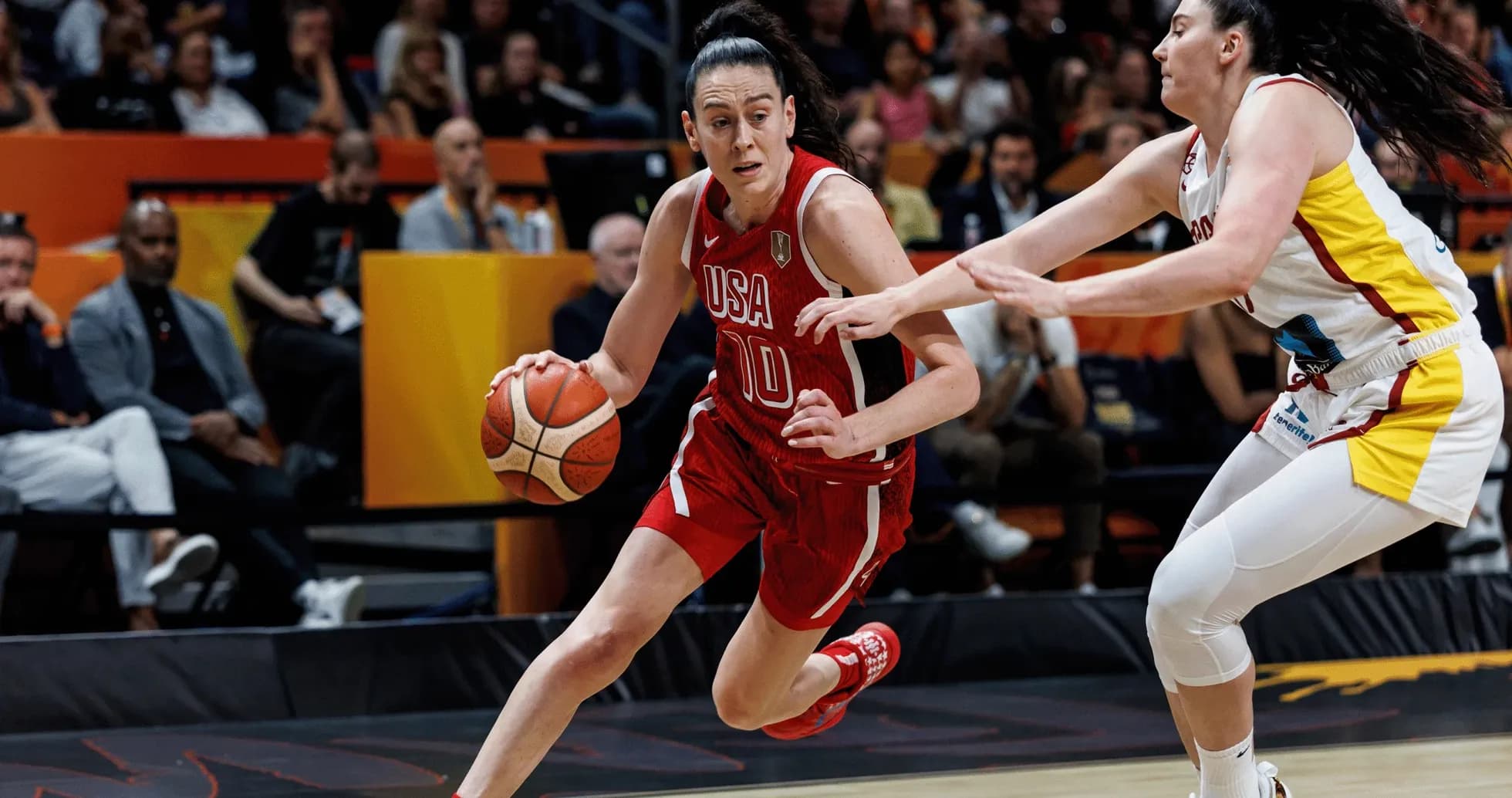
Breanna Stewart steadied the champions with 16 points, Kahleah Copper punched holes in Spain’s resistance with 13, and the U.S. ground out a 76-66 win in Berlin to reach yet another women’s FIBA World Cup final.
Next up: France. A rerun of the 2024 Paris Olympic gold medal game, decided by a single point and still fresh in the memory of both locker rooms.
A streak under real threat
The numbers behind this American run are absurd. Thirty-five straight World Cup victories, stretching back to a semifinal loss to Russia in 2006. Four consecutive titles already in the bag. One more win, and they’ll pull level with the former Soviet Union for the longest streak of World Cup crowns.
Yet for long stretches against Spain, that dominance felt fragile.
Spain came out swinging, aggressive and fearless, ripping off nine of the first 10 points. The U.S. had not trailed by more than three in this tournament; suddenly they were staring at a 16-9 hole and a Spanish bench roaring with belief.
Only when the American newcomers checked in did the game tilt. Fresh legs, fresh energy, and a 12-2 burst to close the first quarter flipped the script. The U.S. had survived the first punch.
They never quite escaped the fight.
A game played on the foul line
Spain refused to give the U.S. any rhythm. Every cut was bumped, every drive contested, every catch met with a body. The physicality turned the game into a parade to the free-throw line.
By halftime, the Americans had taken 27 free throws — and just 26 field-goal attempts. They converted 19 of those foul shots and scraped together a 39-36 lead at the break, but their offense looked clogged, stop-start, and frustrated.
The pattern held. The U.S. spent the night living at the stripe, finishing 27 of 35 from the line. Spain’s strategy kept them close, slowed the pace, and forced the Americans to win ugly.
For three quarters, it worked.
Game on in the fourth
The tension peaked at the start of the final period. Tied at 58, Spain were right there, matching the U.S. possession for possession, refusing to bow to the weight of history.
Then the pressure finally told.
The Americans strung together stops. Stewart and Copper found gaps where there had been none. The ball moved a little quicker, the decisions a little sharper. Over a brutal four-minute stretch, the U.S. ripped off 12 of the first 14 points of the quarter to surge ahead 70-60, their biggest lead of the night, with 5:20 to play.
Spain never got closer than eight again. The upset dream lingered, but it never truly threatened to materialize once the U.S. clamped down defensively and controlled the glass.
From debut to dynasty
This semifinal carried a familiar echo. The last time these two met in a World Cup, the U.S. beat Spain for gold in 2014 — the tournament where a young Breanna Stewart made her national team debut.
A decade later, Stewart is the anchor of a machine that simply does not lose on this stage. The faces around her have changed, the roles have shifted, but the standard has not.
The U.S. didn’t dazzle in Berlin. They didn’t blow Spain away. They advanced the hard way, through contact and whistles and long, grinding possessions.
Sometimes champions have to win like that.
Now comes France, and with it a chance to turn a remarkable run into something historic: a fifth straight World Cup title, and a dynasty measured not in years, but in eras.