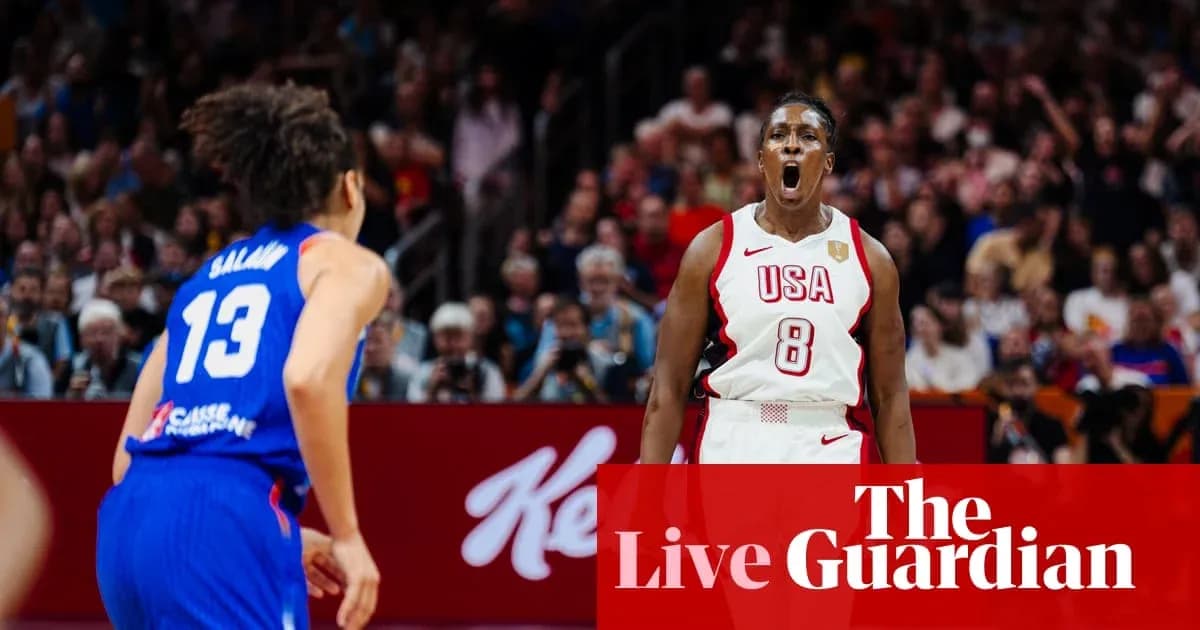
USA Women's Basketball Team Claims Fifth World Cup Title
The dynasty is still alive. It just looks different now.
The United States claimed a fifth consecutive Women’s Basketball World Cup on Saturday, beating France 97-79 in Berlin, a scoreline that hides just how close this came to cracking. For a long stretch, it felt less like another coronation and more like a warning.
France led by 14 in the second quarter. They were quicker, sharper, looser. The US looked old, rushed, oddly brittle. At 31-17 France, the Americans were staring at the kind of deficit that has buried every other team in this tournament.
Then the sport’s long‑time superpower did what it has done for four decades. It absorbed the hit, steadied, and slowly squeezed the air out of the game.
France fly, then fade
France arrived with scars and motivation. Two years ago in the Olympic final, Gabby Williams’ last‑second jumper was worth two instead of three, her toe on the line, and the US escaped. This time, Williams and a fearless young core came straight at the champions.
Every early French possession cut at the US defense. All of France’s first baskets came at the rim. Williams glided into the lane, Dominique Malonga bullied inside, Marine Fauthoux Lacan found open space. When Carla Leite and Maëva Ayayi joined in from the perimeter, the US were suddenly chasing shadows.
Williams set the tone. A smooth drive here, a three there, then another. She reached 16 points by halftime and finished with 20 and seven assists, orchestrating everything. Malonga, just 20, matched her presence with 21 points of her own, stretching the floor with a corner three and punishing switches inside.
France shot 52% from the field and 8-of-14 from three at one point. They led 45-39 late in the second quarter. The US looked rattled, the rotations uncertain, the bench pieces tentative.
And then, almost quietly, the game flipped.
Stewart, Young and Gray take control
The US didn’t turn this final with one spectacular run. There was no single knockout punch. They just kept making the right play, again and again, until France finally cracked.
Breanna Stewart was the anchor. She scored 22 points, grabbed nine rebounds and, as usual, did a bit of everything. Early on, she passed Cheryl Miller to become the fifth‑leading scorer in US history with a pair of free throws. Later, when the offense stalled, she slipped into gaps, drew fouls, and steadied the team at the line.
Jackie Young matched her composure with aggression. She poured in 18 points and dished five assists, hitting timely threes that repeatedly stopped French momentum. Every time France threatened to turn a run into an avalanche, Young appeared on the wing or in transition to drag the scoreline back under control.
Chelsea Gray, the veteran point guard who so often chooses the moment rather than chases it, threaded the whole thing together. Twelve points, five assists, and a series of shots that seemed to get more difficult as the shot clock wound down. She hit fadeaways that had no business dropping, then picked apart traps with the kind of pass only she sees.
By halftime, France still led 45-43, but the current had shifted. The US had survived their worst. France had already shown their best.
The third‑quarter chokehold
The decisive turn came after the break.
On the first possession of the second half, Stewart tied the game. A few minutes later, Napheesa Collier muscled the US into the lead for the first time in what felt like an age. The defense, suddenly connected, began to smother.
France’s clean looks dried up. Open threes turned into rushed heaves. Williams, so fluid in the first half, started to run into walls. Johannes, a spark early in the tournament, went cold. The US pushed misses into quick outlets, and the floor began to tilt.
Young and Gray, both +8 in early plus/minus, took command. Young’s three from a Gray assist pushed the margin back out after a brief French surge. Collier chipped in with mid‑range jumpers. Stewart and Boston controlled the glass. The US would finish with a 36-27 rebounding edge, a quiet but ruthless advantage.
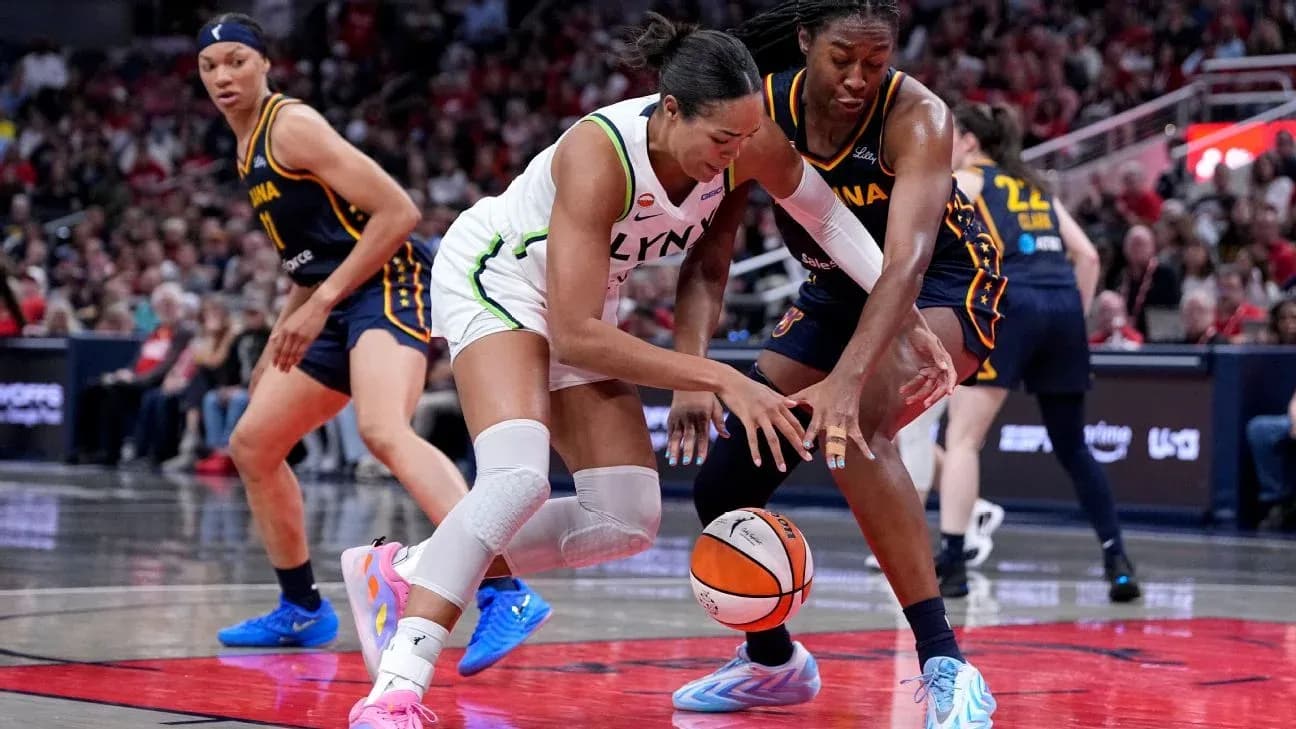
Then came the moment that broke France’s composure. Late in the third, Copper attacked the rim and was hammered by Johannes. Officials went to the monitor to check for an “act of violence” and came back with a ruling that gave the US four free throws and the ball. Copper hit three of four. On the ensuing possession, Caitlin Clark fed her Indiana Fever teammate Aliyah Boston for a layup.
In a blink, the lead was 17. The wheels, as the running commentary put it, had come off for France.
The quarter ended 73-57. From 45-40 down late in the second, the US had outscored France 33-12 in roughly 12 minutes of basketball. The champions had done what champions do: they squeezed, and they didn’t let go.
Clark’s cameo, Copper’s edge, Reese’s bite
For all the noise around her, this tournament has not belonged to Caitlin Clark. It belonged to the veterans. But in this final, she finally had a stretch that looked more like the player who has electrified the WNBA.
Clark played limited minutes yet scored 12 points on 4-of-5 shooting, including 2-of-3 from deep. She added a couple of slick drives, hit a quick‑release three, and found Boston for that key third‑quarter bucket. The numbers came in just over 10 minutes of action.
It was not spotless. She committed four turnovers and picked up a technical for arguing a foul in the fourth quarter, a flash of the same edge she carries back home. But for once in this World Cup, her efficiency matched her impact.
Kahleah Copper, though, set the tone in ways that rarely show in a box score. She finished with 15 points, constantly testing France’s guards, knifing into seams, and punishing every lapse in transition. Her late three, after France had trimmed the gap to 14, slammed the door on any faint comeback talk.
Angel Reese, used sparingly, still left a mark: battling Malonga on the glass, blocking shots, finishing late after a Stewart feed. Aliyah Boston was the first of the new wave to truly impose herself, deflecting shots, running the floor, and giving the US a physical answer in the paint when France threatened to bully their way inside.
The future was there. It just watched this one from the margins.
France’s late push, US’s ruthless reply
Down 27 early in the fourth, France refused to fold. Malonga, in particular, kept swinging. She buried a corner three, scored through contact, and strung together what felt like a one‑woman 13-2 run. The US starters’ plus/minus numbers began to slide as Kara Lawson left her main group out longer than expected.
But every time France flickered, the US snuffed it out. Copper’s putback restored a 20‑point cushion. Stewart kept getting to the line. Collier answered in the mid‑post. When Williams finally found the net again from three, it was too late.
Only in the final minutes did Lawson finally empty the bench. Clark re‑entered with Sonia Citron and Kiki Iriafen, while Stewart, Gray and Young walked off to the ovation their night deserved. By then, the title was secure, the scoreline 95-78 and drifting toward its final 97-79 mark.
A dynasty under pressure – at last
Strip away the margin, and this tournament told a different story from the blowouts of the past.
The US needed a late defensive stand to escape Italy 55-52 in the group stage. They trailed Spain in the semifinal, went into the fourth quarter tied at 58, and only then pulled clear. France had them down double digits in the final. This is no longer a program lapping a half‑formed field.
The rest of the world has caught up. France brought eight WNBA players. Spain pushed them. Italy scared them. The US are still the standard, but they have to work for it now.
On this night, the old guard made sure the trophy stayed where it has lived for so long. Stewart, Young, Gray, Collier, Copper – the core that has carried so much of the load since A’ja Wilson stepped away from this cycle – did enough again.
Behind them, though, waits something new. Clark. Reese. Boston. Bueckers. Citron. Iriafen. A generation that might define the next decade, if they can learn to win the way their predecessors did: not with highlights, but with habits.
The US will be favored at the next Olympics, and at the next World Cup after that. They always are. But nights like this, with France surging early and refusing to back down, suggest the era of inevitability is over.
The dynasty survives. The chase is real now. Who holds the trophy in four years’ time suddenly feels like an honest question.