Usman Nurmagomedov Stands Firm After Controversial Post-Fight Incident at UFC Shanghai
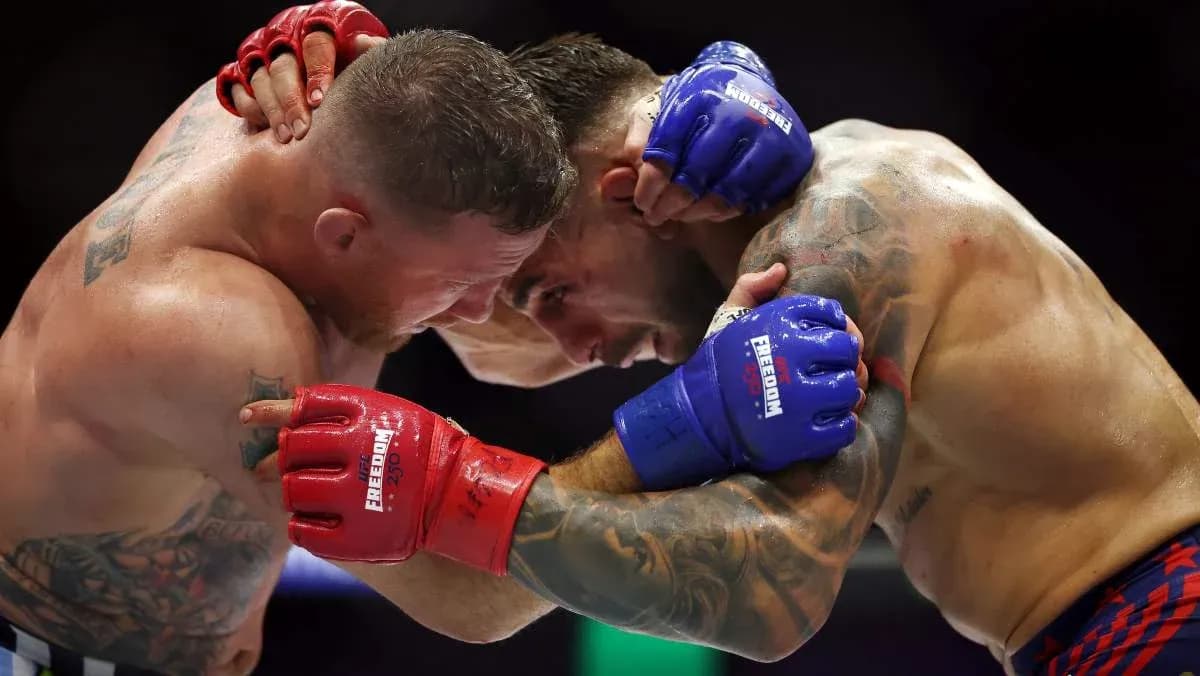
The moment Umar Nurmagomedov’s body hit the canvas in Shanghai, his brother didn’t hesitate. Usman Nurmagomedov vaulted the fence, stormed into the Octagon, and went straight for his fallen family member as Song Yadong wheeled away in celebration.
What followed turned a brutal knockout into a viral controversy.
As Song circled, arms raised, he almost collided with Usman, who by regulation had no business being in the cage yet. The PFL lightweight champion reacted on instinct, shoving Song away and half-cocking a spinning back elbow that stopped only inches from being thrown in full.
It never landed. But the image was enough. One of the sport’s most disciplined families suddenly had a member at the center of an ugly flashpoint.
The backlash came quickly. Clips flooded social media. Fans and fighters lined up to criticize the Russian for losing his composure and putting a victorious fighter in danger during his own celebration. Many framed it as a line you simply do not cross, no matter how personal the moment.
Usman has now answered that criticism head-on — and he isn’t backing down.
“If I Had Wanted to, I Would Have Hit Him”
Taking to Instagram, Usman Nurmagomedov released a statement that made his position crystal clear. He rejected the idea that he had truly tried to strike Song and aimed his anger squarely at those attacking him online.
“Only what is ordained for us will befall us. In any situation—Alhamdulillah. People make such a huge tragedy out of this; they really ought to calm down. There are far worse things; you don’t need to think long—just look at what is happening in the world. And as for the claim that I supposedly wanted to hit his opponent… If I had wanted to, I would have hit him. You spiteful, petty, and envious people—your problem is that you have never known, nor will you ever know, family love and understanding. If you don’t know what a brother means to a brother, then it is not me you should pity, but yourselves,” he wrote.
No apology. No softening. No attempt to walk back the moment.
Instead, Usman framed the incident as a natural reaction from a devoted brother, dismissing the uproar as the work of “spiteful, petty, and envious” critics who, in his view, don’t understand the depth of family loyalty that drives him.
Rules, Repercussions, and UFC Politics
Strip away the emotion, and one issue remains: he jumped the cage before he was allowed to.
Commission rules are clear. Cornermen must wait for officials to bring them in. Usman ignored that, entered the Octagon uninvited, and ended up chest-to-chest with the man who had just knocked out his brother. That’s the kind of scenario regulators try to prevent.
This card was sanctioned in China, where the enforcement landscape and political dynamics differ from those in Nevada or other major U.S. jurisdictions. But had this unfolded in Las Vegas, the conversation might already be about hearings, suspensions, or a revoked corner license.
The act itself — breaching the cage early — is enough to trigger disciplinary talk. The near-physical clash with Song only amplifies it.
It also sets a sharp contrast. Fighters with brothers, cousins, or teammates on the card routinely watch loved ones lose, get hurt, even get stretchered out. They rage in the back. They break things in the locker room. They almost never end up in the cage, nearly throwing strikes at the winner.
That’s why this particular scene cut through so sharply.
Will This Hurt His UFC Future?
On paper, Usman Nurmagomedov is the kind of talent the UFC covets. A high-level lightweight, a champion in PFL, and part of the famed Nurmagomedov lineage that has already reshaped the division once.
Incidents like this can complicate negotiations, but they rarely close doors on fighters of his caliber. Promotions have long proven they will tolerate edge, ego, and even controversy when the talent level justifies it.
So will this derail a potential UFC move? Unlikely.
What it might do, though, is color how he’s received when that time comes. The optics of a fighter doubling down instead of extending a hand to Song Yadong, even with all the emotion involved, don’t play well in an era where every second is clipped, shared, and dissected.
For now, the knockout belongs to Song. The storm that followed belongs to Usman.
And if he does eventually walk into a UFC cage under his own name, not his brother’s, the question will linger: will the sport remember him more for his composure as a champion — or for the night in Shanghai when he nearly let it slip?