VAR Disasters in Premier League: Manchester Derby Incident
The soundtrack to one of the Premier League’s great VAR disasters was not outrage from the stands or a roar from the away end. It was a voice in a bunker at Stockley Park, rattling through a decision that would decide a Manchester derby.
“Quick, quick, quick, quick! Go, go, go, go, go!”
Matt Donohue, the video assistant referee, wanted to be efficient. Instead, he helped deliver one of the most glaring VAR errors the league has seen.
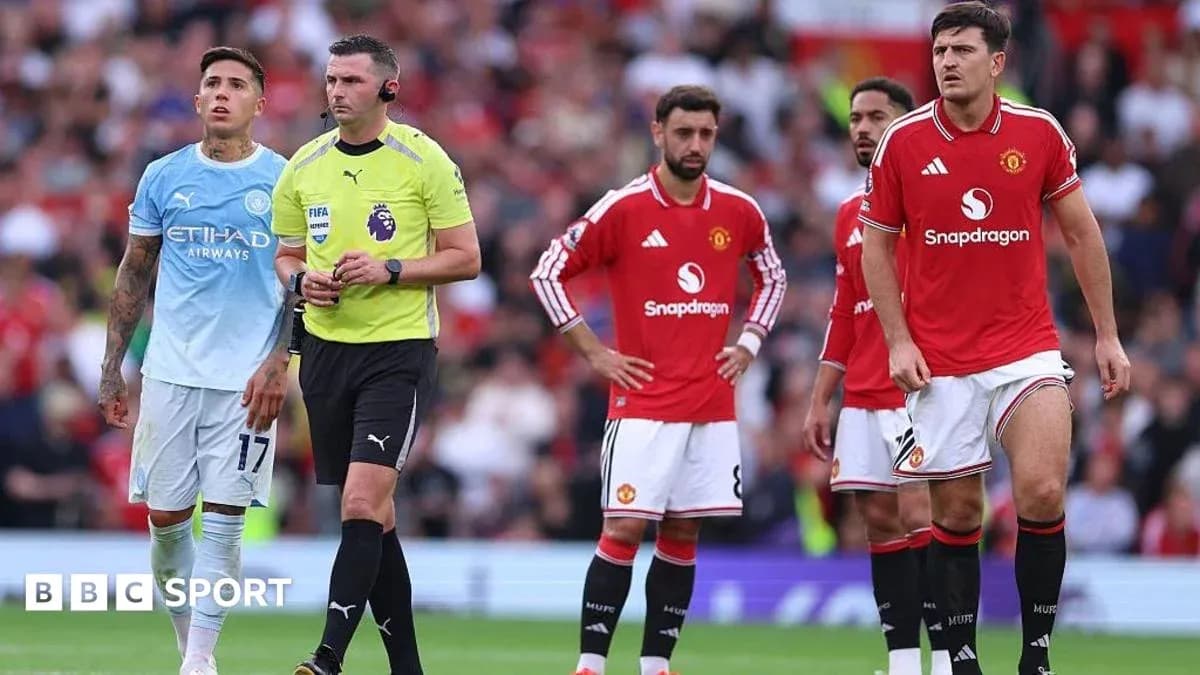
Erling Haaland’s winner stood. Manchester City 1-0 Manchester United. And three yards away from the ball, Enzo Fernandez stood in an offside position that somehow nobody in the VAR team properly accounted for.
Speed over sight
Refereeing has always been a high-pressure job, a goldfish bowl with nowhere to hide. VAR was supposed to share that burden, to bring calm, forensic clarity to the chaos. Instead, in moments like this, it pours petrol on the fire.
The Premier League set out this season with a clear instruction: make VAR quicker, trim the fat from reviews, cut the delays that drive everyone mad. Stakeholder surveys, from managers to fans, hammered home the same message. Decisions must be faster.
The message landed. Maybe too well.
“Let’s go, let’s go, let’s go, let’s go!” Donohue urged as the replays rolled. The exchange with the replay operator sounded rushed, even panicked. Not the cool, methodical process the technology demands, but a scramble. The opposite of what a video official is supposed to be.
The pressure to deliver speed is real. It is also no defence for missing something this obvious.
City manager Enzo Maresca, the beneficiary of the mistake, understood the strain, at least in public.
“To make a decision in 10, 20 seconds is not easy for them,” he said. “Sometimes they make mistakes. I make mistakes, players make mistakes. It’s part of our job.”
Fair enough. But this was not a marginal call lost in a blur of boots and bodies. This was a structural failure in how the review was carried out.
A broken process
The crucial misstep came long before the rush to sign off on the goal.
On the first replay, as Josko Gvardiol prepared to deliver the cross, Donohue asked the operator to freeze the frame at the moment of contact. From there, he dived straight into the semi-automated offside technology.
That should never have been the starting point.
The VAR team’s first task was to watch the entire attacking phase from the cross to Haaland’s header, to build a complete picture: positions, movements, potential infringements, including Fernandez’s role and location. Only then should the lines and technology come into play.
They skipped that wider assessment. The events inside the area were effectively ignored until the attacking phase was being broken down. By then, Donohue and his assistant VAR, Blake Antrobus, had narrowed their focus almost entirely to one question: did Fernandez touch the ball?
If he had, that would have created a new phase of play and made Haaland offside. But with the tunnel vision on that single detail, the glaring offside position of Fernandez before he attempted to head the ball went unseen.
The process collapsed, and with it, the decision.
Where was the safety net?
Donohue has taken most of the public heat, yet Antrobus’ role deserves just as much scrutiny.
The AVAR exists to provide checks and balances, to spot what the primary VAR might miss, to challenge, to slow things down if needed. On this review, his total contribution was a brief “no, yeah” on the question of a possible touch from Fernandez – a single line delivered one second before Donohue said: “final decision is goal, check complete”.
That is not oversight. That is a rubber stamp.
This is not the first time Antrobus has been at the centre of a VAR storm this season. He was AVAR for the only truly lengthy review so far, when a Dan Ballard goal for Brentford against Sunderland was chalked off for a subjective offside against Kevin Danso. That decision took more than four minutes and drew heavy criticism for the delay.
Did that backlash linger in his mind on derby day? Did the memory of being hammered for taking too long push him towards silence when the review needed a second voice? Only he will know.
The irony is brutal. In that Brentford-Sunderland match, Antrobus helped guide VAR Tim Wood to the correct offside call against Danso. Here, under pressure to be quicker, the safety net he was supposed to provide never really appeared.
There was another layer of protection, too: the support VAR, sitting in the operations room next to the match hub at Stockley Park, empowered to intervene on matters of protocol. They saw what was unfolding. They did not step in.
Even after all that, there was still a window to repair the damage. Between Haaland’s goal and the restart, the process could have been reset, the incident re-examined. That opportunity passed as well.
A system under strain
Pro Ref has poured time, money and training into VAR. The ambition is clear: make it both efficient and accurate. The numbers suggest some progress. Average VAR delays, including the referee’s announcement to the crowd, have dropped from 46 seconds per game to 36.
Yet the only other accepted VAR mistake this season – the failure to award Arsenal a penalty at Aston Villa – also came from an incident cleared too quickly.
The pattern is hard to ignore.
Speed is not supposed to mean cutting corners. Reviews can be quicker without skipping steps. On Sunday, steps were skipped.
This is not a case of an unqualified official thrown in at the deep end. Donohue is, by the Premier League’s own definition, a VAR specialist.
Three seasons ago, Pro Ref invited referees to apply for a dedicated video role. Candidates went through aptitude tests, with around 15 reaching the final training stages. Ten of those have now worked as VARs in the Premier League. Donohue is one of them.
Sunday was his 65th match as the video official. His development has been strong enough that he is now on the international list, taking charge of VAR duties in Uefa club competition qualifiers over the summer.
He has made mistakes before; almost all officials have. The role is unforgiving. Only two VARs – Nick Hopton and Neil Davies, both products of the same accelerated programme – have a clean record over the past two seasons.
Even turning referees into full-time VARs has not proved a magic fix. Lee Mason and Mike Dean, the Premier League’s only dedicated video officials after retirement, were both removed by Howard Webb within months of his arrival after a series of high-profile errors.
Look abroad and the picture is no clearer. Spain’s La Liga and second tier use specialist VAR teams who never take charge on the pitch. The controversy there is just as fierce. At the start of last season, their VAR completely missed that a goalscorer was offside when the ball was played. Different country, same arguments.
Football’s obsession with haste
Webb has listened to the calls for faster decisions and tried to respond. In many ways, he has succeeded. Reviews are shorter, delays fewer. On paper, the system is leaner.
But the derby debacle exposes the fault line. When the demand for speed becomes an obsession, it risks undermining the very purpose of VAR.
There is a stark contrast with another high-pressure moment: West Ham’s stoppage-time equaliser against Arsenal last season. That review took more than four minutes. It was long, messy, heavily scrutinised – and ultimately correct.
Nobody enjoyed the wait. The outcome, though, was right.
Now Pro Ref must explain how, in one of the biggest fixtures of the season, a VAR could be heard rushing so desperately through a review that he and his team failed to spot a player standing three yards offside.
The technology is not going away. The training will continue. The investment will rise. But unless football decides what it values more – speed or certainty – nights like this will keep dragging VAR back into the dock.
And the next time a title race, a relegation fight or a cup final hangs on a decision, will anyone inside that bunker dare to say: “Slow down”?