
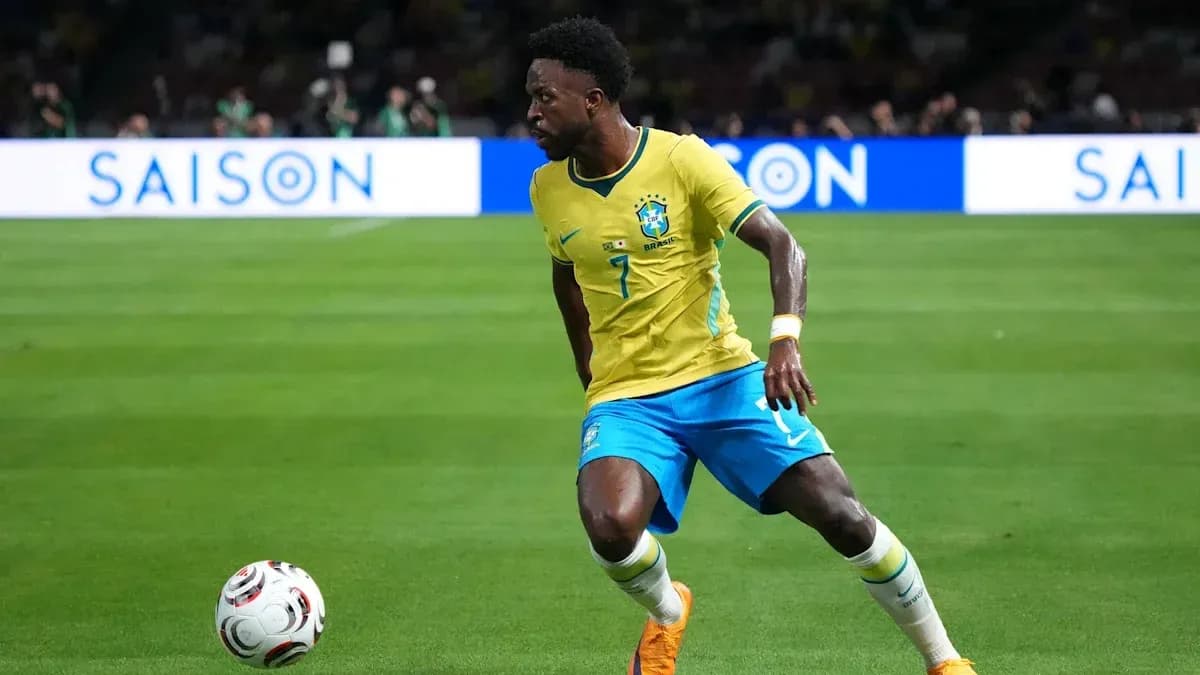
Vinicius Jr. Shines Despite Brazil's Loss to Japan in Singapore
Vinicius Jr. walked off the pitch in Singapore with a brace, a roar of approval from the stands, and a 3-2 defeat that said as much about Brazil’s fragility as it did about his flair.
This was only a friendly on paper. On the grass, it felt far more loaded than that.
Japan strike early, Brazil rocked
Japan arrived sharp, organised and ruthless. Brazil did not.
Takefusa Kubo set the tone after just 15 minutes, punishing Brazil’s loose shape with the kind of incisive finish that instantly quietens a dressing room already under scrutiny. Four minutes later, Keito Nakamura doubled the lead, and the scoreline suddenly reflected what the game was already showing: Japan were quicker to every ball, cleaner in possession and far more coherent.
Brazil’s back line looked stretched, the midfield slow to react. They struggled to contain Japan’s movement, chasing shadows as blue shirts swarmed forward. For a side still trying to find its identity, it was a bruising opening spell.
Then Vinicius changed the temperature.
Vinicius drags Brazil back
On 33 minutes, the Real Madrid forward picked up the ball outside the box and decided he’d had enough of the drift. One touch to set, another to unleash. A powerful strike from distance ripped into the top corner, the kind of goal that silences doubt for at least a night and jolts a team back to life.
It was vintage Vinicius: decisive, fearless, technically pure.
The goal gave Brazil a foothold they had not earned through structure or control, but through individual brilliance. From there, the game opened up. Japan still carried menace on the break, yet Brazil finally began to push higher, to ask questions, to play with a hint of the arrogance the shirt demands.
The equaliser took time, but the threat never left Vinicius’ boots. On 75 minutes, he struck again. Another effort from range, this time a low, precise finish that skipped beyond the goalkeeper and into the corner. 2-2. A brace. A game transformed.
In that moment, it felt like Brazil might turn the night into a statement of resilience rather than another chapter of uncertainty.
A step forward for Vinicius, questions for Brazil
For Vinicius, this performance arrives at an important juncture. His form at Real Madrid has been under the microscope, his end product questioned, his influence dissected. Two goals for his country, both of them high-quality finishes from distance, offered a timely reminder of what he can do when the game bends to his rhythm.
One international display does not erase concerns about consistency. It does, though, shift the narrative. This was a player carrying his team back into a contest that looked lost after 20 minutes, demanding the ball, taking responsibility, and delivering.
Brazil, as a collective, cannot say the same.
Late chaos and a brutal twist
Just when it seemed Brazil might escape with a draw that felt, at the very least, like a partial repair job, the night unravelled.
Japan never stopped probing and punished Brazil’s hesitation at the death. In the 91st minute, Tatsuhiro Sakamoto pounced after Brazil failed to clear inside their own penalty area, sweeping home the decisive goal. A simple finish, born from Brazil’s inability to deal with danger in their own box.
The ball hit the net. The stadium erupted. Brazil exploded.
Brazilian players and staff surrounded the officials, furious, convinced there had been a foul in the build-up. The protests crossed the line, and the punishment was immediate and severe: straight red cards for head coach Carlo Ancelotti and Raphinha. The Barcelona forward had already been substituted, but his anger from the sidelines still earned him an early walk down the tunnel.
By the final whistle, the scoreline read 3-2 to Japan, and the images were stark: Vinicius with two goals that should have defined the night, Brazil arguing with the referee, and Japan celebrating a statement win.
The friendly tag will disappear quickly from the memory. The questions it leaves behind for Brazil will not.





