Waiver Wire Gems for Fantasy Basketball: Injury-Fueled Opportunities
Injuries are ripping through fantasy rosters again, but the waiver wire is quietly filling up with opportunity. In every format, there are minutes, shots and counting stats just sitting there for anyone willing to move first.
This week’s board isn’t about stars. It’s about role players suddenly pushed into the spotlight — and a few who look ready to stay there.
9-Category League Targets
Grayson Allen, Charlotte Hornets (46% rostered)
Kon Knueppel barely made it through his return before his hamstring gave out again. Four weeks on the shelf. Brandon Miller is already dealing with a groin issue and just missed his second straight game on Thursday.
The result? Charlotte needs points, and Grayson Allen is stepping right into the void.
He lit up the Cavaliers on Monday: 27 points, six assists, six threes. Against the Suns on Thursday, he came back with 14 points, six assists and four more from deep. This isn’t a random spike. On the season, Allen is sitting at 15.2 points, 3.3 assists and 3.5 three-pointers while shooting 46.1% from the field.
The Hornets are short on reliable scoring and short on options. Allen isn’t just a streamer while the injuries clear; with this kind of volume and efficiency, he’s a clear 9-cat asset who can swing the three-pointers category on his own.
Aaron Wiggins, Atlanta Hawks (44% rostered)
Atlanta made a statement when they bumped CJ McCollum to the bench and handed the starting job to Kingston Flemings. But the quiet story behind that move is the way Aaron Wiggins has carved out one of the league’s most effective sixth-man roles.
He hasn’t started a game. He hasn’t needed to.
Wiggins is logging 26 minutes a night — the highest mark of his career — and turning them into 14.9 points, 3.7 rebounds, 2.4 assists and 3.0 threes. Bench players usually need elite efficiency to matter in 9-cat, and Wiggins delivers: 46.3% from the field, 41.9% from deep.
The Hawks run at the second-fastest pace in the league, and that chaos suits him. He gets volume, clean looks and enough peripheral stats to avoid being a one-category specialist. He won’t headline your roster, but he might quietly stabilize it for months.
De’Anthony Melton, Golden State Warriors (32% rostered)
Golden State’s season had started to feel dangerous in the best way. Yaxel Lendeborg was emerging, the Warriors were winning, and the old contender vibes were back.
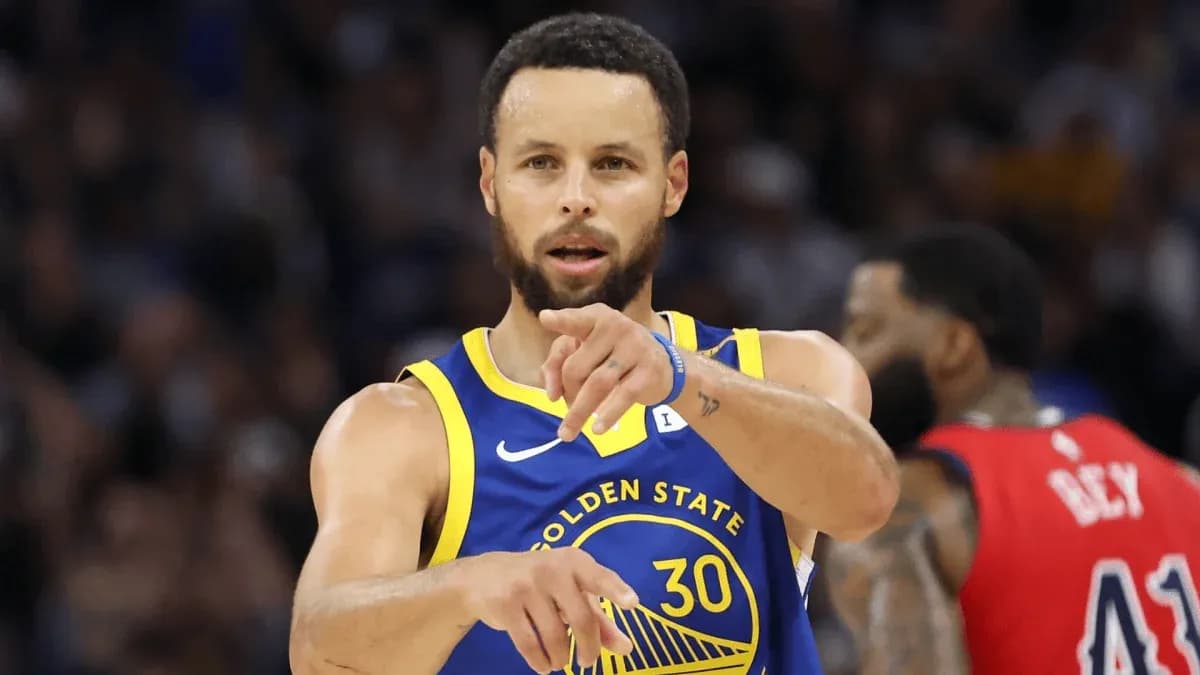
Then Stephen Curry went down.
An oblique abdominal tear will sideline him for at least two weeks, with some reports pointing closer to a month. Jimmy Butler is already out with a knee issue. Brandon Williams has joined them on the injury list with a hamstring problem and is set to miss at least a week.
That leaves De’Anthony Melton as one of the few healthy guards with real two-way impact — and a clear runway to more minutes.
In just 22 minutes per game this season, Melton is averaging 10.1 points, 4.3 rebounds, 2.3 assists, 1.3 steals and 2.3 threes. Those are already 9-cat-friendly numbers. Scale that up to the mid-20s in minutes, and you’re looking at a fantasy starter.
His own injury history is a fair concern; he’s not a lock for 30+ minutes every night. But with Golden State’s depth stripped back, he doesn’t need that to matter. If he settles around 25 minutes, his blend of steals, threes and boards makes him a priority pickup.
Pelle Larsson, Miami Heat (29% rostered)
Miami pushed all their chips in when they traded for Giannis Antetokounmpo. The cost was steep: a big slice of their young core. The response was predictable — plug the gaps with veterans. Klay Thompson, Tim Hardaway Jr. and Bobby Portis bring pedigree, but not much untapped upside.
Pelle Larsson might.
The Heat recently moved him into the starting lineup ahead of Andrew Wiggins, who has labored to 8.7 points and 2.8 rebounds in 26 minutes per game. Larsson, by contrast, has been productive mostly off the bench: 11.4 points, 3.5 rebounds, 3.5 assists, 1.3 steals and 1.4 threes.
The shooting jump is eye-catching. He went from 32.3% from three last season to 46.9% this year. That number will almost certainly cool, but the context matters: playing next to Giannis and Bam Adebayo guarantees a steady diet of open looks and clean reads.
Larsson doesn’t need to stay red-hot from deep to hold value. His across-the-board contributions fit perfectly in 9-cat, and the starting role gives him the platform to keep growing into it.
Points League Target
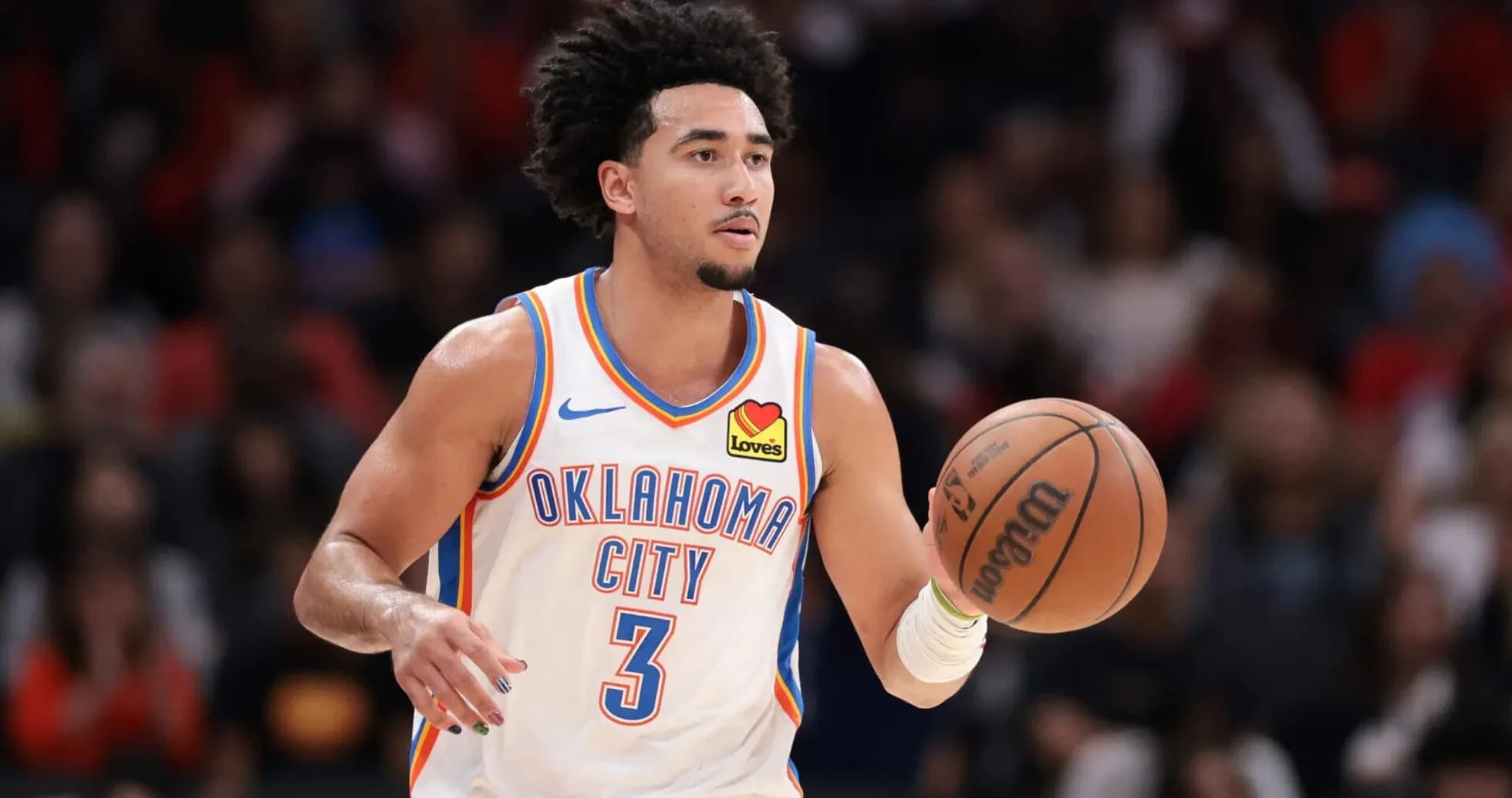
Jared McCain, Oklahoma City Thunder (50% rostered)
When Oklahoma City first acquired Jared McCain from the 76ers last season, he looked like a luxury, not a necessity. The Thunder were deep, loaded with talent, and chasing a title. Minutes were scarce.
That changed fast.
Injuries to Jalen Williams (leg), Chet Holmgren (knee) and Cason Wallace (shoulder) blew the rotation wide open and thrust McCain into a prominent role. Over his last nine games, he’s averaged 28 minutes, posting 13.9 points, 4.4 rebounds, 2.2 assists and 1.0 steal.
The catch is his efficiency. He’s shooting 40.7% from the field over that stretch, after hitting just 42.5% last season between Philadelphia and Oklahoma City.
In category leagues, that hurts. In points formats, it barely matters.
What matters is opportunity, and McCain has it: minutes, usage and a clear offensive role on a high-level team. As long as the Thunder’s injury list stays crowded, he’s a strong points-league add with room for more if the shot ever comes around.
High Score League Target
Brice Sensabaugh, Utah Jazz (4% rostered)
Utah’s scoring hierarchy has been ripped apart. Jaren Jackson Jr. is out with a knee injury. Now Lauri Markkanen joins him on the sidelines with a hand issue that will keep him out for at least four weeks.
Keyonte George is suddenly the primary option. The last two first-round picks, Ace Bailey and Darryn Peterson, are being asked to grow up quickly. Behind them? A rotation full of role players who don’t naturally hunt their own shot.
Except one.
Brice Sensabaugh is a pure scorer. Last season, he averaged 14.9 points and 2.2 threes in only 24 minutes per game. That’s the profile of a player who doesn’t need a ton of time to fill a box score.
Wednesday’s loss to the Magic was a reminder of what he can do when the leash loosens: 19 points, three threes, and a season-high 23 minutes. If he ever creeps toward 30 minutes on a given night, 20-plus points is firmly in play.
There will be quiet games. His role and shot volume will ebb and flow, which makes him volatile in standard formats. But in high-score leagues, where raw points and explosions matter more than consistency, Sensabaugh is exactly the kind of low-rostered swing that can win a matchup in a single night.
The injuries aren’t stopping. The question is who will turn that chaos into fantasy leverage before the rest of the league catches up.