
Wales vs Haaland: Stopping the Unstoppable
How do you stop Erling Haaland?
Coaches across Europe have sketched plans, ripped them up and gone again. Most end the night with their back four in ruins and Haaland wheeling away, arms outstretched, another brace on the board.
Wales, though, have something rare: recent evidence that it can be done.
A month ago in Cardiff, Craig Bellamy’s side beat Norway 2-1 and, just as significantly, they smothered the most ruthless centre-forward in the game. On Saturday in Oslo, they have to do it all over again in the Nations League – this time on Haaland’s turf.
Bellamy’s gamble
Bellamy is not naïve about the scale of the job.
"You're talking about trying to deal with one of the best players in his position in the world," the Wales head coach says. He has watched Haaland terrorise defences for years, for country and for Manchester City, and he knows the usual tricks do not work for long.
Sit deep and you invite him on. Drop the line back towards your own box and you give him what he craves: time to pick his runs, angles to spin into, space for cut-backs and low crosses that he attacks like a sprinter hitting the bend.
Get too physical and you run into another problem. Haaland is 6ft 5in, built like a second-row forward and moves like a winger. Try to wrestle him and you discover he enjoys that, too.
So Bellamy went another way. He chose risk.
"Drive up and don't let him dictate," he explains. The idea sounds almost reckless on paper: a high line against Haaland, with all his raw pace and hunger for balls over the top. Bellamy knows the question before it’s even asked. Why push up against this player of all players?
Because the alternative, in his mind, is worse. Let Haaland dictate the game and you are already halfway beaten.
For Bellamy, the key is universal but amplified when the opponent is this good: time. Star players become untouchable when allowed to settle.
"A good player can look like a top player if you give him time. A top player can look world-class if you give him time. A world-class player might then have a chance of looking like an ordinary or good player, if you don't allow him time."
So Wales pressed. They hunted the ball. They refused to let Norway’s defenders and midfielders pick their heads up and measure passes into Haaland’s feet or into the space behind.
High-risk, yes. But high reward.
Cutting the supply
The numbers from that night in Cardiff tell the story.
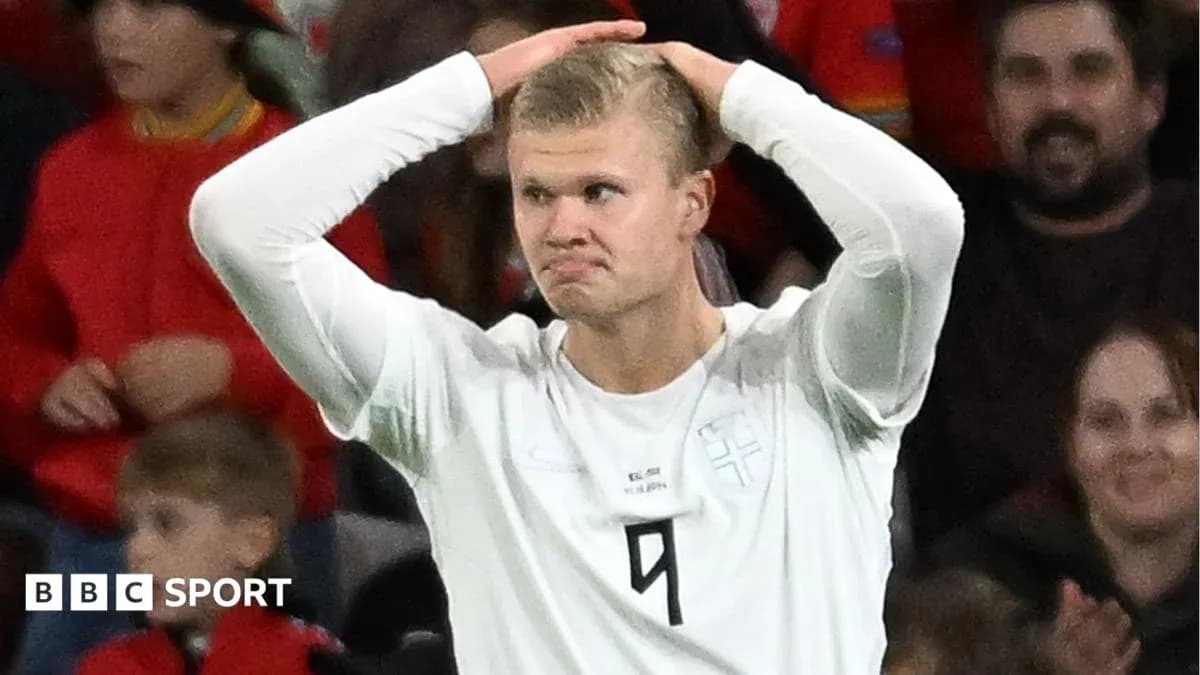
Haaland finished with just 24 touches. That alone is not unusual; he often operates on the edge of games, ghosting around until the moment the ball drops in the box. The real damage came in the shots column: two efforts, one on target, a routine header for Danny Ward.
The real victory lay a step earlier. Wales didn’t just defend Haaland. They defended the idea of Haaland. They cut off the supply.
That is no small task against a Norway side built around Martin Odegaard, the Premier League’s reigning conductor-in-chief and the man who led Arsenal to the title last season. Stop Haaland and you still have to deal with Odegaard threading passes into Oscar Bobb, Andreas Schjelderup and any runner who senses space.
So Bellamy’s plan stretched beyond his centre-backs. Ethan Ampadu and the midfield line became the first shield in front of Haaland, not the last.
"You have to consider the distance between Ethan and Haaland," Bellamy says. "You can't open up the middle too much because balls are going to come into his feet. You have to get your distances right, be side-on and make sure you're aware of his runs."
The distances mattered everywhere. If Ampadu stepped out too far, Odegaard would slide a pass through the gap. If the midfield sat too deep, Norway’s playmaker would dictate the tempo. Wales had to compress the game, narrow the lanes, and still find the energy to spring forward when they won it.
And then there was the other side of the ball.
"It's also important how we use the ball," Bellamy stresses. Use it well, build attacks, push the team up the pitch – and suddenly Haaland is the one doing the running, tracking back, chasing shadows. Star strikers are at their most dangerous when they can rest between sprints. Deny them that luxury and the edge blunts.
Front-foot defending
Under Bellamy, Wales have changed. Since he took over in the summer of 2024, their average share of possession has jumped. They want the ball, not simply to keep it, but to control the terms of the contest.
This Nations League group – with Norway, Portugal and Denmark – has tested that ambition. Wales have had to accept less of the ball at times, and Bellamy has been honest enough to say they can be better.
But the philosophy is clear. He has promised Wales will go "all out" for victory in Oslo. That is not bravado. It is baked into his plan to keep Haaland quiet: attack to defend.
If Wales can stay on the front foot, if they can pin Norway back for stretches and force Odegaard and Haaland to defend their own third, then the Norwegian threat shrinks. Not disappears – it never does with players of that calibre – but shrinks enough to give you a chance.
Dan James, scorer of Wales’ first goal in the 2-1 win, saw the balance up close.
"Our distances [between players] were really good," he says. "Odegaard is a unique player. He'll get the ball anywhere so it's hard as a defence. They want you to jump out and I think they showed that with their goal with the ball for Oscar Bobb and he's finished it well."
Norway still carved moments. Odegaard still slipped passes in behind. But Wales held their line mentally as well as tactically.
"We showed our resilience and it was about limiting their chances and I thought we did that," James adds. "Odegaard played some great balls in behind but, to the very last minute, we defended really well, not just the defenders but the whole unit, from the forwards back."
That last phrase matters: from the forwards back. Against Haaland, the first defender is often your centre-forward.
New test, same problem
Wales will not be able to copy and paste the Cardiff performance in Oslo. For a start, the personnel will change.
Ben Cabango, who battled Haaland and swapped shirts with him at full-time last month, is suspended. Swansea City lose a centre-back to the stands; Wales lose one of the men who fronted up to the Norwegian No 9 and lived to tell the tale.
The boost comes with Joe Rodon’s return. The first-choice centre-back is fit again after injury and back playing for Leeds United. His presence restores experience and aggression to the heart of the back line.
"Ben Cabango and Ben Davies have both done really well against him [Haaland], but the work has to be done in front of them. If it isn't, you expose the defenders," Bellamy warns.
He is under no illusions. Against this type of striker, individual duels only tell part of the story.
"Against this type of player, it doesn't matter how good an individual defender is. We've seen over the last four or five years how difficult it becomes for one player to cope with what Haaland brings."
That is the crux of it. There is no heroic one-on-one script here. No centre-back riding in alone to tame the giant. Stop Haaland, and you do it as a team.
Wales have shown once that they can turn the unstoppable into the merely human. The question in Oslo is simple and brutal: can they summon that same collective courage, that same front-foot defiance, when the roar comes from the other end of the pitch and Haaland is charging at them again?





