Wales' Strategy to Stop Erling Haaland: Lessons from Cardiff
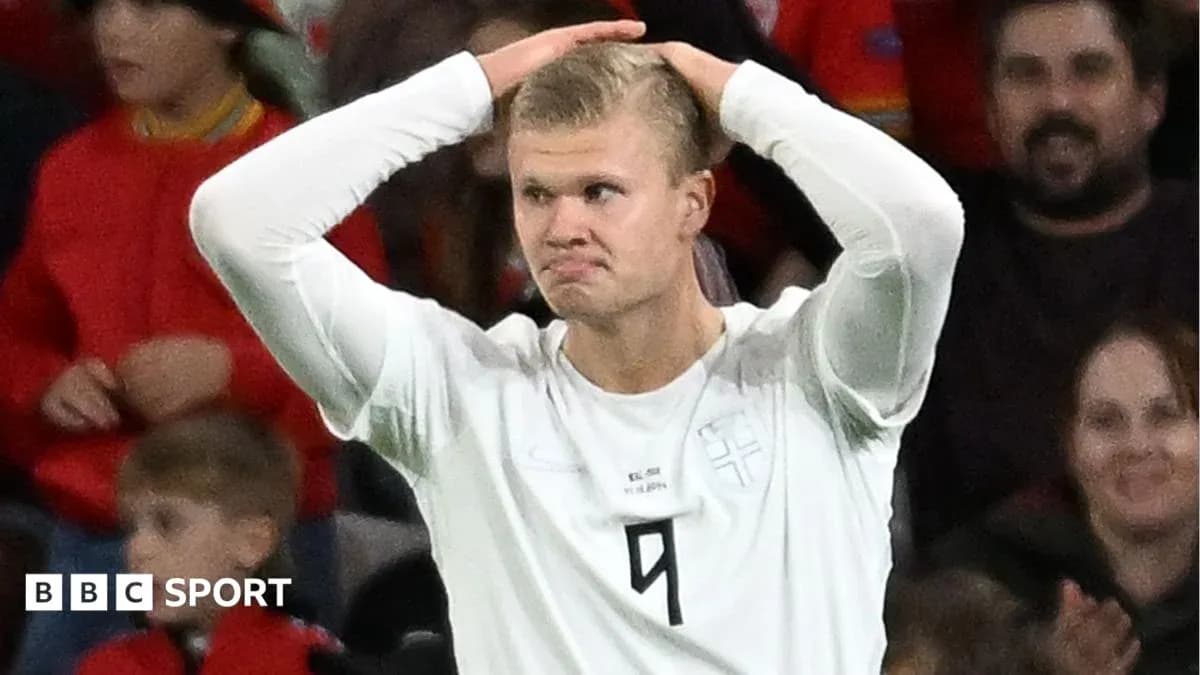
How do you stop Erling Haaland?
Managers across Europe have sketched plans, ripped them up and gone back to the drawing board. Most fail. Norway’s phenomenon usually leaves them scattered in his wake, another defence broken, another set of numbers bent out of shape.
Wales, though, have something very few can claim: a recent, working example.
A month ago in Cardiff, Craig Bellamy’s side beat Norway 2-1 and kept Haaland quiet. Not anonymous – he never is – but contained. Restricted. Managed. On Saturday in Oslo, they have to do it again in the Nations League, this time in his own backyard.
Bellamy knows exactly what that means.
“You're talking about trying to deal with one of the best players in his position in the world,” the Wales head coach says. “He's different to what you would normally have to deal with. He has the profile of everything you want in a player, and that's quite rare.
“It's a collective responsibility, not just an individual one.”
That last line is the key. Against Haaland, bravery is not just about tackles and blocks. It’s about how high you dare to stand.
Bellamy’s gamble: high line, high risk
Plenty of teams have tried the obvious move: drop deep, crowd the box, deny space in behind. On paper, it makes sense. In reality, you invite wave after wave of pressure, give Haaland and his creators time to pick passes, angles and runs. Eventually, he finds you.
Others have gone the other way and tried to rough him up. That usually ends badly as well. Haaland is 6ft 5in, powerful, explosive and unbothered by contact. Turn it into a wrestling match and he often wins that too.
So Bellamy went for the bold option. Press high. Squeeze the pitch. Live with the risk.
“Drive up and don't let him dictate,” he explains. “It's easier said than done because then you could turn around and say to me, 'Why are you playing a high line against Haaland?' Trust me you don't want to, but you can't have him dictating the game.”
The idea was simple, the execution anything but. Wales pushed up, hunted the ball and tried to suffocate the supply line before it ever reached Norway’s No 9.
“A good player can look like a top player if you give him time. A top player can look world-class if you give him time,” Bellamy says. “A world-class player might then have a chance of looking like an ordinary or good player, if you don't allow him time.
“Putting pressure on the ball is always important for us, and I thought we did that really well that night.”
The pressure told.
Haaland finished with just 24 touches at Cardiff City Stadium. That in itself doesn’t shock anyone who has watched him for Manchester City or Norway; he often drifts on the fringes of a game, conserving energy, waiting for that one decisive moment. The real story lay elsewhere.
Two shots. One on target. A routine header straight at Danny Ward.
For a man with 65 goals in 59 games for his country, those are meagre rations.
Cutting off the Odegaard connection
Stopping Haaland is never just about Haaland. Norway’s captain Martin Odegaard is the one who feeds him, the conductor who sets the tempo, the Premier League champion who dragged Arsenal to last season’s title.
So Wales went to work on him too.
Midfielders such as Ethan Ampadu became as important as the centre-backs. Distances, angles, body shape – the invisible details that rarely make the highlights – mattered more than ever.
“You have to consider the distance between Ethan and Haaland,” Bellamy says. “You can't open up the middle too much because balls are going to come into his feet. You have to get your distances right, be side-on and make sure you're aware of his runs.
“He has the ability to take a team on, but he also has the willingness to make those runs.
“It's also important how we use the ball. If we use it well, develop our possession and move up the pitch, he has to work. He has to run and get back.”
That last point cut to the heart of Wales’ plan. Don’t just defend Haaland. Make him defend you. Make Odegaard turn and chase. Make Norway’s stars spend energy running towards their own goal.
Since Bellamy took charge in the summer of 2024, Wales’ share of the ball has climbed sharply. Against Norway, Portugal and Denmark in this Nations League campaign it has dipped again, and the coach is the first to say they can use it better. But the principle remains: possession as a form of protection.
Dan James, scorer of Wales’ opener in Cardiff, saw the plan from the sharp end.
“Our distances [between players] were really good,” he says. “Odegaard is a unique player. He'll get the ball anywhere so it's hard as a defence. They want you to jump out and I think they showed that with their goal with the ball for Oscar Bobb and he's finished it well.
“We showed our resilience and it was about limiting their chances and I thought we did that.
“Odegaard played some great balls in behind but, to the very last minute, we defended really well, not just the defenders but the whole unit, from the forwards back.
“I thought we defended really well on the day, and we've got to be great again on Saturday.”
New test, same problem: Haaland
The challenge in Oslo will look familiar, but the pieces are slightly different.
Wales must make at least one change. Ben Cabango, who did so much of the dirty work against Haaland in Cardiff – and left with the striker’s shirt as a souvenir – is suspended. His absence removes one of the central figures from that successful blueprint.
The good news is that Joe Rodon is back. The first-choice centre-back has returned for Leeds United and is available again for his country.
“Ben Cabango and Ben Davies have both done really well against him [Haaland], but the work has to be done in front of them. If it isn't, you expose the defenders,” Bellamy says.
“Against this type of player, it doesn't matter how good an individual defender is. We've seen over the last four or five years how difficult it becomes for one player to cope with what Haaland brings.”
That is the truth every side faces when they line up against Norway. Take him on alone and you are asking for trouble. Double up and you leave someone else free. Drop deep and invite Odegaard to pick you apart. Push high and risk the ball over the top.
Bellamy has nailed his colours to the mast. Wales will go “all out” for victory. That means front-foot football, it means making Norway defend, and it means trusting that the best way to keep Haaland quiet is to keep him far from your penalty area.
It worked once. The question now is whether Wales can walk into Haaland’s home, with a reshuffled back line, and prove that blueprint still holds against a striker who rarely lets the same trick beat him twice.