Washington Wizards' Bold NBA Strategy: Balancing Youth and Experience
The Washington Wizards are no longer drifting on the NBA’s fringes. They’ve thrown themselves into the center of the league’s storyline, armed with a bold, almost contradictory plan: build around a 19-year-old future star while hitching the present to two established, high-usage headliners.
Trae Young arrived first, a 27-year-old former face of a franchise in Atlanta, suddenly recast as the lead guard in Washington. That move alone turned heads. The Wizards’ timeline screamed rebuild. Their trade screamed win-now.
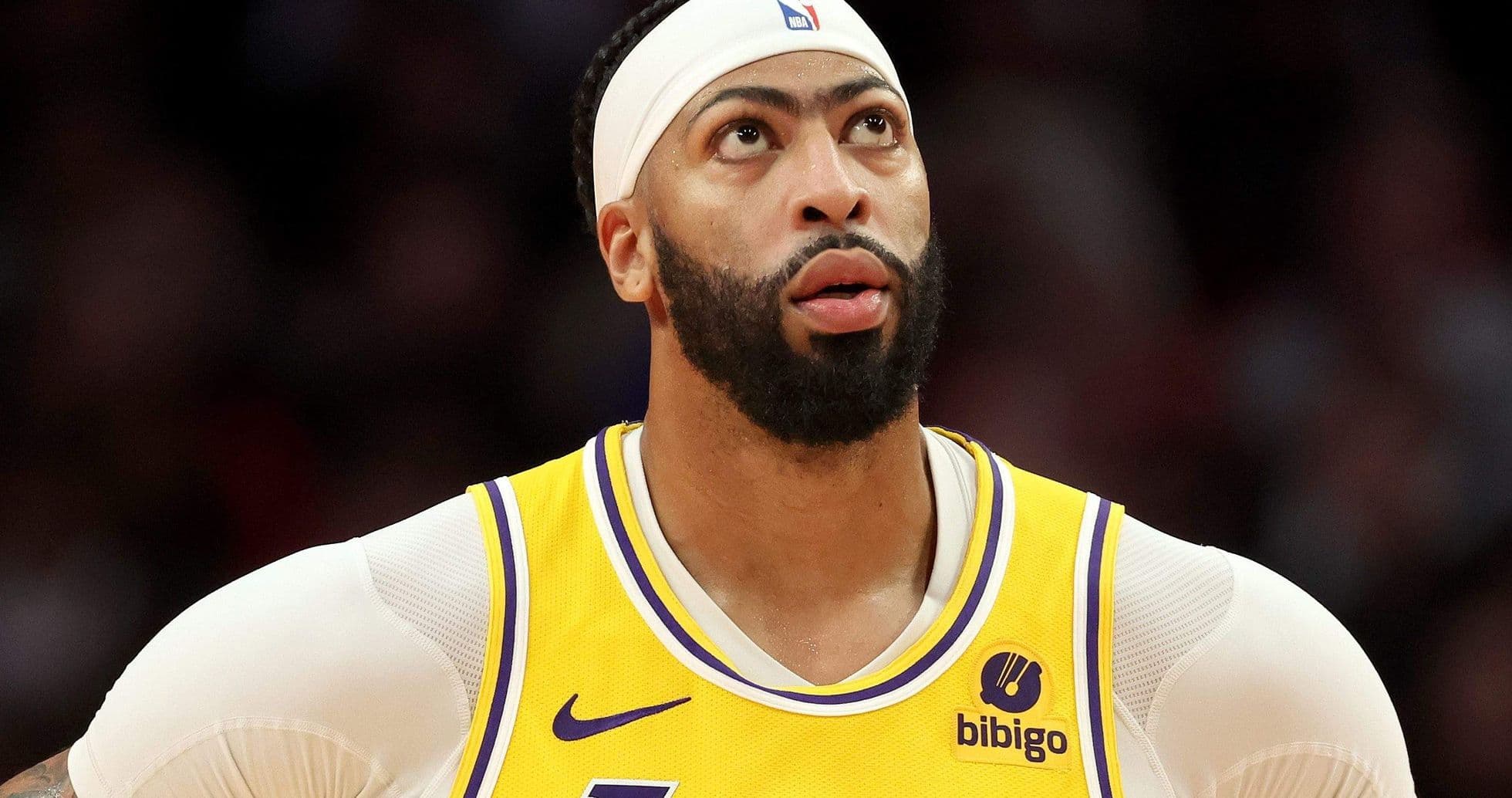
Then came the second jolt: Anthony Davis, pried from the Dallas Mavericks, a 10-time All-Star with a championship résumé and a medical file that always lingers in the background. Washington didn’t just dip a toe into the veteran market. It dove in.
Now the question hangs over the franchise: are the Wizards truly committed to this version of Anthony Davis, or is he simply the most valuable chip on the table?
A Star Without an Extension
Davis is 33 and still one of the league’s most dominant two-way bigs when healthy. He remains on a three-year deal worth roughly $175 million, a contract that screams “franchise pillar” in salary, if not in security. He’s eligible for an extension. He hasn’t received one.
That gap between eligibility and commitment is where the intrigue lives.
On paper, the Wizards’ future belongs to AJ Dybantsa, the 19-year-old No. 1 overall pick and the kind of prospect front offices dream about when they strip down rosters and stockpile draft capital. Teams in that position usually clear the deck for their prodigy. Washington has done the opposite, stacking high-usage, high-profile veterans in front of him.
If the Wizards ever decide to pivot, Davis is the obvious pressure point. He’s expensive, but he’s also the sort of player who can tilt a playoff race. Put him on the market and phones would light up.
One of those calls could come from Boston.
The Boston Scenario
The Celtics have already taken a seismic step by moving on from Jaylen Brown. That alone reshapes their identity. The idea of following that up by chasing Anthony Davis is the kind of move that could redefine the Eastern Conference.
A proposed framework looks like this:
- Wizards receive: Paul George, Baylor Scheierman, Jordan Walsh, and a 2031 first-round pick
- Celtics receive: Anthony Davis
No frills. No swaps. A star-for-star centerpiece with youth and a future asset attached.
For Washington, it’s a layered play. Scheierman and Walsh slide neatly into the young core, joining Dybantsa and the rest of the developmental group. The 2031 first-round pick adds long-term flexibility, the kind of asset that can either be used in a future trade or held as insurance if the current experiment stalls.
Paul George, at 36, is the short-term wrinkle. He’s not a long-term cornerstone, but he doesn’t have to be. The Wizards could lean into his pedigree, give him a prominent role, and let his value climb ahead of the February trade deadline. He proved in last season’s playoffs that he can still impact high-level games. Contenders desperate for wing scoring and perimeter defense would notice.
Boston’s calculation is different. The Celtics would be betting on ceiling. Davis, if he can stay on the floor, gives them an MVP-caliber presence who can anchor a defense and dominate inside. Jayson Tatum has never shared the court with a big man as accomplished, as decorated, or as versatile as Davis. The idea of Tatum operating off a true interior fulcrum would change how defenses load up on Boston’s star.
The risk is obvious. The reward might be a title.
Washington’s Gamble
All of this hypothetical noise bumps up against one stubborn reality: the Wizards haven’t acted like a team eager to move on from Davis.
General manager Will Dawkins has leaned into the narrative of a motivated, edgy core, built around veterans with something to prove and youngsters desperate to arrive. His view of the Young–Davis pairing isn’t of a stopgap, but of a foundation.
“What we’re getting with both of them are players who are motivated and have a chip on their shoulder, as well,” Dawkins told ESPN earlier this year, framing the roster as a convergence of hungry veterans and ambitious prospects. He pointed to a “storm of motivation” stretching from the coaching staff to the developmental group, and he made one thing clear: Davis and Young are not here reluctantly. They chose this.
Davis, bounced from the Lakers to the Mavericks and now to Washington in a two-year blur, arrives with his reputation intact but his stability in question. Young, once the unquestioned face of the Atlanta Hawks, saw his tenure there unravel before landing in D.C. He managed just five games for the Wizards last season before being shut down, a brief glimpse rather than a full audition.
Both men are trying to reassert control over their careers. Both are trying to prove they can still be the axis of a winning team.
That’s the bet Dawkins is making.
The Dybantsa Question
Hovering over all of this is Dybantsa.
Teams don’t land the first overall pick very often, and when they do, everything usually bends around that player. Minutes. Usage. Roster construction. Patience.
So why cling to a 33-year-old star on a massive contract while preaching development around a 19-year-old cornerstone? Why keep the door open to a deep playoff push when the safer play is a slow, methodical build?
Maybe the lack of an extension for Davis is the tell. Washington can talk up its belief in the Davis–Young partnership and still leave room to pivot if the right offer appears. The franchise doesn’t have to decide today whether Davis is a long-term Wizard or a short-term accelerant.
The market will help make that decision.
For now, Washington looks ready to walk into the 2026–27 season with Davis and Young at the front of the line, Dybantsa rising behind them, and a roster full of players trying to prove something. It’s a volatile mix. It’s also the kind of setup that can flip a franchise’s direction in a single season.
If Boston, or any other contender, comes calling with a package like the one on the table, the Wizards will have to decide what they want to be sooner than they planned: a team chasing wins right now, or a team willing to let a teenager grow into the face of the next era without a giant casting a shadow over him.